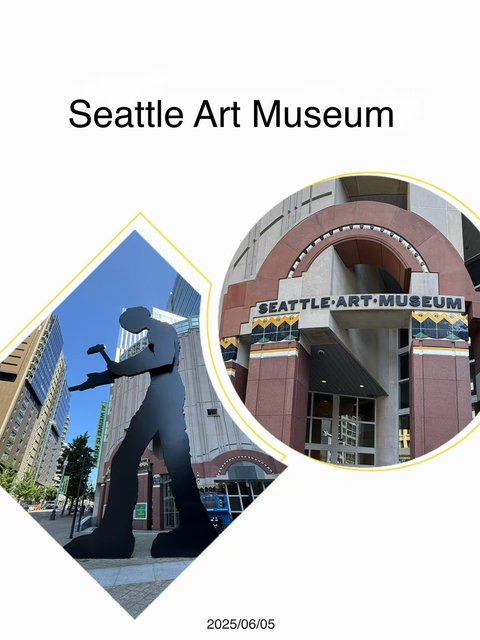
This morning we visited the Seattle Art Museum. When we arrived, we discovered that admission was free that day. They told us that the museum offers free entry on the first Thursday of every month. What a coincidence—and even more coincidentally, there was an exhibition by a Chinese artist surnamed Ai. By the time we arrived it was almost 11:00 a.m., and our entry time for his exhibition was scheduled for 12:20.
Originally, we thought we would just wander around casually and finish in an hour or two. Instead, we ended up spending the entire afternoon in the exhibition hall.
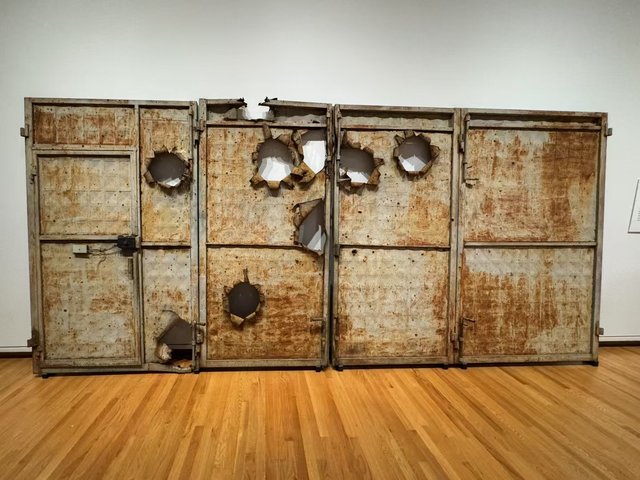
Previously, I had only heard his name and knew very little about him. When I first walked into the gallery and saw those sculptures of raised middle fingers, I couldn’t help feeling a bit of dislike, thinking that he might simply be an attention-seeking “eccentric.” However, as we continued through the exhibition—especially after following a museum guide who carefully explained the works—I gradually developed a more complete and nuanced understanding of this artist.
He is truly a multifaceted artist. When he was young, he studied in the United States and spent time living in New York. During that period, he made a living in various ways, including drawing portraits for people on the street and delivering newspapers as temporary work. What eventually brought him widespread international recognition was his involvement in the design of the “Bird’s Nest” National Stadium for the 2008 Beijing Olympics. He participated as an artistic consultant and collaborated with the Swiss architectural firm Herzog & de Meuron. Ironically, it was also during that same year, following the Wenchuan earthquake, that he gradually transformed from primarily an artist into a civil rights activist.
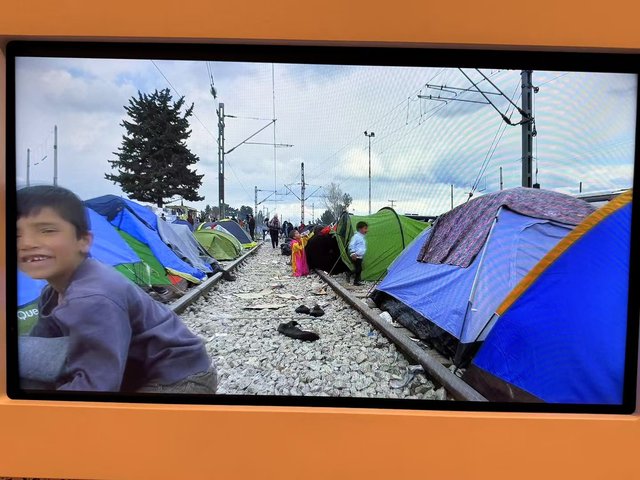
For many years he and his team documented the journeys of refugees from the Middle East and Africa crossing the Mediterranean and risking their lives to reach Europe, capturing many powerful and sobering images.
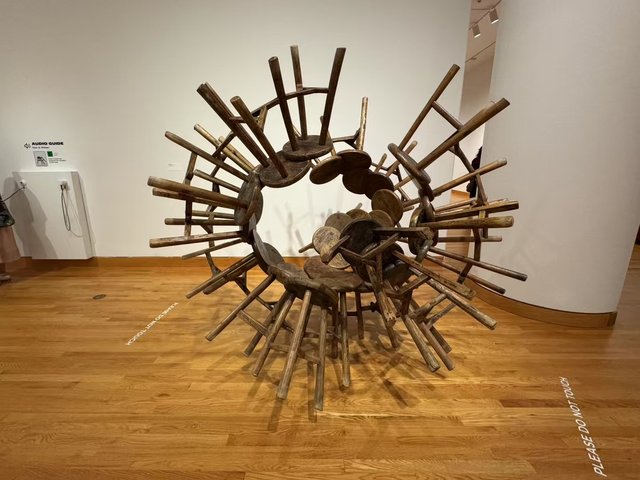
It is no exaggeration to say that he is extremely versatile. His work spans painting, woodworking, ceramics, metal, and marble sculpture. One of his notable works, titled “Grapes,” was created by assembling hundreds of traditional wooden stools into a complex spherical structure. Remarkably, not a single nail was used—each stool is joined together using traditional Chinese mortise-and-tenon craftsmanship.
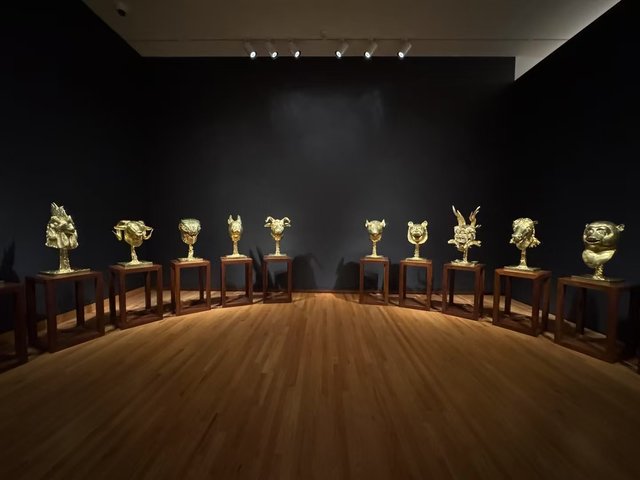
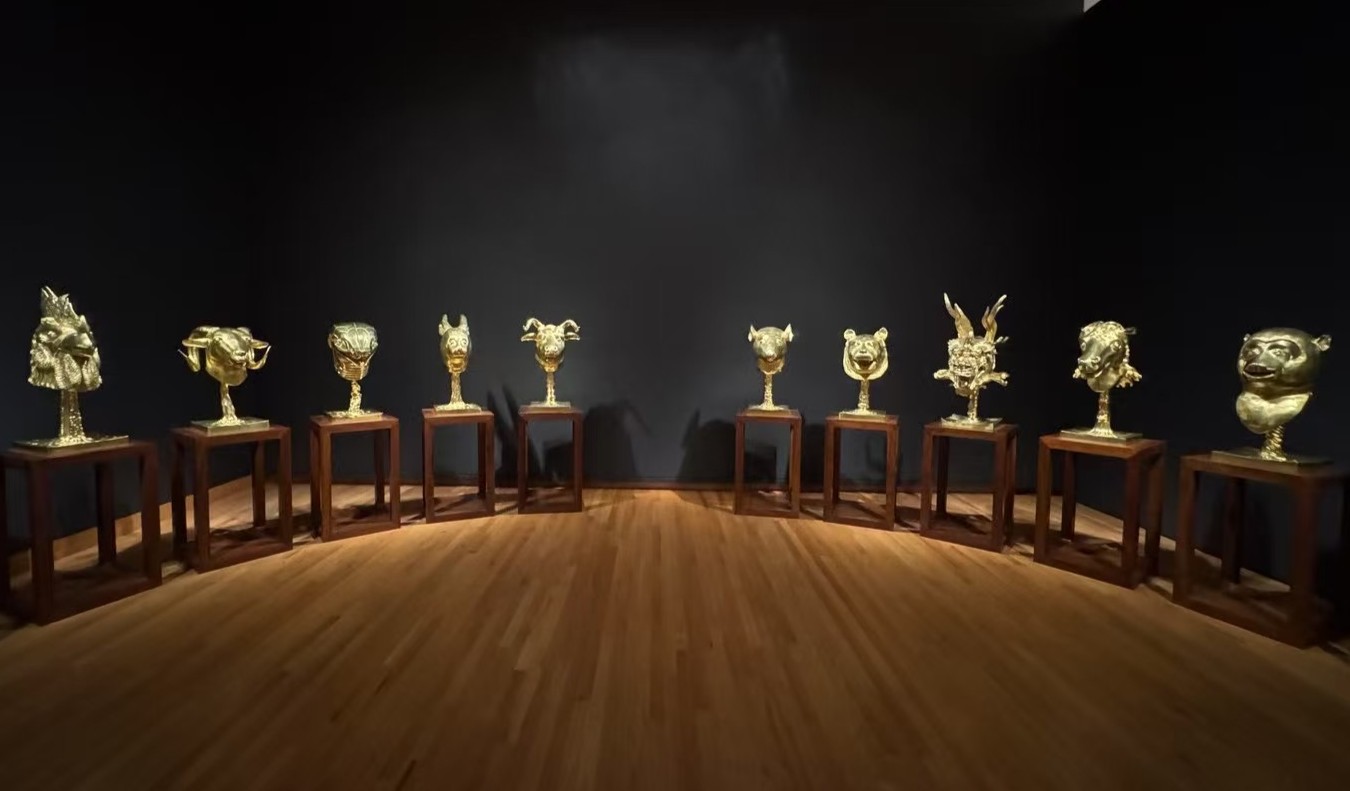
He also created the famous “Circle of Animals / Zodiac Heads,” reinterpreting the twelve zodiac bronze heads that were once part of Beijing’s Old Summer Palace. Through modern artistic language, the work reflects on themes of cultural loss and historical memory.
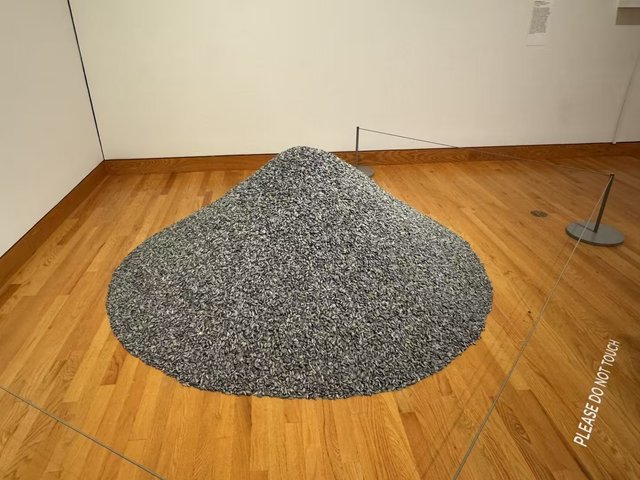
Perhaps the most impressive project was his large-scale ceramic installation created in Jingdezhen, China’s historic porcelain center. He hired 1,600 artisans, who spent two and a half years handcrafting 100 million porcelain sunflower seeds. These seemingly ordinary objects are so realistic that each one can easily pass for the real thing. The work explores deeper ideas about collectivity versus individuality and authenticity versus replication. The installation was exhibited in the Turbine Hall at Tate Modern in London, where visitors were initially allowed to walk across the seeds and interact with the artwork. Later, for safety reasons, the museum restricted visitors to viewing it from a distance.
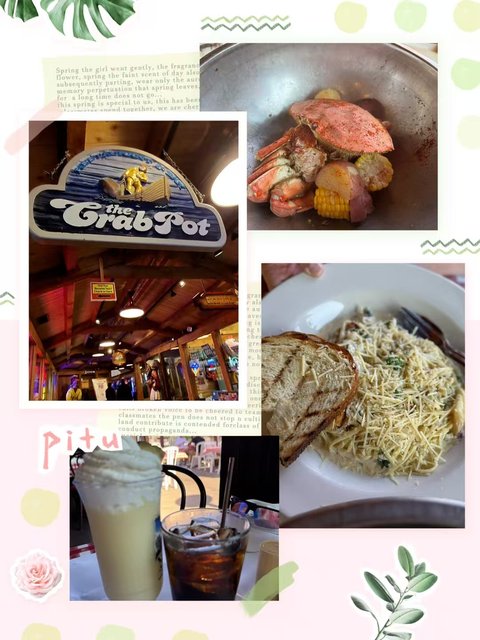
For dinner we once again chose The Crab Pot, savoring Seattle’s specialty one last time—Dungeness crab.
With this, our Seattle journey comes to a close. Over the past few days, we experienced both the natural beauty and cultural richness that define this unique city. From the breathtaking landscapes of Mount Rainier to the vibrant markets, museums, and waterfront of the city itself, each day brought new discoveries. Seattle blends the calm spirit of the Pacific Northwest with the energy of a modern city, leaving a lasting impression on us. Perhaps that is the true meaning of travel—through constant movement and exploration, we encounter new places and rediscover ourselves. Farewell for now, Seattle. Perhaps one day, we will return again.
We use cookies to ensure that we give you the best experience on our website. If you continue to use this site we will assume that you are happy with it.