Early this morning, shortly after leaving the hotel, we encountered a wedding procession. At the front was a tractor carrying a loudspeaker playing celebratory music. Behind it, women dressed in bright red and green danced the traditional yangko, followed by eight Audi cars decorated with large red flowers.
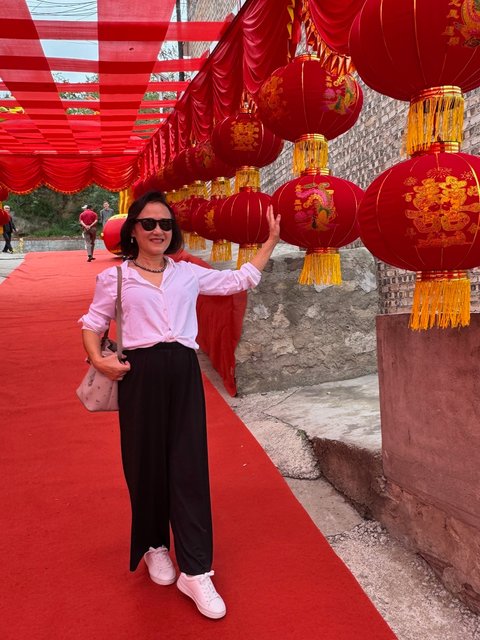
Not long after, we came upon the wedding venue itself. The area was filled with festive decorations and bustling with people. We stepped out to join the excitement, observing the venue, the couple’s photos, busy cooks, and villagers attending the celebration. It was a rare and joyful scene.
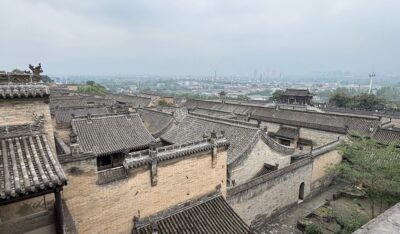
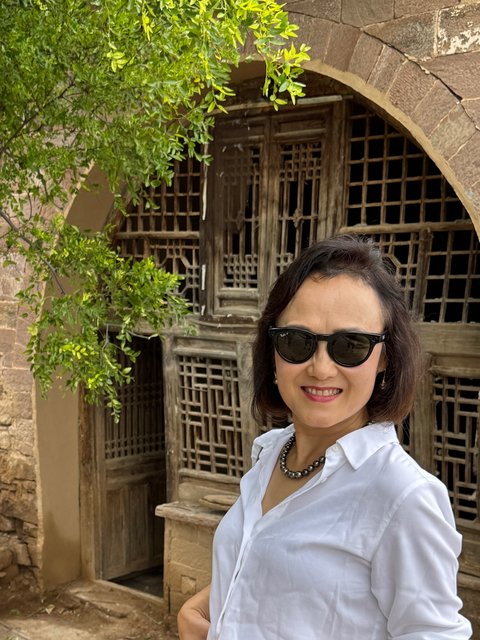
Our next stop was Wubu Stone City, an ancient stone-built settlement perched on a mountainside. The road leading up was steep, narrow, and winding, requiring cars to take turns passing safely.
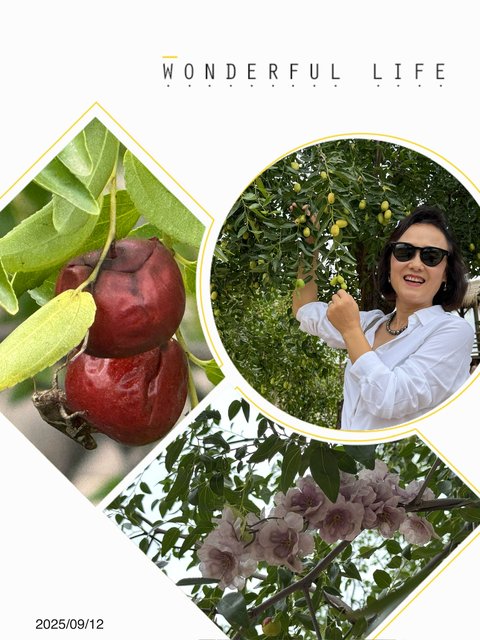
The houses in the city are built entirely from local stone, making them sturdy and enduring. The hills are covered with jujube trees, which, according to a local elder, are now mostly wild. We picked a few to taste—not particularly sweet, but fresh and organic. It was also my first time seeing jujube blossoms, their light purple flowers quietly awaiting fruit.
On our way back, we encountered an elderly man driving a three-wheeled cart filled with peaches. He offered them to us freely. Though they looked ordinary, the peaches were surprisingly delicious, adding a warm human touch to the journey.
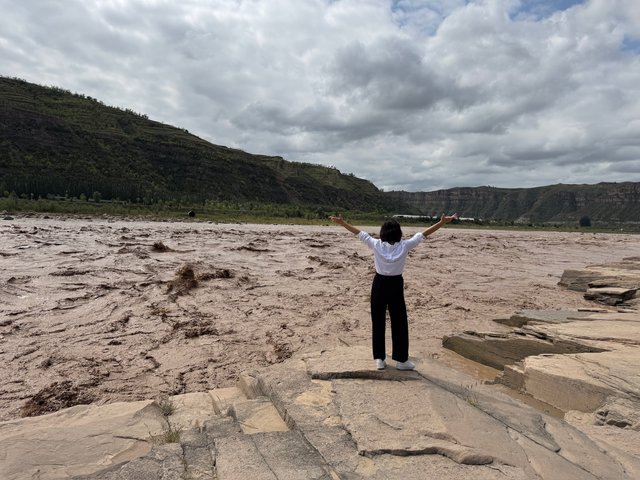
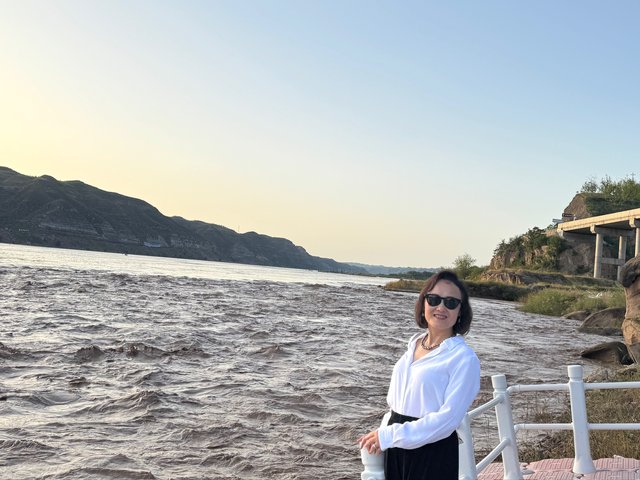
Next, we arrived at Erqi Rapids Yellow River, known as one of the most dramatic sections of the Yellow River. The riverbed is filled with rocks and shoals, causing turbulent currents and roaring waves that echo through the valley, truly living up to its name as a natural barrier.
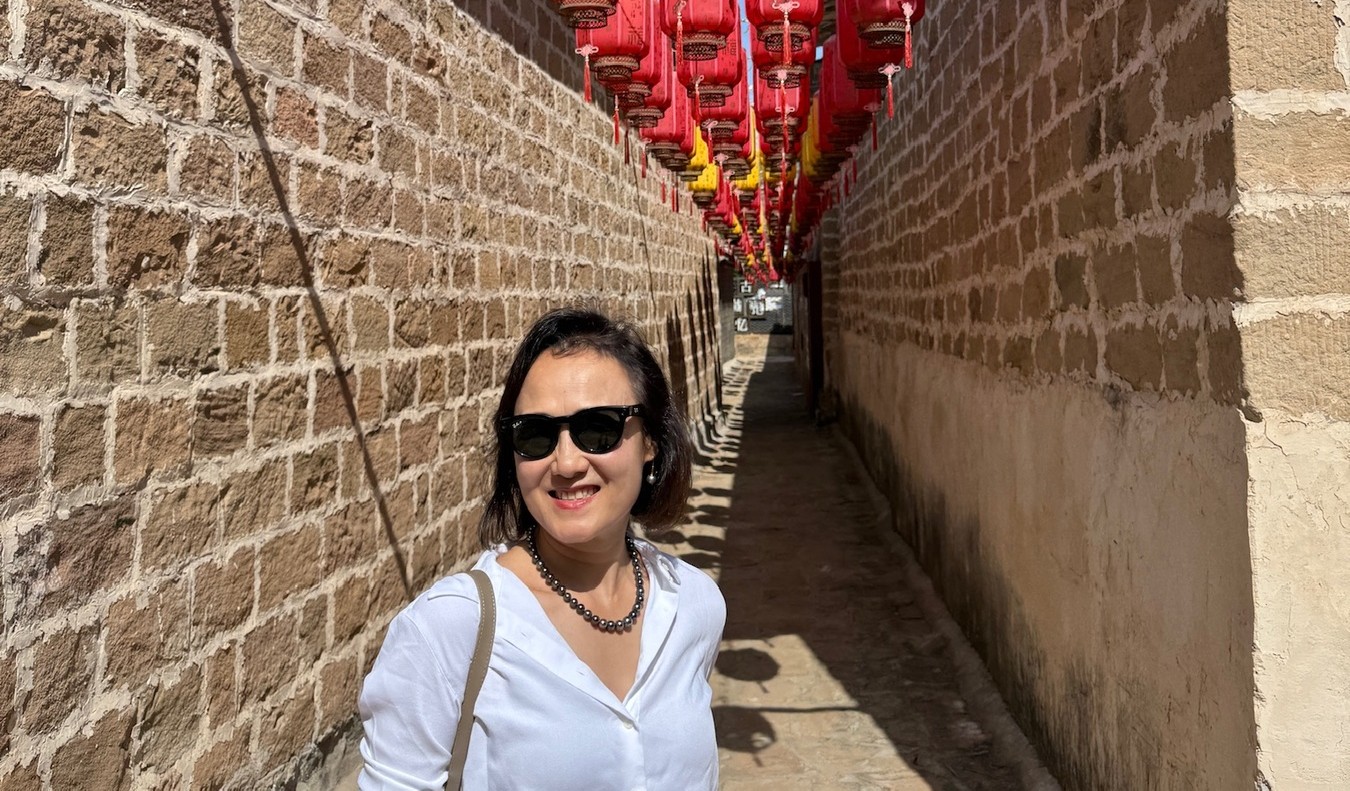
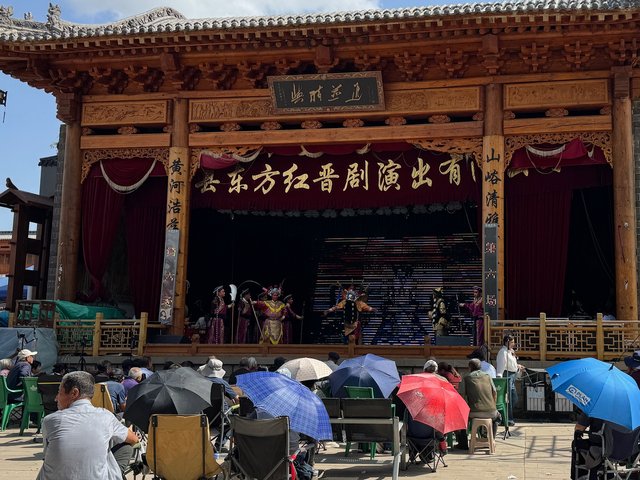
Continuing onward, we reached Mutouyu Ancient Town, known as “Xiucai Town.” As soon as we arrived, we heard drums and singing. Inside the town, a Jin opera performance was underway, with villagers sitting below, cracking sunflower seeds and enjoying the show in a lively atmosphere.
Walking through the town, we learned why it is called “Xiucai Town.” A local Miao family had produced many scholars over generations, including xiucai and even top-ranked scholars. One notable figure, Miao Zirong, became a tribute student at eighteen and later taught for over forty years, earning the title “model of scholars.”
Another notable figure is Gao Jingde, president of Tsinghua University from 1983 to 1988, an academician of the Chinese Academy of Sciences, and the first Chinese student to earn a doctorate in the Soviet Union. He was also a son-in-law of the Miao family.
When we arrived at the square, we happened to catch a theatrical performance by locals.
The Yellow River Gallery is another highlight here, where steep cliffs carved by the river form deep gorges. The winding river creates a landscape resembling a long traditional Chinese painting.
However, just before reaching the scenic area, the road was blocked by fallen rocks. We had to take a detour, which cost us more than two hours. By the time we arrived, the site had already closed. Though the boatmen offered rides, we decided not to board due to safety concerns. Still, from the shore, we could admire the river-carved rock formations and call it a satisfying end to the day.
We use cookies to ensure that we give you the best experience on our website. If you continue to use this site we will assume that you are happy with it.
 Planning a similar trip? Download your free itinerary below.