You are currently viewing Shanxi Travel Journal Day 9: Guangsheng Temple & Hongtong Great Pagoda Tree
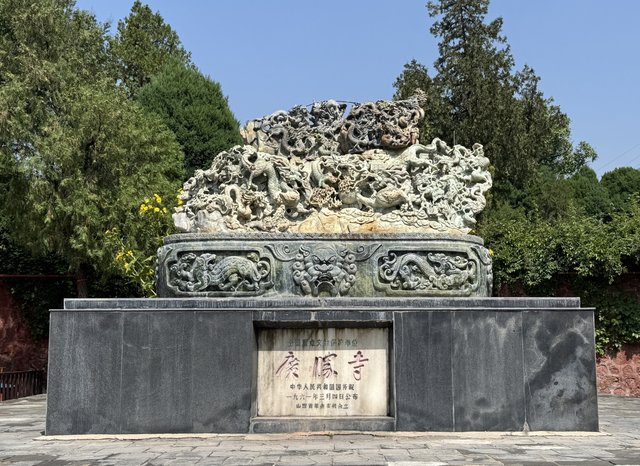
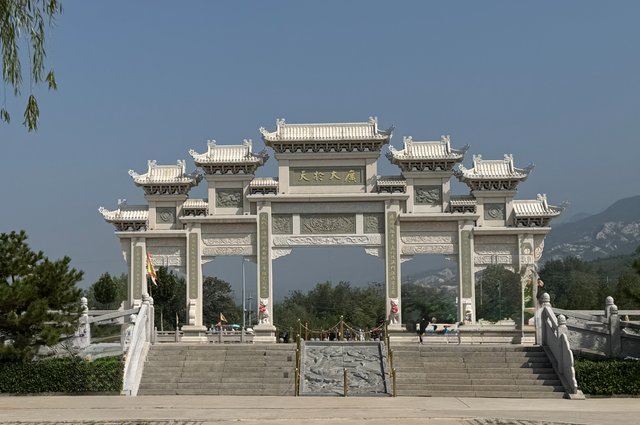
Hongtong Guangsheng Temple 洪洞广胜寺

Shanxi Travel Journal Day 9: Guangsheng Temple & Hongtong Great Pagoda Tree

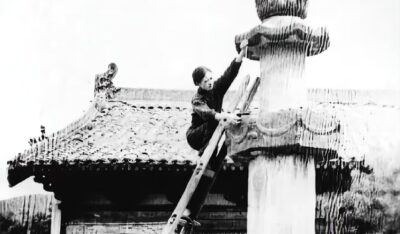
We began the day at Guangsheng Temple, a rare multi-layered Buddhist architectural complex in China.

Hongtong Guangsheng Temple 洪洞广胜寺

First built in 148 AD during the Eastern Han Dynasty, it has a history of nearly two thousand years.

01 Hongtong Guangsheng Temple 洪洞广胜寺

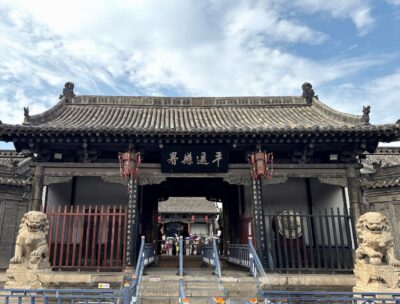
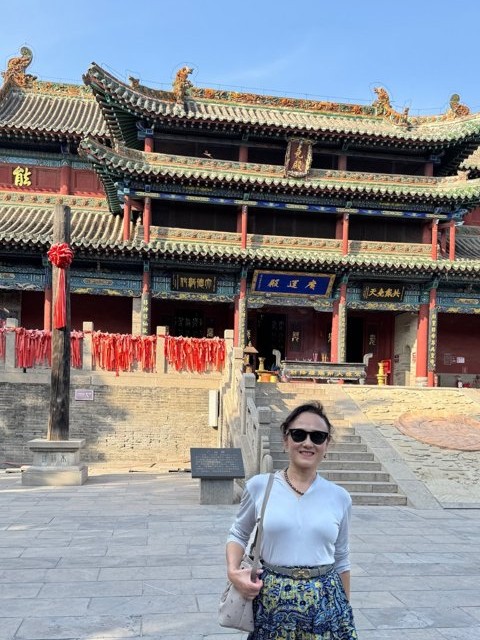
A shuttle bus first brought us to the Upper Temple, the largest part of the complex and one of the most complete surviving Yuan Dynasty wooden temple structures in China.

The Hall of Heavenly Kings houses the Four Heavenly Kings, while the Dizang Hall enshrines Ksitigarbha Bodhisattva.

Hongtong Guangsheng Temple 洪洞广胜寺

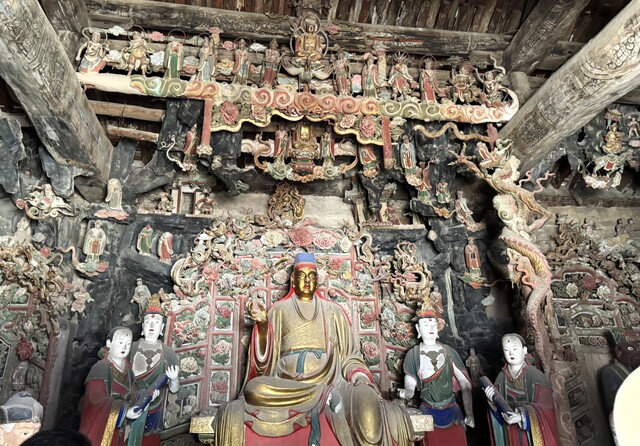
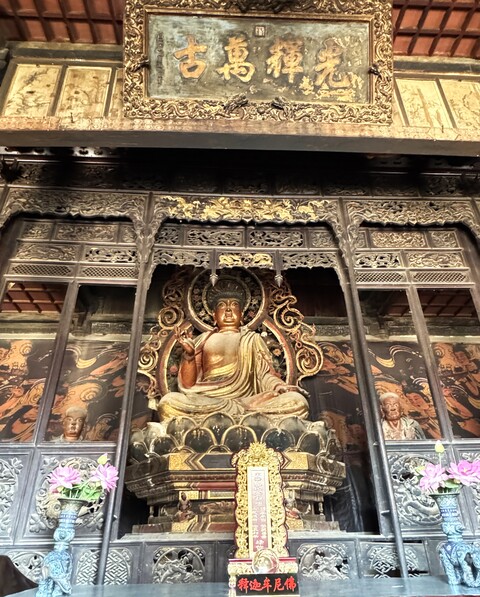
The most impressive structure is the Mahavira Hall, rebuilt during the Yuan Dynasty. Upon entering, a seated statue of Sakyamuni Buddha, about six meters tall, rests on a lotus pedestal, with a serene expression and gently lowered eyes.

The murals inside the hall are the highlight of the temple. Covering more than one hundred square meters, they depict stories from the Buddha’s life, the Huayan cosmology, and celestial scenes. Their vivid colors remain striking, earning them the title “Treasure House of Yuan Dynasty Murals.”

Hongtong Guangsheng Temple 洪洞广胜寺

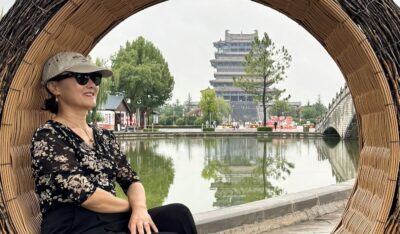
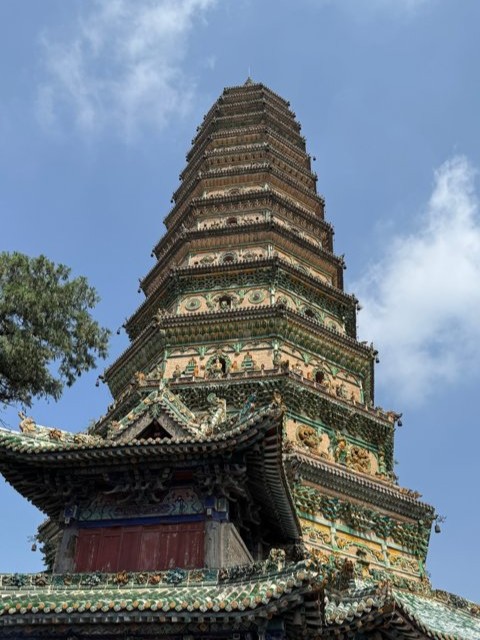
From the Upper Temple, we could see the towering Guangsheng Pagoda, built in 1347 during the Yuan Dynasty. The thirteen-story pagoda is decorated with glazed tiles, Buddha figures, and lotus motifs, all exquisitely crafted.

Hongtong Guangsheng Temple 洪洞广胜寺

We then visited the Lower Temple. The Mahavira Hall here was rebuilt during the Yuan Dynasty (1297) and is a typical example of Yuan-era wooden architecture. The original Yuan Dynasty murals inside the hall have largely been lost. The reasons for their destruction are complex: on one hand, prolonged exposure to humidity, flooding, and warfare caused gradual deterioration and peeling; on the other hand, in 1928 during the Republican period, in order to raise funds for temple repairs, monks and local elites sold the murals for 1,600 silver dollars. These works were subsequently dispersed overseas.

Today, fragments of the Guangsheng Temple Lower Temple murals can be found in institutions such as the Metropolitan Museum of Art, the University of Pennsylvania Museum of Archaeology and Anthropology, and the Nelson-Atkins Museum of Art. Some pieces are also held in museums in the United Kingdom and Japan.

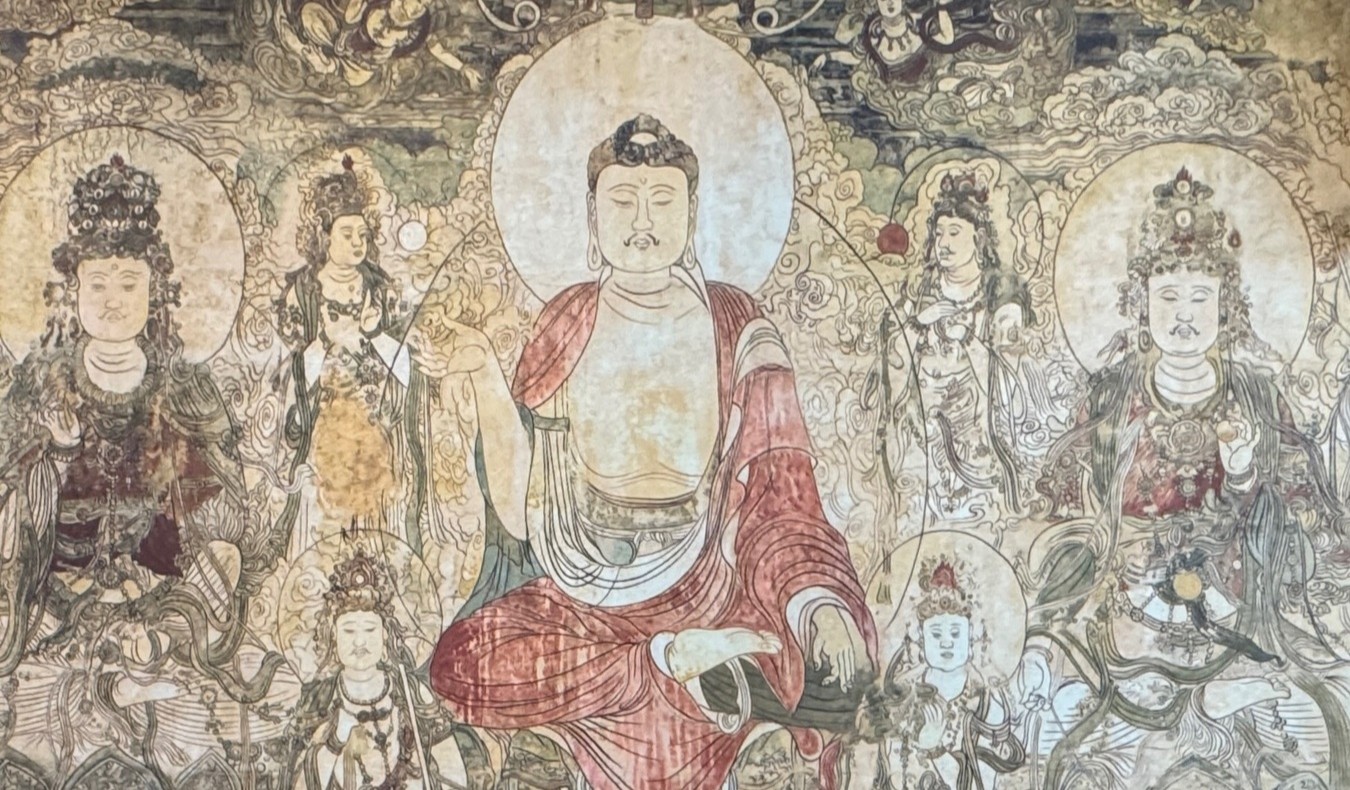
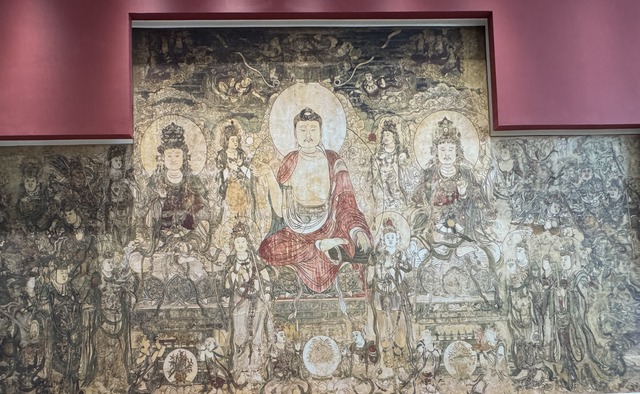
The original Assembly of “The Medicine Buddha” painting is now housed at the Metropolitan Museum of Art; what is displayed here is a reproduction from the Guangsheng Temple mural exhibition hall.

Buddha_of_Medicine Guangsheng Temple 药师佛佛会图 - 广胜寺壁画展览

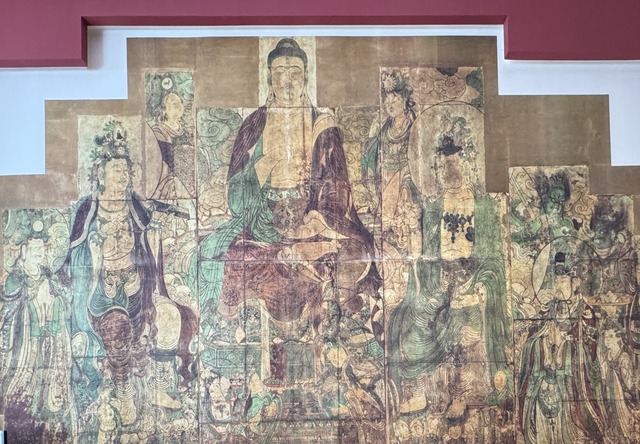
Similarly, the original Assembly of “The Blazing Light Buddha” is preserved at the University of Pennsylvania Museum of Archaeology and Anthropology, and the version shown here is also a reproduction.

Buddha-of-blazing-light 炽盛光佛佛会图 - 广胜寺壁画展览馆

Next, we visited the The Hongtong migration Tree.

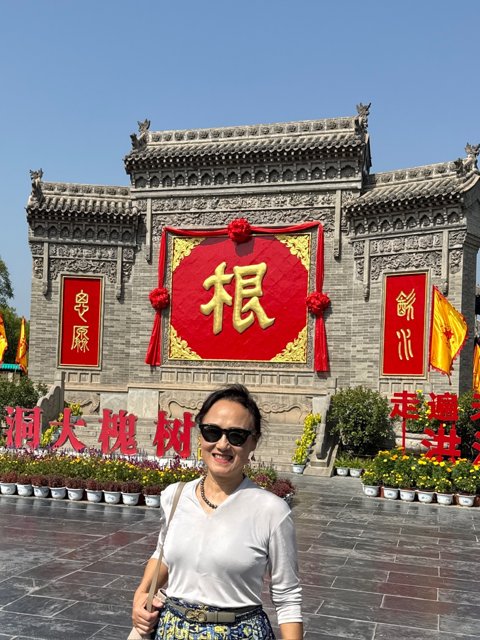
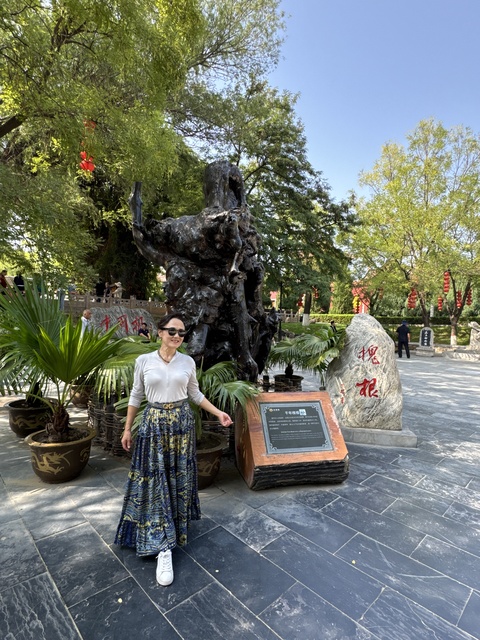
Hongtong Great Pagoda Tree 洪洞大槐树寻根园

During the late Yuan Dynasty, wars devastated northern China, while Shanxi remained relatively stable. In the early Ming Dynasty, Emperor Zhu Yuanzhang organized large-scale migrations, relocating people from Shanxi to repopulate other regions.

Hongtong Great Pagoda Tree 洪洞大槐树寻根园

Hongtong became the central gathering point for these migrants, and the Great Pagoda Tree turned into a symbolic place of origin. Though the original tree has long since perished, memorials and later generations of trees stand in its place.

Hongtong Great Pagoda Tree 洪洞大槐树寻根园

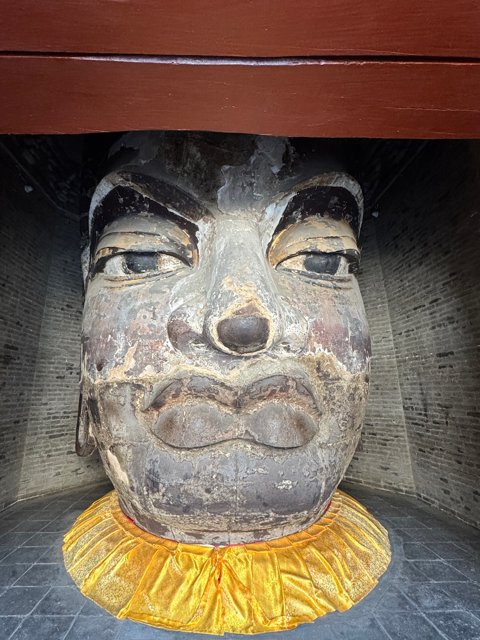
We then visited Tiefo Temple Dayunsi, a unique site featuring a square tower. Inside, a massive iron Buddha head occupies almost the entire ground floor. The sculpture’s full cheeks, prominent brow, long earlobes, and detailed curls give it a powerful presence.

Tiefo Temple Dayunsi 铁佛寺

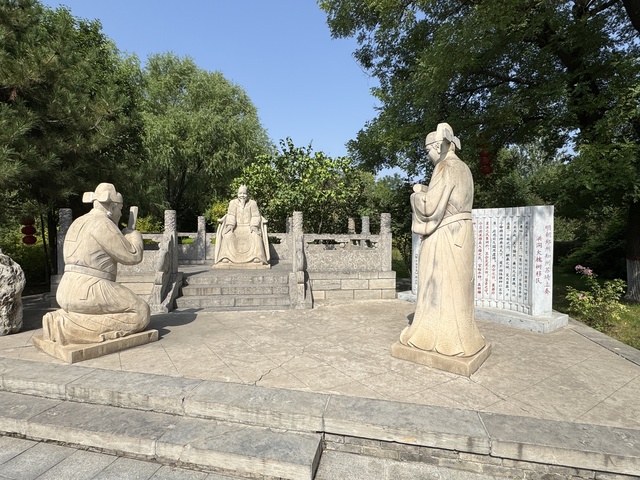
Finally, we arrived at Yao Temple Linfen, built on the site of Emperor Yao’s former palace and recorded as early as the Northern Wei Dynasty.

Yao Temple Linfen 尧庙

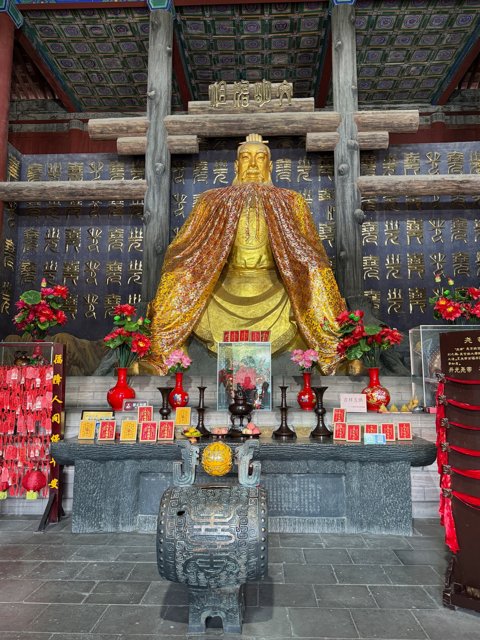
In Chengqing Hall, believed to be the site of Yao’s residence, a statue of Emperor Yao sits prominently. Clay sculptures depict his life and achievements, including governing through virtue, implementing abdication, controlling floods, and unifying tribes—qualities that made him an ideal ruler.

Yao Temple Linfen 尧庙

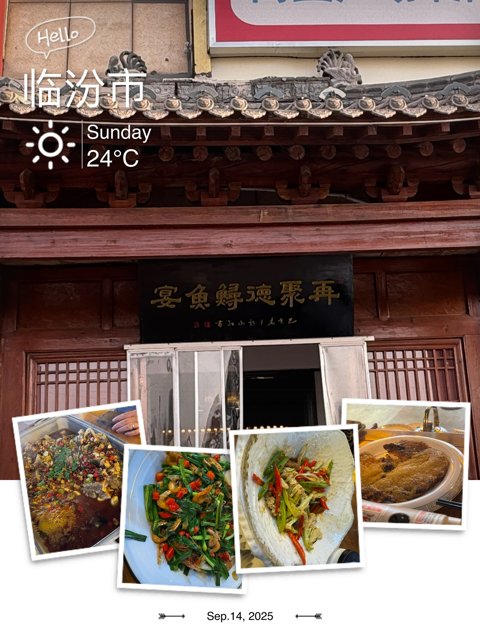
For dinner, we tried sturgeon. After finishing the fish, the staff added water and ingredients such as tofu, vermicelli, and vegetables, turning it into a hot pot. This creative dining experience was both fresh and enjoyable.

Dinner at Sturgeon Banquet 在鲟鱼宴晚餐

📍 Travel Logistics

🛏️ Accommodation: Novotel Linfen Mount Yun

🚗 Transportation: Rental Car

📥Planning a similar trip? Download your free itinerary below. 🧭

Leave a Reply