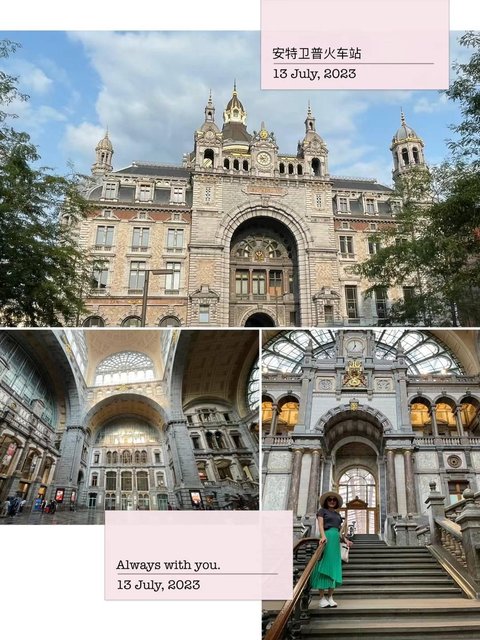
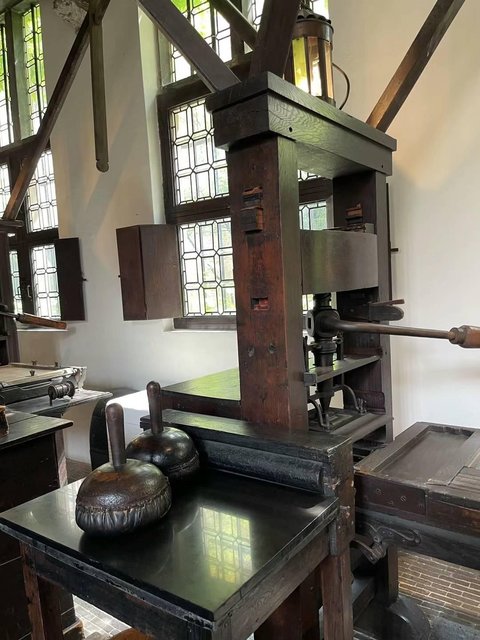
Day three in Antwerp blended grandeur and cultural depth. Breakfast at a small local café set a relaxed tone before taking the train to Antwerp, where the magnificent Antwerp Central Station immediately impressed us with its palace-like architecture. As the world’s diamond trading capital, the city’s historic prosperity felt evident. At the UNESCO-listed Plantin-Moretus Museum, we explored the preserved sixteenth-century printing house that once published Bibles and shaped European publishing history. The Cathedral of Our Lady showcased Rubens’ masterpieces, including the dramatic Raising of the Cross, where his signature diagonal composition stood out once again. After a long day of art and history, we chose a cozy Japanese noodle shop for dinner, a comforting return to Asian flavors. Though Rubens’ residence was closed for renovation, the youthful atmosphere of our Moxy hotel provided an energetic end to a culturally rich day.
This morning, we decided to have breakfast at a small café near the hotel. We picked this one at random—though it wasn’t big, it was quite busy. You place your order at the counter yourself. We had one savory waffle and one sweet waffle—just a simple breakfast to experience a bit of local life. It felt a bit like the classic Shanghai combo of dàbǐng, yóutiáo, and soy milk 😀
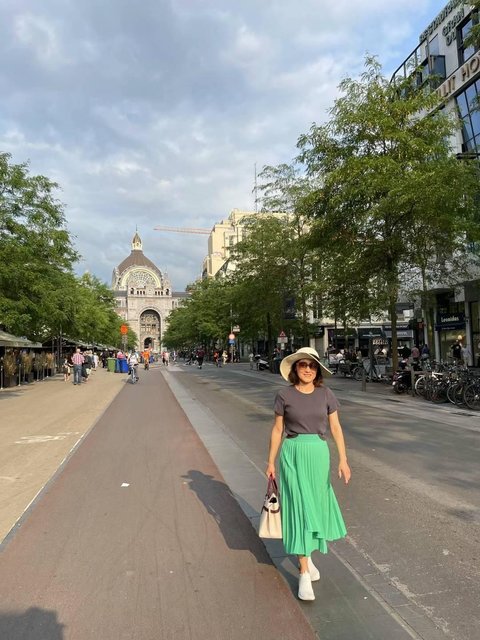
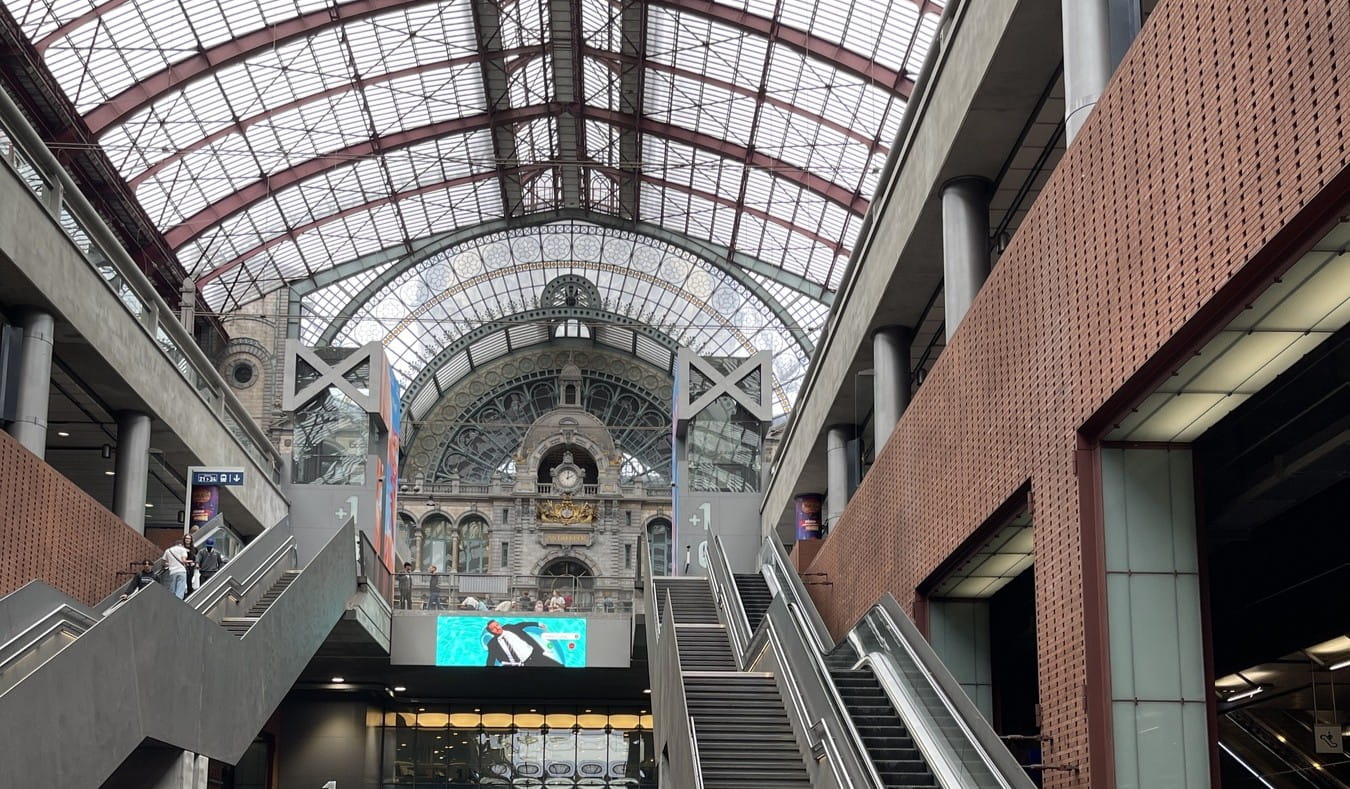
Taking the train to Antwerp is very convenient. Before going, I had heard that Antwerp Central Station is incredibly beautiful—ranked as the second most beautiful train station in the world. But seeing it in person was still breathtaking. At first glance, I thought it must have been a palace that was later converted into a station. After looking it up, I learned that it was actually built as a train station from the beginning.
Constructed in the late 19th to early 20th century, Antwerp must have been extraordinarily wealthy at the time to afford such a grand structure. It makes sense—Antwerp is the world’s diamond capital, with about 84% of rough diamonds passing through the city, placing it at the center of global diamond trade and quality control. Its economic status was certainly no small matter.
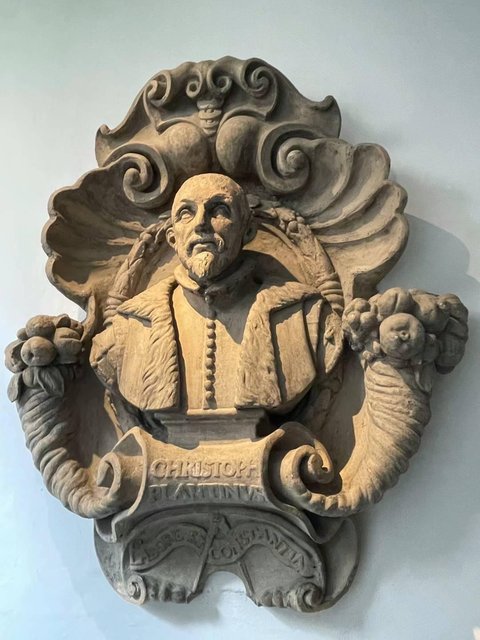
The Plantin-Moretus Museum has been listed as a UNESCO World Heritage Site since 2005. In the 16th century, Christophe Plantin founded this printing house and made his fortune printing Bibles. It is said that he left a will stating that the family estate must not be divided among heirs, which is why the printing house remained intact. The building itself served both as a residence and a workshop. Inside, there are portraits of family members, books they printed, original printing equipment, and many short videos demonstrating typesetting and printing techniques. It was quite educational. The children in the family were expected to work from a young age—proofreading, for example. Plantin would even decide their future professions based on their personalities. Later, his son-in-law Jan Moretus inherited and expanded the business, which is why the printing house carries both their names. In 1876, the descendants sold the building to the city government—perhaps the old business could no longer be sustained, and the family members had to move on. That is how it became the museum we visit today.
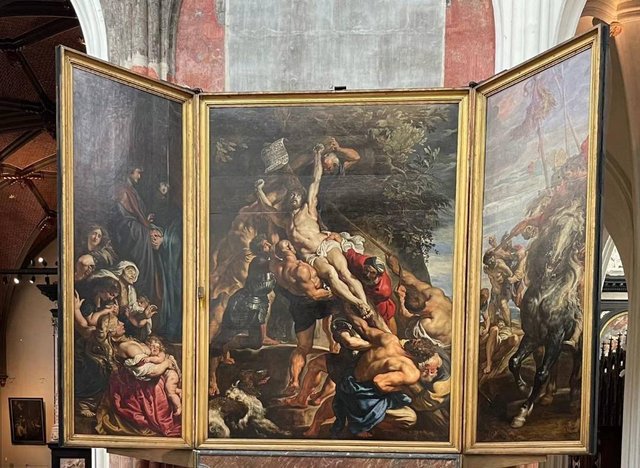
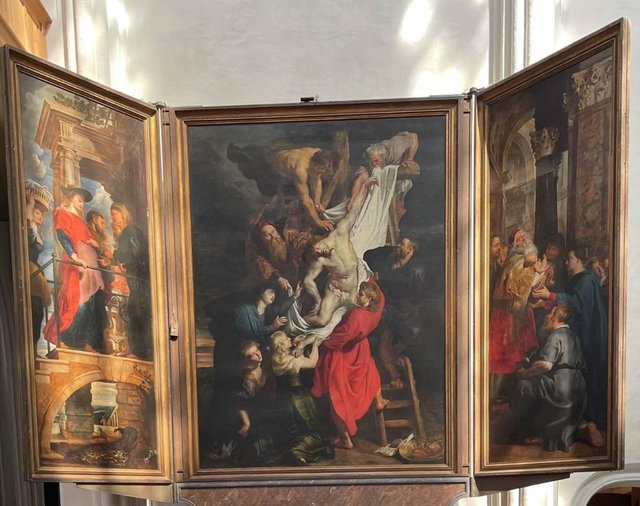
The world-famous painter Peter Paul Rubens spent his later years in Antwerp, leaving many traces of his presence. The most notable site is the Cathedral of Our Lady. The cathedral houses four of his paintings, attracting many visitors. Entry to the church itself is free, but there is a fee to view the artworks—it feels like a small museum inside the church. Among the collection, the most famous is Raising of the Cross, a massive triptych. The central panel depicts the dramatic moment when Christ’s cross is being lifted upright. Rubens placed the base of the cross in the lower right corner and the top in the upper left, creating a strong diagonal composition that draws focus to Christ’s body. There it was again—his signature diagonal. A few years later, he painted another masterpiece, The Descent from the Cross.
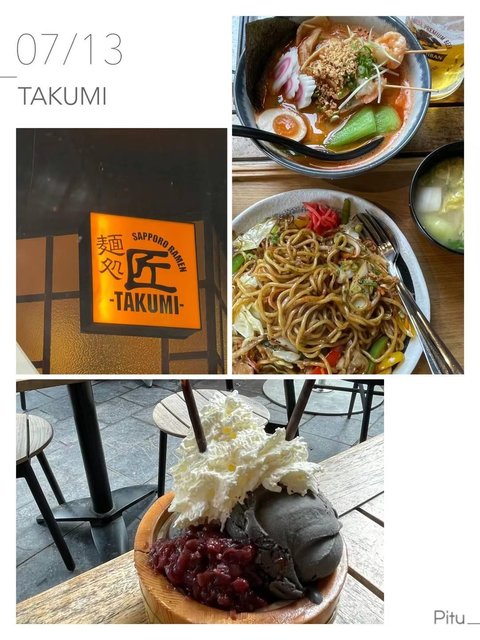
Outside the cathedral, the area is packed with restaurants. As we walked along, one Japanese noodle shop caught our eye. It had been a while since we’d had Asian food, so we decided on that for dinner. The noodles were excellent, and to finish, there was black sesame ice cream—delicious.
After dinner, we thought about visiting Rubens’ residence. After asking around several times, we finally found it. The entrance was empty, with the doors half open, but inside it sounded lively, almost like a banquet was taking place. We asked a staff member at the door and were told that the interior was under renovation and not open to the public. So we had to give up.
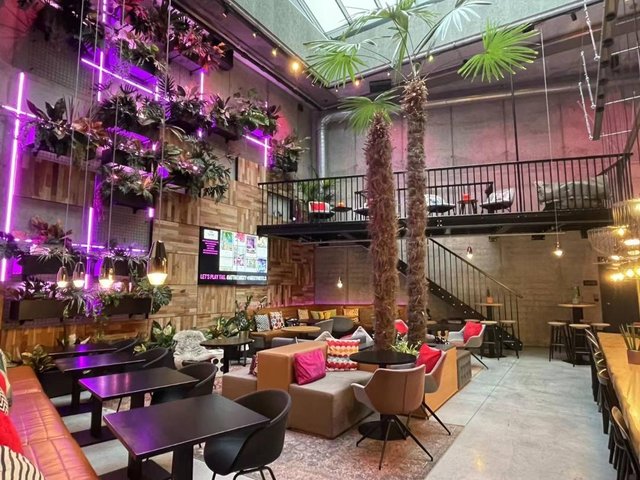
Back at the hotel, we took a few photos. The Moxy Antwerp, part of Marriott, targets a younger crowd. The rooms are simple and practical, while the public spaces are stylish and energetic—a perfect atmosphere after a long day of exploring.
We use cookies to ensure that we give you the best experience on our website. If you continue to use this site we will assume that you are happy with it.