This eight-day journey began in Athens, where ancient politics, philosophy, and civic ideals became tangible—from the rational beauty of the Parthenon to Socrates’ commitment to law and principle.
The trip then moved to Santorini. Traveling in winter slowed the pace. With fewer crowds and changing weather, Oia and Fira felt less like postcards and more like lived places.
Back on the mainland, Delphi revealed ancient views of fate, while Mycenae carried the journey back to the Bronze Age. It ended in Nafplion, where seaside light and everyday moments offered a gentle close.
A quieter journey, but a deeper one.
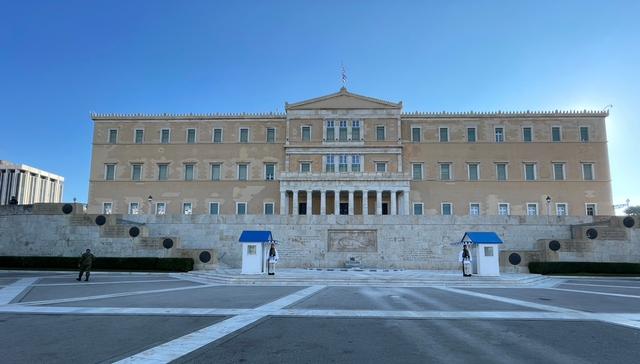
Greece Travel Journal Day 1: Athens
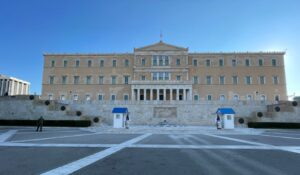
Before the trip, we did some quick background reading on ancient Greek history and philosophy, which greatly enriched the experience. Our journey began in Athens, with the day starting at Syntagma Square, where we witnessed the changing of the guards — a powerful symbol of modern Greek history. We then walked through the National Garden and visited the Temple of Olympian Zeus, followed by the well-preserved Hadrian’s Arch.
Strolling through the cobblestone streets of Plaka under mild winter sunshine was a highlight, before continuing on to the Roman Agora and the Tower of the Winds. In the afternoon, we explored the Ancient Agora and gained a sense of its former scale through the Stoa of Attalos. A visit to the Acropolis Museum provided essential context for the following day, while also raising questions about cultural heritage. The day concluded with a stop at the Prison of Socrates and dinner overlooking the illuminated Acropolis — a fitting end to a history-filled first day in Athens.
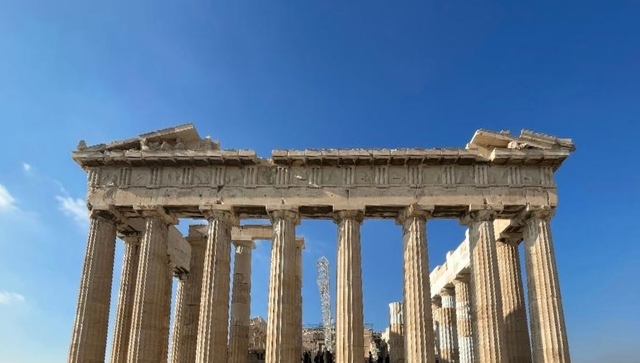
Greece Travel Journal Day 2: Athens
Day two centered on the Acropolis of Athens, the symbolic and strategic heart of the city since the Bronze Age. Ascending the hill reveals a sequence of monuments—from the Roman-era theater and the monumental gateway to temples dedicated to victory and protection—culminating in the Parthenon. Its refined proportions and subtle architectural adjustments reflect the height of ancient Greek rationality, artistry, and engineering.
Across from it stands the Erechtheion, distinguished by its iconic Caryatid porch, adding a human and sculptural contrast to the Acropolis. Walking along the walls offers sweeping views of modern Athens, where layers of history and contemporary life intersect.
In the afternoon, the journey continued at the National Archaeological Museum of Athens. Masterpieces such as the Mask of Agamemnon and the bronze horse and rider extend the story back to Mycenaean civilization, highlighting the dialogue between myth, epic poetry, and archaeology. The day concluded at the Panathenaic Stadium, a marble-built arena that bridges ancient athletic traditions with the modern Olympic legacy.
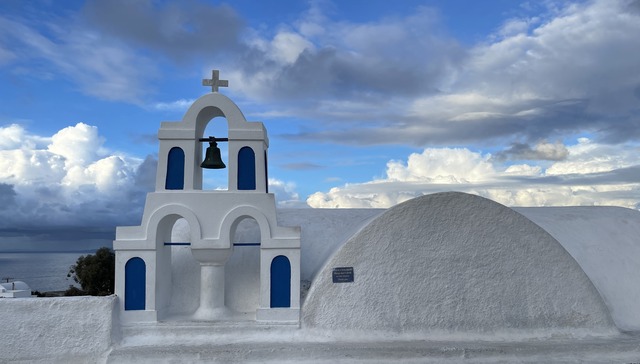
Greece Travel Journal Day 3: Santorini
On day three, we flew from Athens to Santorini, arriving at the iconic blue-and-white village of Oia. Traveling in the off-season, the island felt calm and unhurried, with winding stairways, layered white houses, and sweeping views of the Aegean Sea.
Planned excursions to the volcanic islands and local wineries were canceled due to strong winds and the quiet winter season, turning the visit into an unplanned lesson in slowing down. After the rain cleared, empty coastal paths, suspended doorways, and encounters with cats, dogs, and camels revealed a side of Santorini rarely seen in peak season.
Rainbows appeared repeatedly after passing showers, adding gentle color to the island’s serene atmosphere. With no rush and no fixed agenda, Santorini welcomed us into a slower, softer rhythm.
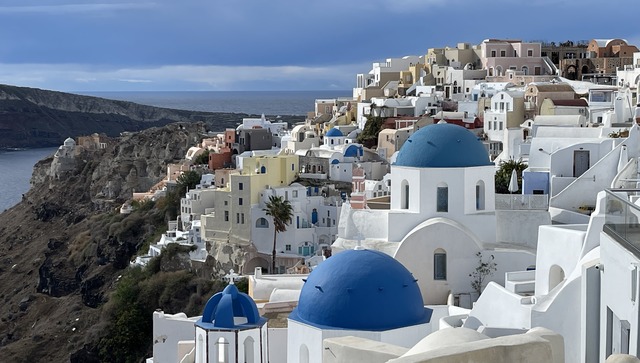
Greece Travel Journal Day 4: Oia
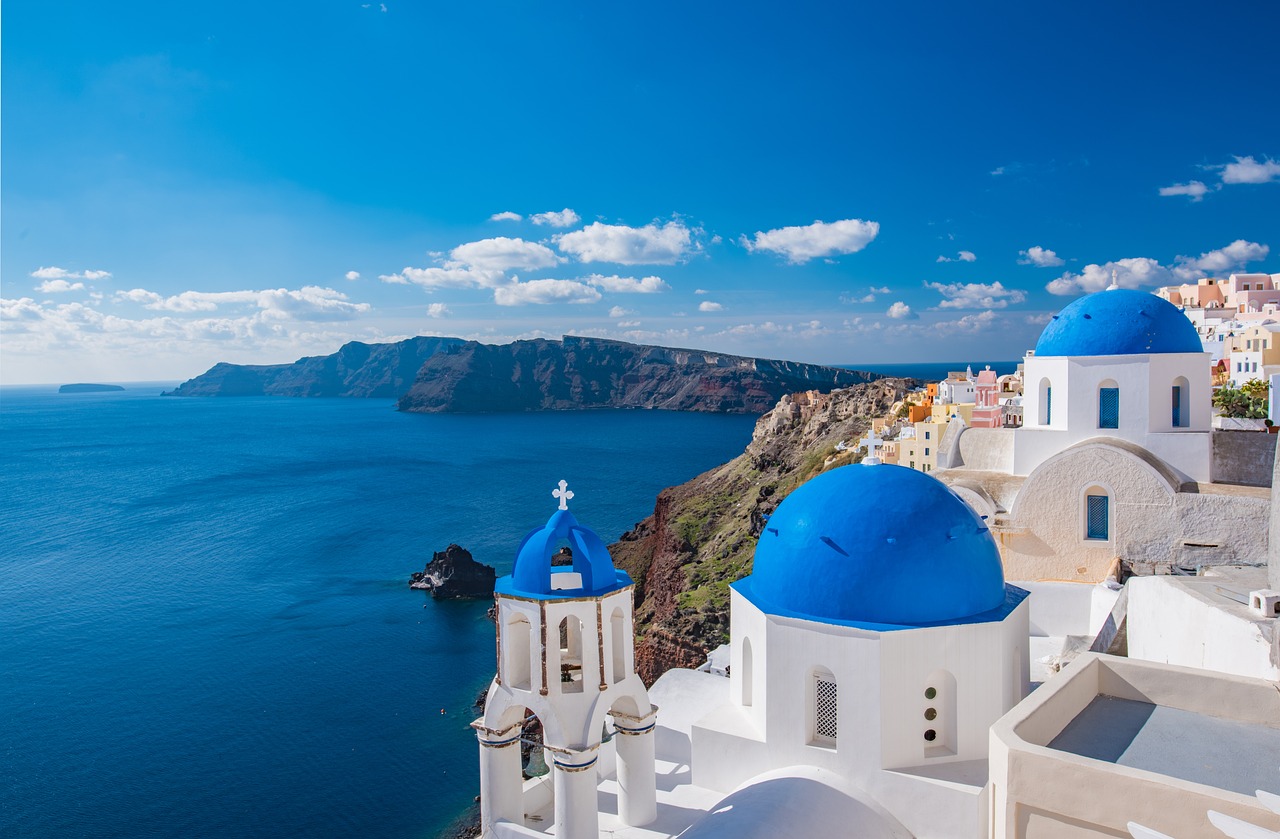
Day four was spent entirely in Oia. The highlight of the day was finally seeing the iconic blue-domed churches so often featured in magazines and postcards. After some searching, standing at the familiar viewpoint felt quietly thrilling. Traveling in the off-season meant no crowds, allowing us to photograph freely as the light, clouds, and moods shifted.
Continuing through the village, empty terraces, closed seaside cafés, and preserved windmills revealed a quieter side of Santorini beyond tourism. Strong winds, passing rain, and recurring rainbows turned simple walks into moments of discovery.
As evening fell, we waited once again for sunset. Though thick clouds hid the classic image of the sun sinking into the Aegean Sea, the filtered light, glowing white rooftops, and scattered streetlights created a subdued and haunting beauty. In Oia, even an imperfect sunset leaves a lasting impression.
Greece Travel Journal Day 5: FIRA
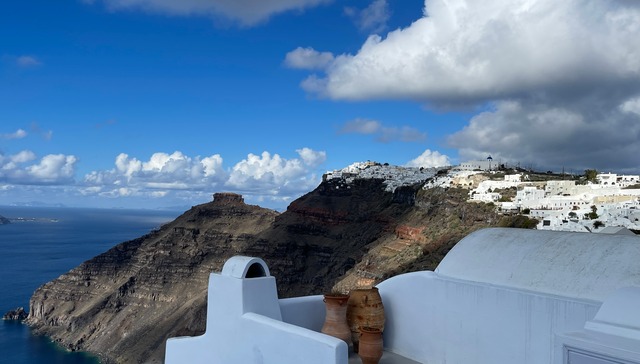
Day five was spent exploring Fira. Despite the island’s quiet off-season pace, flexible transportation and unexpectedly warm service made the journey feel personal and unhurried. Built along the cliffs, Fira overlooks the old port below, once the island’s main trading hub, connected by steep paths and cable cars.
After an unexpected slowdown, the afternoon unfolded as a relaxed drive around the island. The highlight was Red Beach, where oxidized volcanic rock gives the cliffs and sand their striking red color—a rare sight shaped by the island’s volcanic past. A smaller black sand beach nearby offered another glimpse into Santorini’s geological origins.
Though the day did not go exactly as planned, it became memorable in its own way. Between Fira’s layered townscape and the island’s dramatic volcanic terrain, this was a day defined less by perfection and more by resilience and discovery.
Greece Travel Journal Day 6: Athens
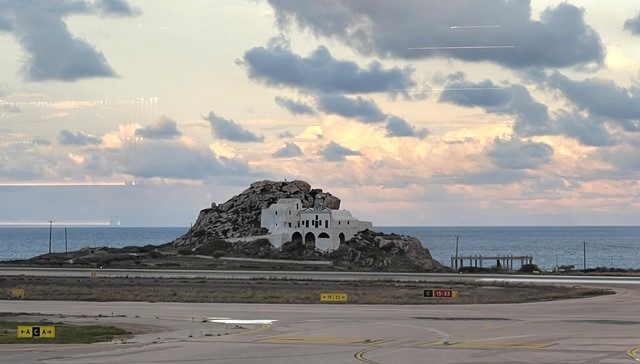
Day six marked our final moments in Fira, with an afternoon flight back to Athens. With no guests arriving after us, the hotel kindly allowed a late checkout, giving the morning an unhurried pace. We planned a seaside lunch near the airport, eventually finding an open restaurant right by the beach.
Enjoying a relaxed meal by the sea felt like a fitting farewell to Santorini. Throughout the island, especially in the off-season, everyday interactions felt gentle and unforced—even tipping was treated as a polite option rather than an expectation. Without any formal goodbyes, the island quietly slipped into memory.
Greece Travel Journal Day 7: Delphi
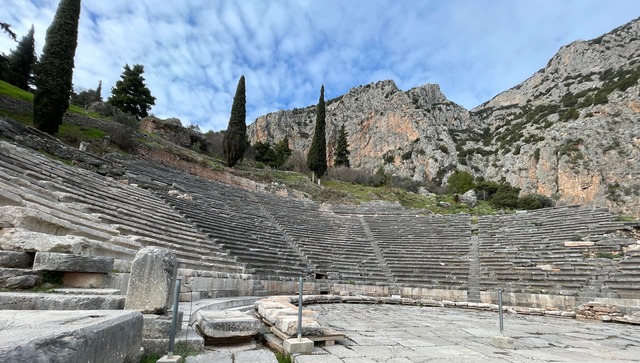
Day seven was dedicated to Delphi, one of the most sacred sites in ancient Greece and home to the legendary Oracle of Delphi. Believed to be the center of the world, Delphi once drew visitors from across the Greek world seeking guidance from the priestess Pythia, whose cryptic prophecies shaped both personal decisions and political history.
Although only a few columns of the Temple of Apollo remain, the dramatic setting still conveys its former spiritual authority. The nearby ancient theater, better preserved, hints at the close connection between religion and civic life. At the Delphi Archaeological Museum, the Sphinx of Naxos stands out, illustrating how a single mythological figure carried very different meanings across cultures.
In the afternoon, we visited Arachova, a charming mountain town often called “Little Switzerland.” Bathed in sunlight, its narrow streets, shop windows, and slow pace offered a gentle contrast to the solemn atmosphere of Delphi—ending the day with a sense of simple, everyday happiness.
Greece Travel Journal Day 8: Mycenae
Day eight began at the Corinth Canal, an ambitious engineering project linking the Aegean and Ionian seas, now primarily a scenic landmark.
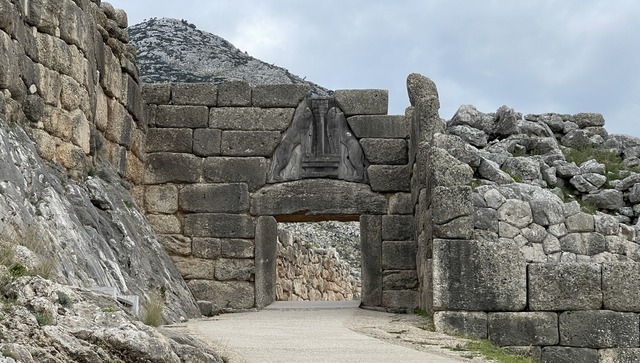
The journey continued to Mycenae, the heart of Mycenaean civilization and a key setting of Greek epic tradition. The Lion Gate, the site’s most iconic feature, remains the largest surviving prehistoric relief in the Aegean world.
In the afternoon, we arrived in Nafplion, a former capital of modern Greece. With its seaside setting, gentle winter light, and small everyday encounters, the city offered a calm and human ending to a journey shaped by myth, archaeology, and history.