Middle East Travel Journal Day 20: Madinah Impressions
Highlights of the Day
Today we drove to the holy city of Madinah, one of the most important places in Islam. We visited religious landmarks such as Masjid Dhul Hulayfah (the Miqat mosque) and Quba Mosqu. As non-Muslims, we couldn’t enter most religious sites, but the journey was still eye-opening and filled with rich observations.
We drove four hours to reach Madinah, a city of great religious importance in Islam. The Prophet Muhammad first began spreading Islam in his hometown of Mecca. As his followers grew, opposition from the ruling elites intensified. Eventually, he led many of his followers on foot to Madinah, over 400 kilometers away. There, the Muslim community grew even stronger, making Madinah the second holiest city in Islam.
There are many important religious sites here, but non-Muslims are not permitted to enter. We only stayed one night and planned to leave the next morning.
Roadside Signs: "Haram Area" Boundaries
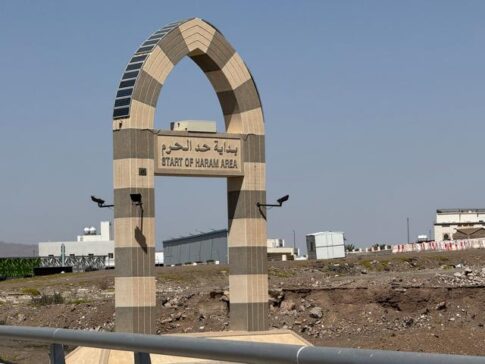
As we approached Madinah, we noticed unusual signs along the highway. One read “Start of Haram Area” and another “End of Haram Area.” Curious, we slowed down to take a photo when the signs appeared again. A quick online search revealed their meaning: “Entering the Sacred Zone” and “Leaving the Sacred Zone.” In Mecca, non-Muslims are not allowed to enter this area at all. In Madinah, non-Muslims may enter the city but are not allowed near Al-Masjid an-Nabawi (the Prophet’s Mosque) and its surrounding sacred precincts.
Masjid Dhul Hulayfah – Beginning the Pilgrimage
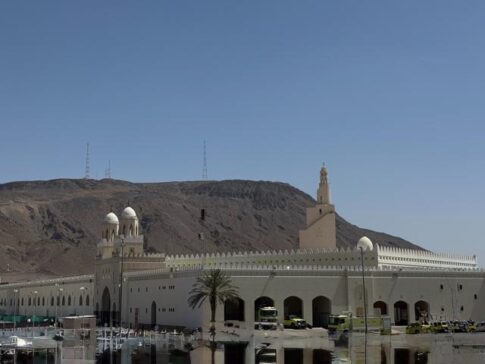
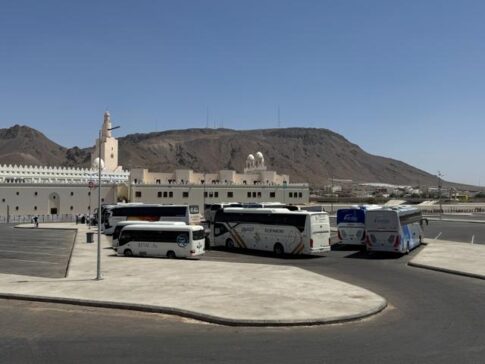
Our first stop was Dhul Hulayfah, the Miqat station. There we saw Masjid Dhul Hulayfah, a mosque with deep spiritual significance. This site was personally designated by the Prophet Muhammad as the starting point for pilgrims traveling from Madinah to Mecca for Hajj or Umrah. All pilgrims departing from Madinah must enter the state of Ihram here and change into the special white garments known as Ihram. The Prophet himself is said to have done so at this exact location.
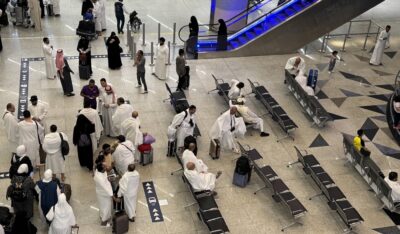
The Ihram is the same two-piece white cloth outfit we saw worn by travelers at Jeddah Airport.
The mosque is vast. We stood at a distance and observed crowds of pilgrims dressed in white robes exiting the mosque and boarding large buses. The scene was solemn and awe-inspiring.
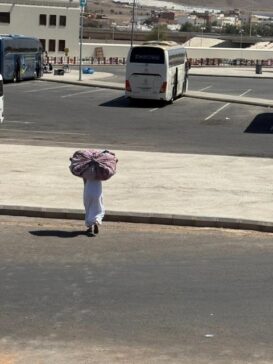
At the same time, we noticed many workers carrying large bundles on their backs or heads, crossing the road toward the buses. Some were elderly, while others looked like teenagers. We weren’t sure if they were selling food and supplies to the pilgrims or helping transport goods and luggage. After doing some research, we learned that such mobile vendors and temporary workers are quite common during pilgrimage seasons. They form part of the vast logistical network that supports the pilgrimage.
Attempting to Approach the Prophet's Mosque
Our next goal was to visit the Prophet’s Mosque, the second most important mosque in Islam. The Prophet Muhammad is buried in this city. However, non-Muslims are not allowed inside.
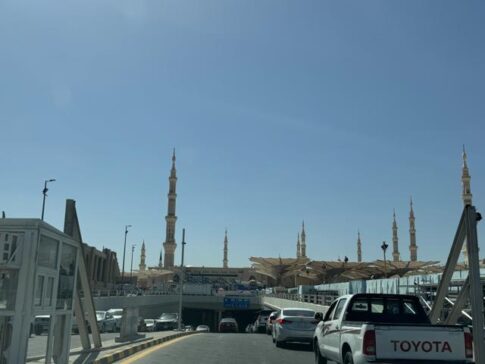
What we didn’t know was that not only are we prohibited from entering, but we can’t even get close. We followed Google Maps and tried different routes, but were repeatedly redirected by police officers. One memorable moment was in a large underground tunnel where traffic noticeably slowed. At a fork in the road, officers actively directed us toward the exit. It made us wonder whether vehicles on the restricted route had special permits on their windshields.
I recall one of my Muslim coworkers mentioning that they need special visas to enter Mecca.
Under normal conditions, it might be possible to drive near the mosque, but during Ramadan, with the influx of pilgrims, access becomes heavily restricted.
The closest we got to the mosque was the spot just before entering that tunnel—where we managed to take a photo.
Quba Mosque – The First Mosque in Islam
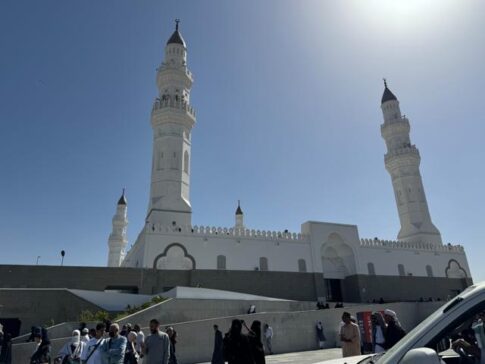
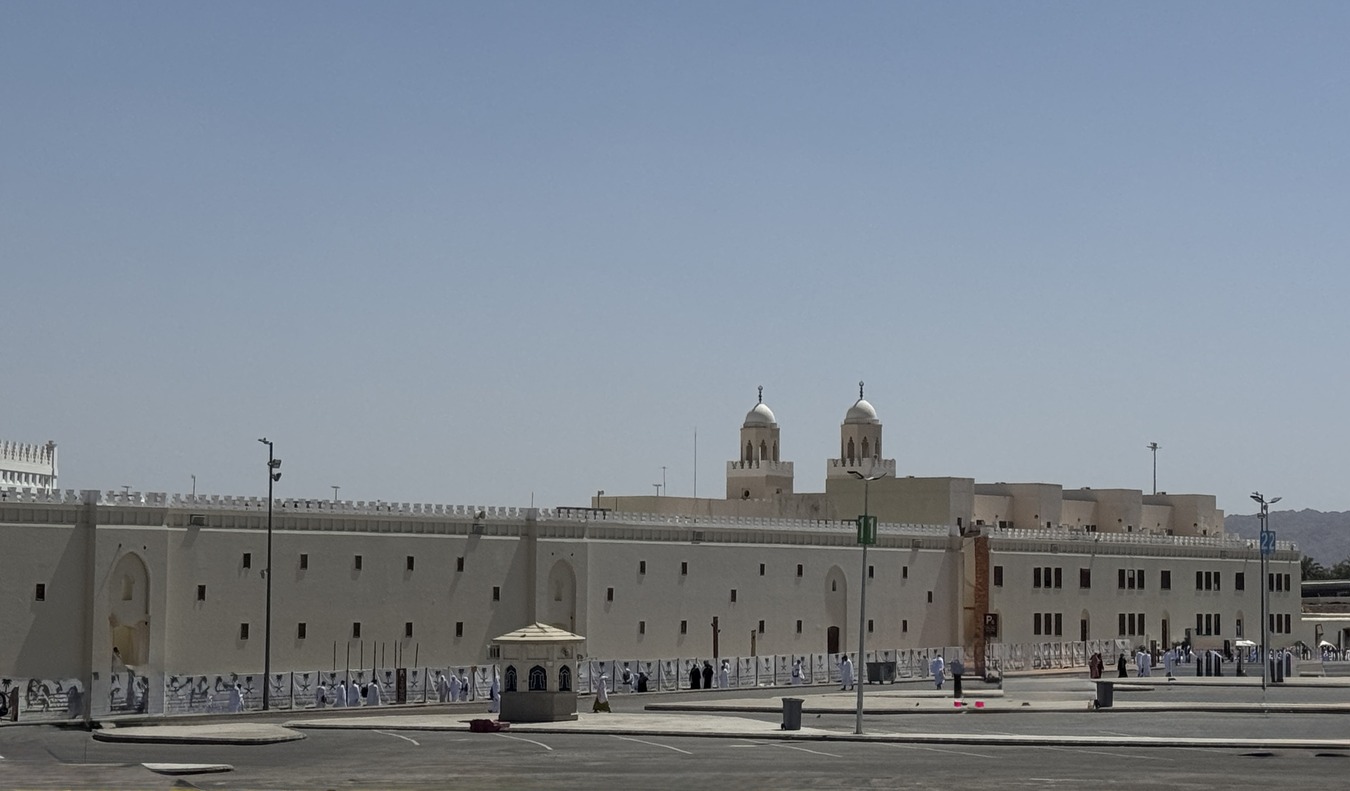
Our next stop was Quba Mosque, believed to be the very first mosque in the world, founded by the Prophet Muhammad himself. It is the resting place of many important Islamic figures, including relatives of the Prophet and early companions. Non-Muslims are not allowed inside. The area was packed with people, but we were able to drive past and snap a photo from across the street.
Mount Uhud – A Lesson in Obedience
Our final destination for the day was Mount Uhud, the site of a famous historical battle. The Battle of Uhud was one where Muslims were initially poised for victory but suffered a devastating defeat due to disobedience and lack of discipline. This battle became a pivotal moment in Islamic history, reinforcing the importance of following the Prophet’s commands and staying united in faith.
Unfortunately, halfway to the site, the paved road ended and turned into rough gravel. We didn’t want to risk damaging the tires, so we turned back.
Dinner and Reflections in Madinah
As expected, dinner at the hotel was buffet-style. During Ramadan, à la carte ordering is rarely available. The food was surprisingly good, with freshly cooked hot dishes suited to Chinese tastes.
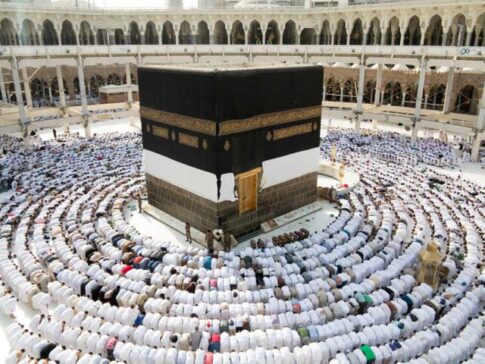
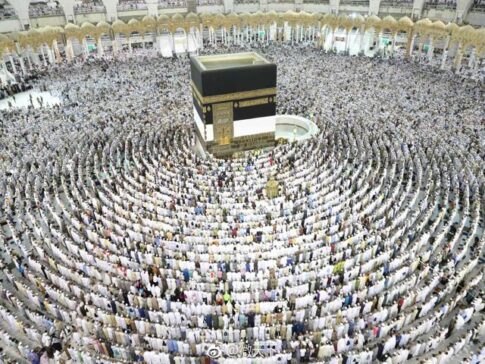
I’d often heard that the pilgrimage in Mecca draws massive crowds, but seeing the sheer scale on TV tonight—it was beyond breathtaking.
Tomorrow we will leave Madinah. Overall, the religious atmosphere here is very strong. People are humble and sincere, and compared to the other cities we’ve visited so far, Madinah feels noticeably less developed.
🌍 What’s Next?
On Day 21, we will leave Madinah and head to the captivating landscapes of AlUla. From strolling through a thousand-year-old mudbrick town, to admiring breathtaking canyon views at Harrat Viewpoint, and witnessing the magical reflections of the Maraya Concert Hall—every moment promises to be unforgettable.
If you’d like to learn more about the itinerary, please click the button below to download a free copy of the customizable itinerary.
We use cookies to ensure that we give you the best experience on our website. If you continue to use this site we will assume that you are happy with it.