Highlights of the Day
Today in Jabal Umm Sinman , we walked through 12,000 years of history — from prehistoric rock carvings to Ramadan reflections. We experienced warm hospitality, marveled at ancient human expression, and caught glimpses of cultural nuance that reminded us how different — and how connected — we all are.
Accommodation: Millennium Hail Hotel
Transportation: Rental Car
Jabal Umm Sinman: From Desert to Prehistoric Lakeshore
Today we visited one of Saudi Arabia’s most significant prehistoric heritage sites — located in the Jabal Umm Sinman mountain range in the Hail region. Since it was Friday, the site only opened at 1:00 PM. We took the opportunity to sleep in, rest a bit, and then drove an hour to get there.
It’s hard to believe that this now arid desert region was once the edge of a lake — a lush green oasis. According to archaeologists, based on rock art and stratigraphic studies, this area was once inhabited by tribes who lived by hunting and herding.
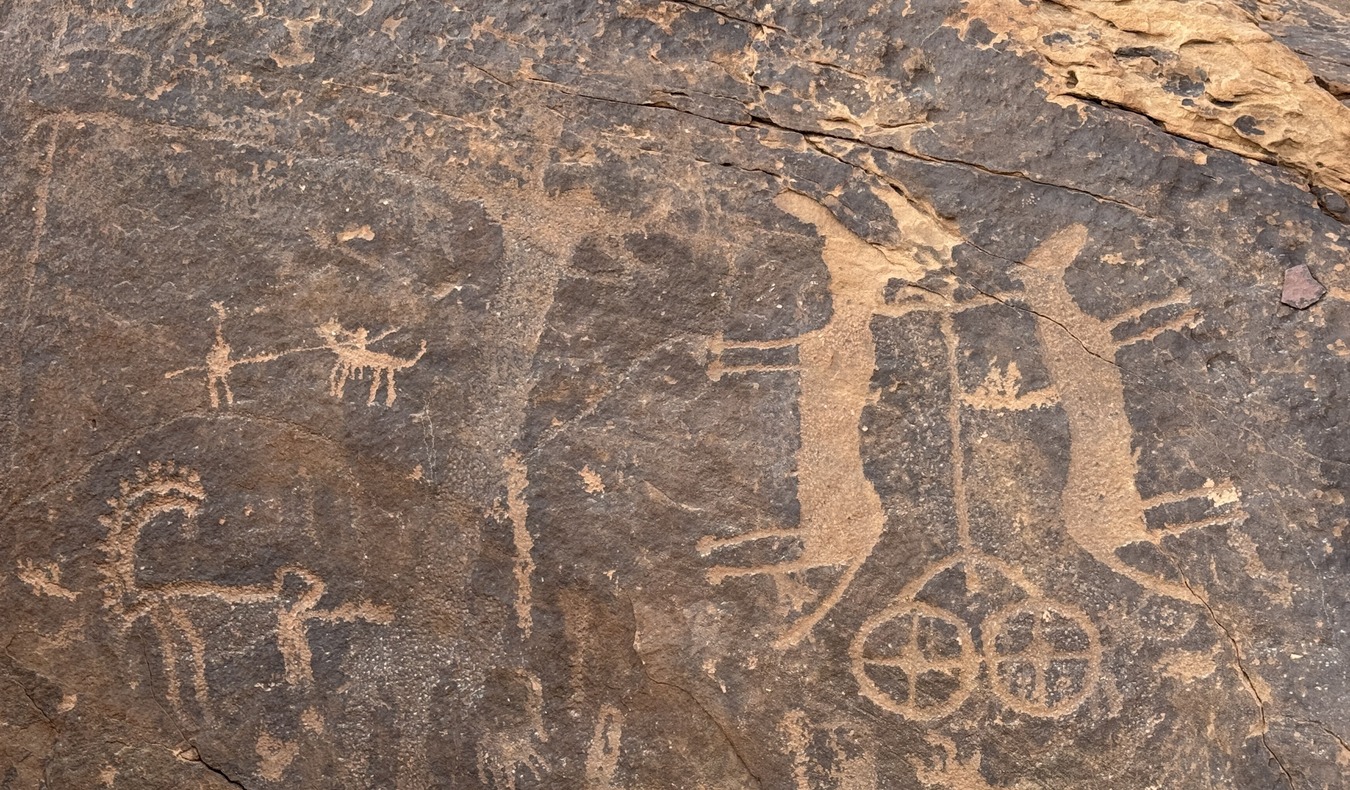
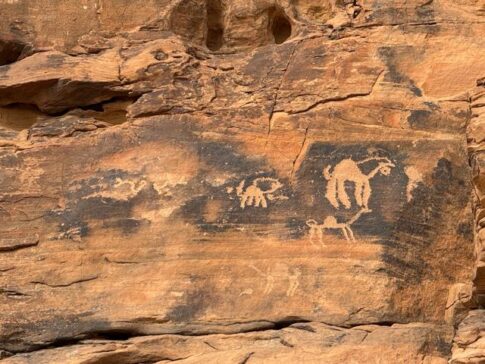
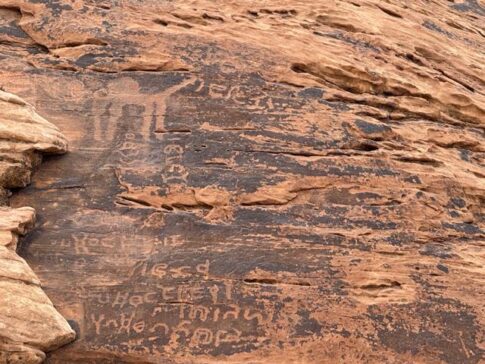
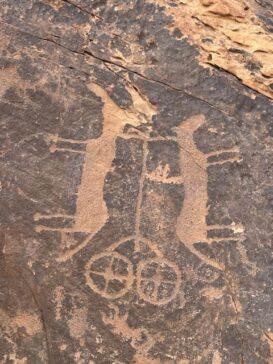
The site is now recognized by UNESCO as part of the World Cultural Heritage. It contains a large number of rock carvings, featuring human figures, animals (like camels, cows, horses), as well as hunting and combat scenes.
Rock Art Stories: Kings, Cattle, and Chariots
I couldn’t help but recall two other prehistoric sites I had visited: one in France, where the original cave was sealed and replaced by a full-scale replica for preservation; and another in Andalusia, Spain, where a group of boys accidentally discovered a cave with stalactites, paintings, and ancient inscriptions. That site was also closed off to protect it, and visitors experience it through a 3D immersive projection.
Hail was entirely different. Here, the rock art is simply etched into the mountains — raw, real, and right before your eyes. That alone was exciting.
Visitor Center and Guided Highlights
The visitor center staff welcomed us warmly. We watched several short films detailing the region’s history, current development, and conservation plans. Then our guide introduced us to some of the site’s must-see carvings:
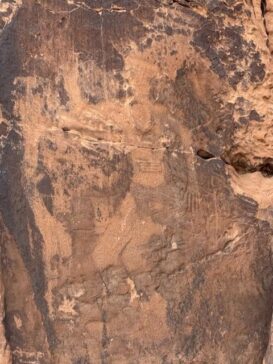
- The “King” Figure (approx. 8,000 years old): A prominent male figure with distinctive head and waist adornments. Scholars believe he could have been a tribal leader or revered figure.
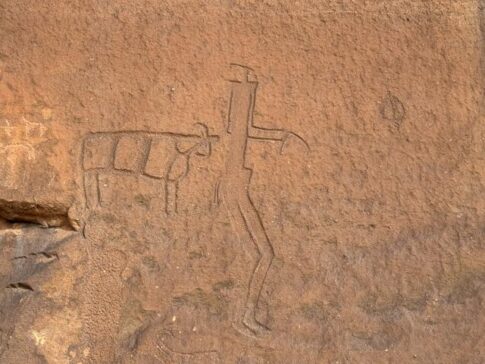
- The “Human and Cow” Scene (approx. 12,000 years old): On the left, a clearly defined cow; on the right, a highly abstract human with long bent legs and extended arms, seemingly leading or guiding the cow.
- The “Chariot” Rock Art (2000–1000 BCE): A pair of horses pulling a two-wheeled cart. This piece challenged earlier beliefs about when horses were introduced to the region.
After the presentation, the staff invited us to record a short feedback video for their internal use. I genuinely praised the visitor center — it was the most well-organized site I had visited in the Middle East — and the guide was thrilled to hear it.
Rock Art in the Wild: The Thrill of Discovery
The rock art is spread across two mountain areas. The first mountain contained many animal carvings. It was incredible to view these ancient works up close.
At the second mountain, we spotted a tall staircase and assumed the key rock carvings would be at the top. But no matter how we looked, we couldn’t find them. Recalling that the guide had mentioned another spot behind the mountain, we circled around, climbed another staircase, and finally found the “Human and Cow” rock art.
Following that logic, we returned to the first mountain, determined not to give up. After searching carefully, we found the “King” carving in a surprisingly hidden corner — far fainter than the version shown in the visitor center photo.
The final carving was located on a separate hill, a five-minute drive away. When we returned to the parking lot, the staff member was waiting at the door to explain the route and said her colleague would wait for us at the final location.
After viewing the last piece, we realized they had stayed past closing time (5:00 PM) just for us. I was deeply impressed by their dedication — and bowed respectfully to express my thanks.
Ramadan Mealtime Observations
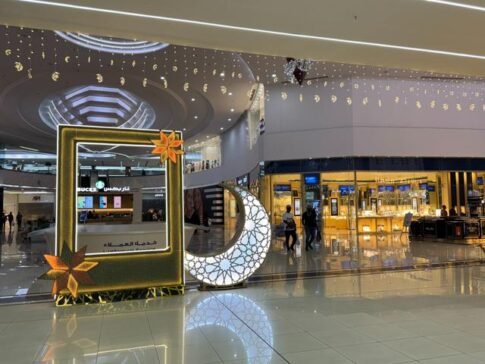
We were determined not to eat at the hotel again tonight, so we headed to the city’s largest shopping mall. The food court was lively and fully open. We stopped at a stall labeled “Guangzhou” and asked if we could eat in the mall after sunset. The vendor seemed unsure due to the language barrier and told us no.
At a nearby juice stand, the staff spoke better English and told us, “You’re not Muslim, so you can eat now.” Still, we decided to observe the local practice.
Sure enough, we saw many Muslim families buying food and then waiting quietly. About ten minutes later, the loudspeaker broadcast the prayer call, and everyone began to eat. We followed suit.
Faith and Everyday Life: Eating with Niqab
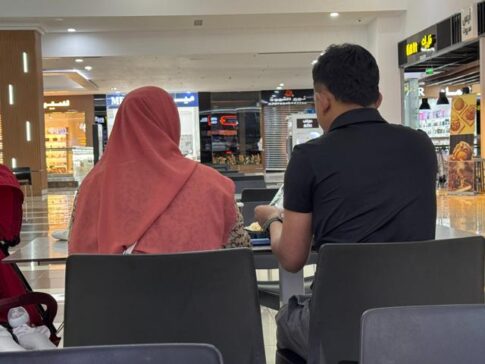
We were especially struck by how some women wearing niqab (face coverings that expose only the eyes) ate their meals — gently lifting the fabric with one hand for each bite, then letting it fall again. Though I may have seen this in movies, witnessing it in person felt both intimate and respectfully different.
Unexpected Curiosity: A Glimpse of the Familiar
At the mall and even earlier when arriving, we noticed young children staring at us — curious, smiling, and even giggling. One little boy stuck his head out of a passing car, eyes fixed on us the entire time. Maybe East Asians like us are still relatively rare here. It reminded me of how, during China’s early reform years, people reacted to seeing foreigners for the first time.
A City of Size, Systems, and Legacy
Before coming, I thought Hail would be a small town like AlUla or Madinah. But it turned out to be a large, developed city, with excellent roads and infrastructure. It was also here that we first saw a large-scale agricultural irrigation system — the only one we had encountered throughout the Middle East.
Later, I learned that Hail had once been the capital of an independent kingdom — ruled by the Al Rashid family, known as the Emirate of Jabal Shammar. It was eventually annexed by the Al Saud family in the early 20th century. No wonder the city exuded an aura of historic significance and quiet strength.
🌍 What’s Next?
On Day 26, we take a long desert drive to Riyadh, the capital of Saudi Arabia. Along the way, the vast emptiness gives space for quiet reflection—on what we’ve seen, what surprised us, and how modern Saudi life reveals itself in both subtle details and bold contrasts. From prayer signs in hotel rooms to the evolving roles of women, these aren’t new discoveries—just clearer ones.
If you’d like to learn more about the itinerary, please click the button below to download a free copy of the customizable itinerary.