This Middle East travel guide takes you on a fascinating 30-day journey through vibrant cities and treasured historical sites. We start in Dubai, marveling at the wonders of modern architecture, followed by Abu Dhabi, where we immerse ourselves in its rich cultural heritage. In Muscat, we experience the deep-rooted traditions of Oman, while Doha offers a perfect blend of contemporary flair and cultural legacy.
Next, we head to Jeddah to admire the natural beauty along the Red Sea coast, then continue to Medina for a soulful and spiritual experience. AlUla and Hail present breathtaking desert landscapes and ancient rock art that spans millennia, offering us a glimpse into the region’s timeless civilizations. Finally, in Riyadh, we witness the dynamic fusion of tradition and modern energy.
Each city reveals the unique charm and character of this remarkable land.
Middle East Travel Journal Day 0: Arriving Dubai
Arriving in the Middle East during Ramadan felt both unexpected and meaningful. Before the trip, I had studied Islam, local customs, and dress codes—but somehow forgot to check the calendar. Landing in Dubai during Ramadan turned out to be a once-in-a-lifetime experience.
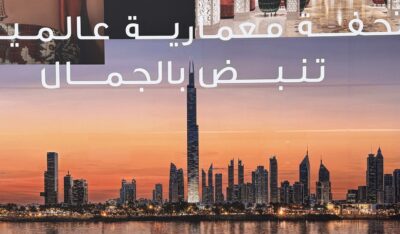
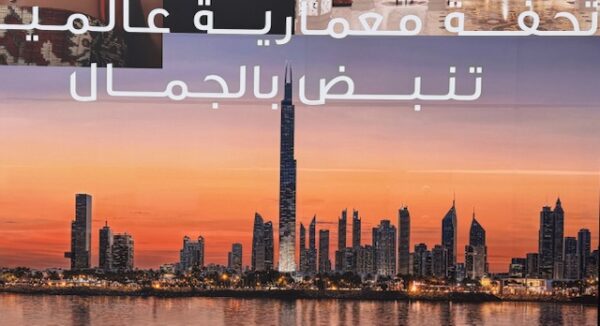
After a 13-hour nonstop flight from Newark, we arrived at Dubai International Airport, where modern design, scale, and efficiency immediately stood out. Immigration looked highly automated, yet our first entry required a longer, manual process involving several checkpoints. Stepping out of customs, a glowing image of Dubai’s skyline at dusk made the moment feel surreal—we had truly arrived.
What struck me most were the contrasts: conservative cultural expectations alongside bold fashion ads, and alcohol-free traditions coexisting with prominent duty-free liquor displays. Even a luxuriously designed Starbucks felt different here. Renting a car introduced our first logistical surprise, but a small act of kindness—being driven between terminals by airport staff—set the tone for a warm and memorable first impression of Dubai.
Middle East Travel Journal Day 1: Dubai
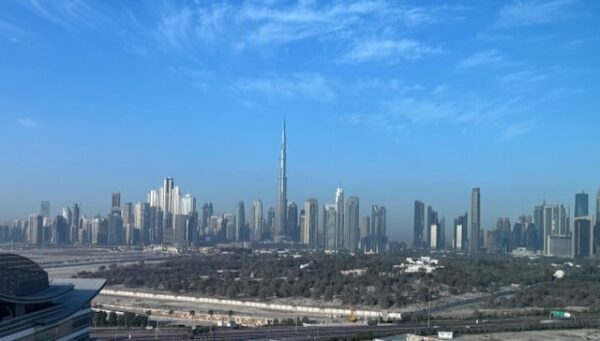
Waking up to a clear view of the Burj Khalifa was the perfect way to start our first full day in Dubai. Bathed in soft morning light, the world’s tallest building stood quietly above the city, a reminder of how extraordinary this desert metropolis truly is. After a generous hotel breakfast with international and Middle Eastern touches, we headed to Dragon Mart, Dubai’s largest Chinese wholesale market. With endless rows of shops selling everything from lighting to home décor, almost all sourced from China, it was a striking display of global trade in action.
Ramadan turned out to be less restrictive than expected. To our surprise, several eateries were open during the day, and we even enjoyed our first public ice cream without issue. Lunch at Din Tai Fung in Dubai Mall brought familiar flavors in an unfamiliar setting. The afternoon unfolded at a relaxed pace with coffee at Armani/Caffè, wandering through the vast mall, and admiring the Burj Khalifa from every angle. The day ended perfectly with a sunset visit to the observation deck and an unforgettable Dubai Fountain show beneath the glowing skyline.

Middle East Travel Journal Day 2: Dubai
A desert safari is an experience not to be missed when traveling in the Middle East. We booked the tour through our hotel, and a seven-seat SUV picked us up early in the morning. Before entering the desert, the driver stopped to deflate the tires—a necessary step to improve stability on soft sand, and something we learned for the first time.
The highlight was sand bashing, where the vehicle sped across steep dunes, tilting dramatically from side to side. Sitting in the last row made the ride especially intense, and we eventually asked the driver to slow down for safety. At the desert camp, we enjoyed a short camel ride, followed by an off-road dune drive in a convoy, which felt thrilling yet more controlled.
Other activities included sandboarding, though the gentle slope made it less exciting than expected. What left the deepest impression was the staff working under the scorching sun while observing Ramadan, refusing water despite the heat. It was a half-day journey—physically exhausting, yet deeply memorable.
Middle East Travel Journal Day 3: Dubai
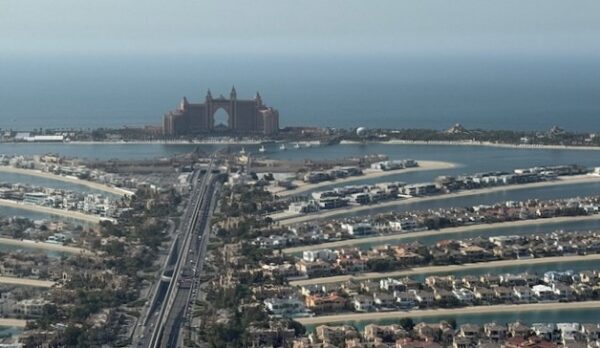
Palm Jumeirah is one of the world’s largest artificial islands and a bold symbol of Dubai’s ambition. Shaped like a palm tree, it consists of a central trunk, 17 fronds, and a crescent-shaped breakwater, all built with massive amounts of sand and rock. Driving along the coastline, we enjoyed long sea views with Dubai’s skyline in the distance, and were pleasantly surprised by the availability of free parking.
We stopped near Atlantis The Palm, whose iconic arch instantly recalled the Atlantis resort in the Bahamas. Lunch at White Beach offered a relaxed Mediterranean atmosphere by the sea, though non-guests were not allowed to explore the hotel interior.
In the afternoon, we took the Palm Monorail, stopping at Nakheel Mall to visit The View at The Palm. From above, the island revealed its full palm shape—orderly, surreal, and almost dreamlike. The view perfectly captured Dubai’s vision of creating opportunity rather than waiting for it.
Middle East Travel Journal Day 4: Dubai
Day 4 offered a vivid contrast between old and new Dubai. We began in the historic old town, wandering through narrow streets filled with small shops, colorful clothing stores, and everyday local life. Along the way, the sudden call to prayer echoed through the streets. Locals paused, laid out prayer mats, and prayed in unison—a powerful and humbling reminder of how deeply faith is woven into daily life.
We then explored the Gold Souk, dazzled by elaborate gold jewelry displays, followed by the nearby Spice Souk, where fragrant spices and frankincense reflected Dubai’s long history as a trading hub.
In the afternoon, we drove to Jumeirah Fishing Harbor and the nearby beach, enjoying calm sea views and a clear sight of the iconic Burj Al Arab.
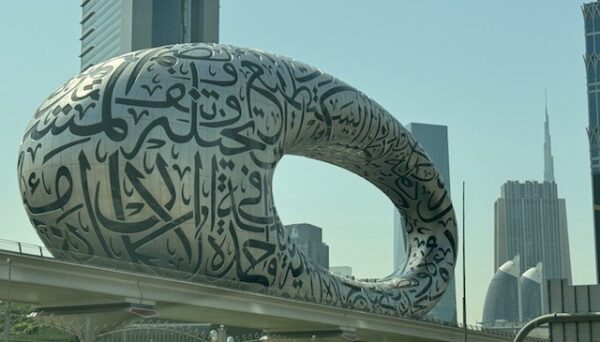
The highlight of the day was the Museum of the Future. From immersive exhibitions and futuristic design to interactive experiences imagining life in 2071, the visit was inspiring and thought-provoking. Dubai once again proved how boldly it turns visions of the future into reality.

Middle East Travel Journal Day 5: Drive to Abu Dhabi
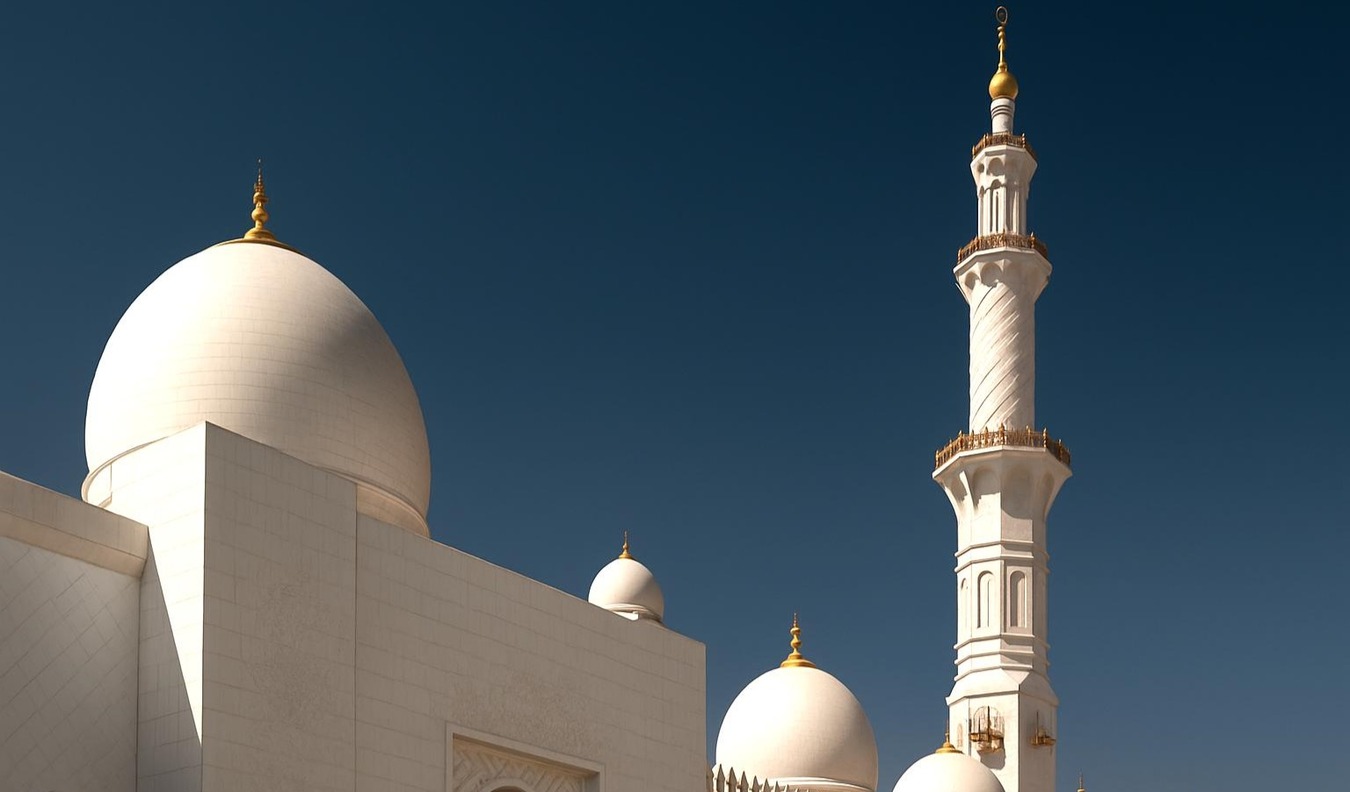
Today we left futuristic Dubai and drove to Abu Dhabi, the capital of the UAE. The short desert drive revealed vast sands alongside carefully maintained greenery, supported by drip irrigation systems—an impressive reminder of human adaptation in a harsh environment. Our first stop was the Sheikh Zayed Grand Mosque, a breathtaking masterpiece of white marble, symmetry, and light. From the world’s largest handwoven carpet to enormous crystal chandeliers, every detail reflected devotion, craftsmanship, and scale. The calm and elegance of the mosque left a deep impression.
In the afternoon, we visited Qasr Al Watan, the Presidential Palace. Though still an active government building, it opens its doors to visitors, offering insight into the nation’s values, governance, and culture. The palace’s grand halls, Islamic patterns, and the striking installation The Power of Words highlighted wisdom, leadership, and respect for knowledge. Compared with Dubai’s bold ambition, Abu Dhabi feels more reserved and dignified—quietly powerful in its own way.
Middle East Travel Journal Day 6: Abu Dhabi
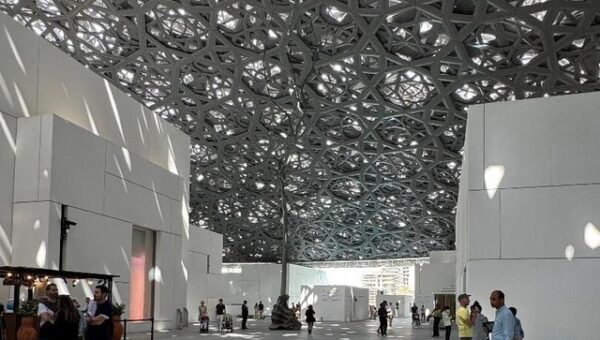
Today we visited the Louvre Abu Dhabi, one of only two Louvre museums in the world. Built through a landmark cultural partnership with France, the museum reflects Abu Dhabi’s ambition to create a world-class art destination in the Middle East. Designed by Jean Nouvel, its low, understated exterior felt almost unassuming at first glance.
Inside, the galleries span civilizations and eras, presenting art as a shared human story rather than a Western narrative. Among the highlights were a Chinese Tang tri-color ceramic, an Andean gold mask, and Rodin’s powerful sculpture Socrates and Truth.
The most unforgettable moment came beneath the massive dome. Sunlight filtered through layered geometric patterns, casting drifting “rain of light” across the space. What looked plain from the outside transformed into a place of quiet wonder.
Later, we noticed the Guggenheim Abu Dhabi rising nearby, hinting at an emerging cultural district. The day ended with a relaxed mall visit during Ramadan and a peaceful sunset back at the hotel.

Middle East Travel Journal Day 7: Abu Dhabi
The day began with another enjoyable hotel breakfast in Abu Dhabi, rich in Arabian style and surprisingly offering a comforting bowl of hot rice noodles. After breakfast, we drove about half an hour to Yas Island, home to several of Abu Dhabi’s major theme parks.
Our first stop was SeaWorld Abu Dhabi, the brand’s first international park. Entirely indoors, it offered a cool and immersive escape from the desert heat. From sharks and stingrays to sea turtles gliding overhead, the exhibits were thoughtfully designed, with interactive touches that made the experience engaging and relaxed. The dolphin show stood out for its smooth choreography and the visible trust between trainers and animals.
In the afternoon, we visited Ferrari World. The architecture was striking and the car displays impressive, though many attractions required extra fees. As the day came to an end, it also marked the close of our UAE journey—Dubai’s bold ambition and Abu Dhabi’s quiet confidence together leaving a lasting impression.
Middle East Travel Journal Day 8: Drive to Muscat
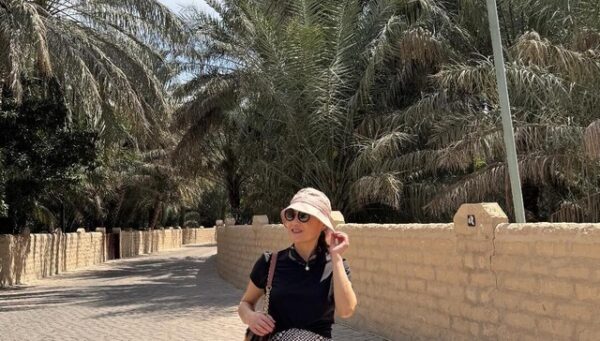
Today we drove out of the UAE and crossed the border into Oman, heading toward Muscat, with a stop in Al Ain along the way. Located at the edge of the desert, Al Ain felt noticeably different from the modern cities we had just left—calmer, greener, and rooted in history. The palm-filled oasis, sustained by underground water, offered a brief but striking contrast to the surrounding desert landscape.
Lunch was an unremarkable Chinese meal, eaten behind curtains—a reminder that cultural openness can vary greatly even within the same region.
The border crossing itself turned into a memorable experience. Multiple checkpoints, paperwork, unexpected fees, and a slightly tense but ultimately humorous exchange with an immigration officer made the process far more eventful than expected.
Once inside Oman, the scenery changed dramatically. Instead of flat desert and skyscrapers, rolling hills and mountains accompanied us for hours until we reached Muscat. The day ended on a high note with dinner at Rozna, a palace-like restaurant where a traditional Ramadan buffet and whole roasted lamb offered our first deep immersion into Omani culture.
Middle East Travel Journal Day 9: Muscat
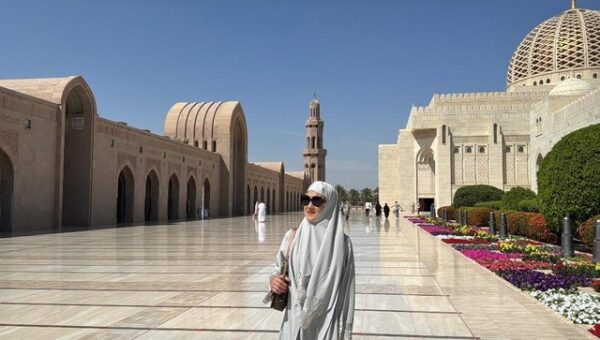
Ramadan felt especially present in Muscat today. Even the hotel breakfast area was screened off with curtains, signaling stricter daytime dining customs than in the UAE. Our first stop was the Sultan Qaboos Grand Mosque, open to visitors in the morning. While less monumental than Abu Dhabi’s mosque, it felt more serene and dignified. Inside, the massive Swarovski chandelier and once–world-largest handwoven carpet were impressive, but it was the blue-green tilework that left the deepest impression.
We later explored Muscat’s old town, spotting the iconic Riyam Incense Burner from afar and wandering through the lively Muttrah Souq. Near the Royal Palace, Portuguese-era forts Mirani and Jalali overlooked the harbor, adding layers of history. Ramadan made lunchtime challenging—almost everything was closed—so we returned to the hotel to cook.
In the evening, a seaside walk led us to a small fort with sweeping views over the bay. At Qurum Beach, locals shared dates with us at sunset, a small but heartfelt gesture. The day ended with an excellent Chinese dinner and a reminder that in Oman, patience and intuition matter—on the road and beyond.
Middle East Travel Journal Day 10: Muscat
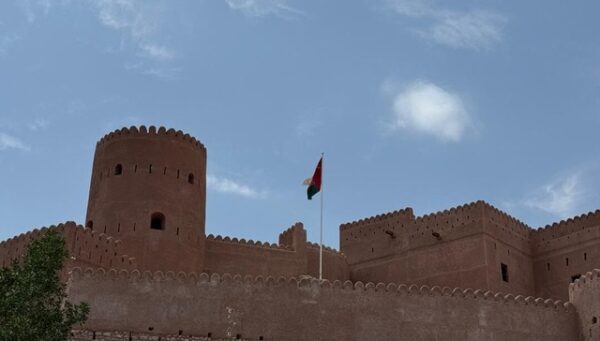
Today we took a one-hour drive from Muscat to Nakhal Fort, a striking mud-brick fortress perched high on a rocky hill. Although it looks surprisingly new, the fort dates back to pre-Islamic times and was extensively rebuilt in the 17th century, with recent restoration by the Omani government. Walking through its gates, kitchens, prison cells, and family quarters felt like stepping into everyday life from centuries ago. From the top, we enjoyed sweeping views of the town, palm groves, and nearby oasis.
After learning more about Ramadan customs from locals, we came prepared with snacks and quietly ate in the car, a small but respectful adjustment. Nearby, we stopped at Ain Al Thawarah hot spring, where locals soaked and children collected spring water—simple, calming moments of daily life.
We skipped Wadi Al Abyadh due to rough terrain unsuitable for regular cars, and ended the day at the elegant Royal Opera House Muscat, admiring its architecture before dinner in the surrounding modern complex.
Middle East Travel Journal Day 11: Muscat
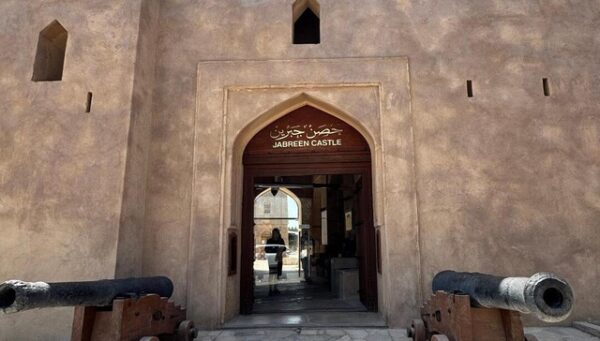
Today we visited Nizwa, once the capital of Oman and a city deeply rooted in history. Our plan centered on Nizwa Fort, but due to adjusted Ramadan hours, the fort only opened in the afternoon. This unexpected pause led us to Jabreen Fort, a smaller yet more refined castle surrounded by palm groves and grazing animals, offering a glimpse into rural Omani life.
Built in the 17th century by an art-loving imam, Jabreen Fort impressed us with its elegant interiors, reception halls, and library—spaces designed as much for culture as for defense. We were even surprised to find an open café inside, a rare midday dining option during Ramadan.
Back in Nizwa, we finally entered the iconic fort, home to Oman’s largest tower and once a key defense against Portuguese expansion. On the drive back, a sudden sandstorm swept across the road, a dramatic reminder of the desert’s power and unpredictability.
Middle East Travel Journal Day 12: Muscat
Today we set out on a southeast road trip from Muscat, chasing the image of a famous pink lake we had seen online. After more than three hours of driving, we arrived only to find a dried salt flat with faint pink traces—beautiful photos, it turned out, belonged to the past. Locals later confirmed that prolonged drought had caused the lake to evaporate, a reminder of how fragile natural wonders can be.
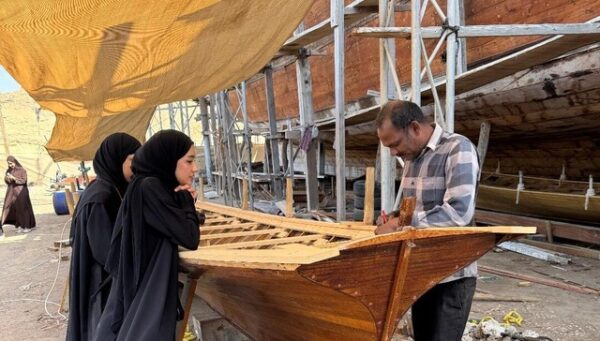
We continued to a nearby turtle reserve but learned that turtle sightings are strictly limited to early morning or late night and depend heavily on seasonality. Although we missed the turtles, the journey led us to the Dhow Factory in Sur, where traditional wooden boats are still built by hand—a living link to Oman’s maritime heritage.
On the return drive, the Bimmah Sinkhole offered a striking contrast: turquoise water hidden within limestone cliffs. We ended the day with a traditional Omani iftar near the Royal Opera House, followed by a quiet evening walk under its glowing lights.
Middle East Travel Journal Day 13: Muscat
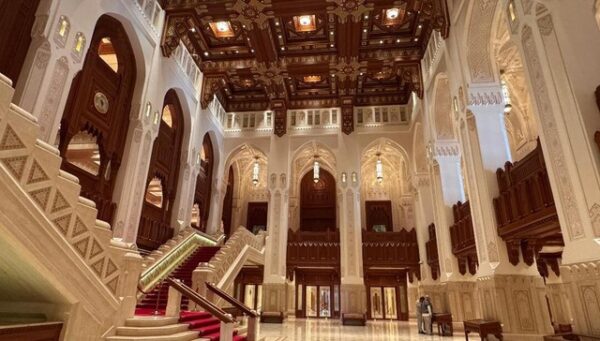
Our final day in Oman unfolded at a relaxed pace, centered on culture and everyday life. In the morning, we finally stepped inside the Royal Opera House Muscat. The interior was breathtaking: white marble carved with intricate Arabic patterns, inlaid with warm Burmese teak that softened the grandeur. Blending Western scale with Islamic elegance, the building reflected the artistic vision of Sultan Qaboos, who personally commissioned it. Guided explanations revealed details about its design inspirations, imported materials, multilingual seat screens, and its role as a global performance venue.
Later, we visited a shopping mall to observe Ramadan life more closely. While restaurants remained closed, supermarkets stayed active, offering hot food and local dates—Safawi being the standout favorite. In the afternoon, we returned to Qurum Beach, this time finding a wide, beautiful stretch of sand where the atmosphere felt unexpectedly relaxed and open.
Oman left a lasting impression: understated, grounded, and deeply shaped by tradition—where daily rhythms quietly reflect faith, history, and restraint.
Middle East Travel Journal Day 14: Fly to Doha
Today marked our transition from Oman to Qatar as we flew from Muscat to Doha. What first stood out was how travel logistics in the Middle East are shaped by geopolitics: although we had hoped to rent a car in Dubai and return it in Doha, the lack of cross-border rental options—due to years of diplomatic separation—made that impossible.
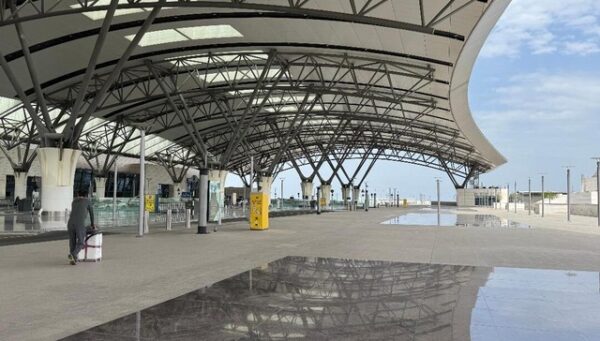
Muscat International Airport was a graceful farewell to Oman, blending modern design with subtle Arabian aesthetics. The departure itself, however, tested our patience. Strict baggage limits meant careful packing, and returning the rental car turned into an unexpectedly slow process. Check-in lines were inefficient, forcing us to queue twice for the same flight.
Despite Ramadan restrictions, we managed to find a café open inside the airport—our rare chance to eat openly during the day.
Upon arrival in Doha, our stay at the Marriott Marquis began with an unusual experience: hotel-style security screening, including baggage inspection. Even a small electric kettle was flagged and temporarily confiscated. It was a reminder that in Qatar, order and safety often take precedence over convenience.
Middle East Travel Journal Day 15: Doha
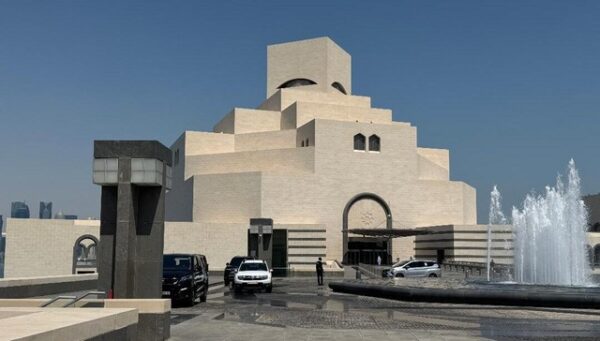
Day 15 marked our final stop in the Middle East: Doha, Qatar. We began the day at the Museum of Islamic Art, designed by I. M. Pei. Approaching the museum along a palm-lined walkway, the geometric limestone building rose with quiet authority. Inside, soaring arches, filtered daylight, and grand staircases created a powerful sense of calm and balance. The collections—ranging from early Qur’an manuscripts to textiles and jewelry—offered a sweeping view of Islamic civilization across centuries and regions.
At midday, Ramadan restrictions became more noticeable. Many restaurants were closed, and lunch turned into a small logistical challenge, eventually solved with takeaway sandwiches from a supermarket. In the afternoon, we explored Doha’s landmarks: Souq Waqif, the Torch Doha, Khalifa International Stadium, and the Corniche. Walking by the waterfront, with views of the skyline and pearl monument, felt like a fitting farewell. Doha revealed itself as a city shaped by culture, restraint, and quiet confidence.
Middle East Travel Journal Day 16: Doha
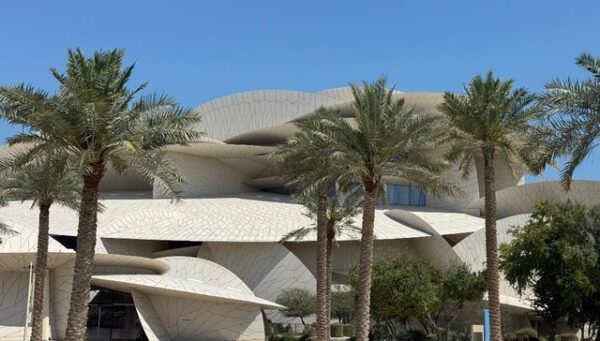
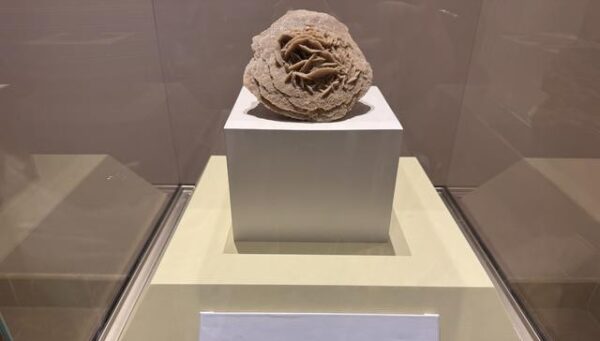
Today was a full day exploring Doha’s vision of history, culture, and the future. The morning began at the National Museum of Qatar, where the desert rose–inspired architecture immediately stood out. Beyond its striking design, the museum’s immersive videos and interactive exhibits vividly portrayed Qatar’s past, especially the hardship of pearl diving, where divers risked their lives dozens of times a day to sustain their families.
Next, we visited Katara Cultural Village, a space blending tradition and modern creativity. Although many shops were closed for Ramadan, the amphitheater, inspired by Greek architecture, and the seaside views toward The Pearl still made the walk worthwhile.
At The Pearl, the island’s necklace-like layout felt elegant yet quiet, seemingly designed more for residents than visitors. The day ended in Lusail, a city built for the future. From the World Cup stadium glowing at sunset to the marina promenade and the twin Katara Towers, Doha revealed its ambition through architecture that confidently looks ahead.
Middle East Travel Journal Day 17: Doha
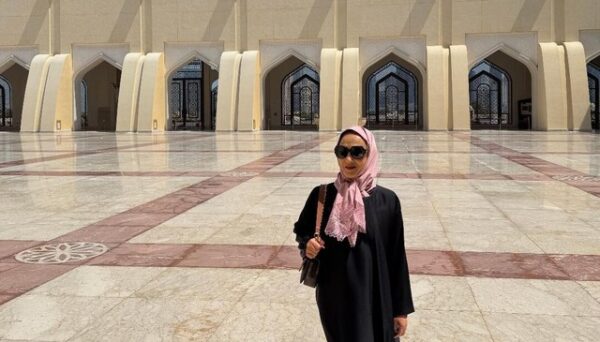
This morning, we visited the Imam Muhammad Ibn Abdul Wahhab Mosque, Qatar’s largest and most important mosque. Despite dressing modestly, women were provided with official black abayas on site—each individually wrapped—highlighting the mosque’s strict standards and attention to detail.
The mosque itself was grand yet restrained, with immaculate red carpets and an atmosphere of calm dignity. Framed by geometric doors, Doha’s modern skyline appeared in the distance, creating a striking visual contrast between faith and rapid urban development.
We were guided by a female docent from Texas who shared her personal journey of converting to Islam, offering thoughtful insights into Islamic beliefs and practices. Her story added a human, reflective dimension to the visit.
Later, we explored a small neighborhood prayer hall, simple and unadorned, revealing a quieter, everyday side of religious life. The day concluded with a peaceful walk along the Corniche, where palm-leaf-shaped streetlights illuminated Doha’s futuristic skyline in soft, golden light.

Middle East Travel Journal Day 18: Fly to Jeddah
Today we flew to Jeddah, entering Saudi Arabia during the height of Ramadan. At the airport, many men were dressed in two simple white cloths, which at first looked unusual. Later we learned this was Ihram, the traditional attire worn by pilgrims heading to Mecca—no surprise, as Jeddah is the main gateway for Hajj and Umrah pilgrims.
Women’s dress here appeared noticeably more conservative, with most fully covered in black, a clear reminder that Saudi Arabia observes stricter customs.
Jeddah’s airport was the most crowded we had encountered so far, with chaotic taxi scenes and intense bargaining right outside the terminal.
Our rental car experience came with an unexpected twist: the office had closed early due to Ramadan hours and wouldn’t reopen until evening. After returning at night, we were warmly received, given a free upgrade, and finally on our way.
Despite the logistical hiccups, the day offered a vivid first glimpse into Saudi Arabia’s religious rhythm, social customs, and subtle signs of change.

Middle East Travel Journal Day 19: Jeddah
Our day in Jeddah began along the Red Sea at the Jeddah Corniche, where strong sea winds and vivid blue water set a refreshing tone. Walking along the coast, we learned how algae give the Red Sea its name, adding a layer of natural history to the scenery.
We then visited Al Rahma Mosque, often called the “Floating Mosque.” Built on pillars over the sea, it appears to rise directly from the water, especially at high tide. Quiet and almost empty, the setting felt serene rather than touristic.
In the afternoon, we explored Jeddah’s historic old town. Narrow streets, weathered buildings, carved wooden balconies, and frequent gold shops revealed everyday life layered with history. Landmarks such as Bab Makkah and the exterior of Nassif House offered glimpses into Jeddah’s past as a gateway for pilgrims.
After dinner, we returned to the waterfront to see the King Fahd Fountain. Illuminated against the night sky, its towering jet of water was both dramatic and symbolic. In just one day, Jeddah revealed a city balancing tradition, change, and coastal openness.
Middle East Travel Journal Day 20: Drive to Madinah
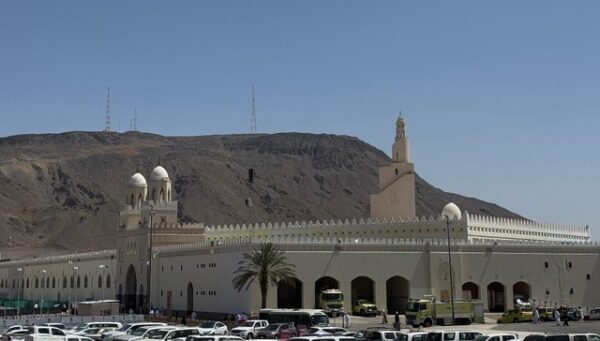
Today we drove four hours to Madinah, Islam’s second holiest city. After facing opposition in Mecca, the Prophet Muhammad migrated here, where the early Muslim community grew stronger. The religious atmosphere was immediately noticeable. As non-Muslims, we could only view major sites from a distance.
Near the city, we passed signs marking the start and end of the “Haram Area,” designating sacred boundaries. In Madinah, non-Muslims may enter the city but not the Prophet’s Mosque or its surrounding holy zone.
Our first stop was Masjid Dhul Hulayfah, the Miqat point where pilgrims from Madinah enter the state of Ihram before heading to Mecca. Crowds in white garments created a solemn, powerful scene. Attempts to approach Al-Masjid an-Nabawi were redirected by police due to Ramadan crowds. We also visited Quba Mosque and drove toward Mount Uhud before turning back. Madinah felt deeply devout, modest, and spiritually intense.
Middle East Travel Journal Day 21: Drive to AlUla
Breakfast brought a small surprise this morning. Because of Ramadan, the hotel had moved the dining area to a hidden back room, away from public view. After leaving the more liberal atmosphere of Dubai and Abu Dhabi, we could clearly feel the stronger religious customs again.
We then drove four hours to AlUla, a historic oasis city once home to the ancient Dadan and Lihyan kingdoms. Our first stop was the Old Town of AlUla, a thousand-year-old mudbrick settlement with narrow alleys and low doorways, quietly preserved in the desert air. Across the road, a newly built “heritage” town offered a more polished experience.
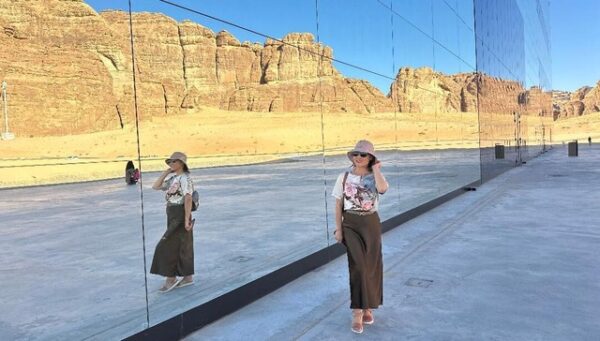
At Harrat Viewpoint, we admired dramatic volcanic canyons glowing red at sunset. Nearby, the mirrored Maraya Concert Hall reflected the mountains in perfect symmetry. That evening, we checked into a tent-style canyon resort, surrounded by towering rock formations and desert silence.
Middle East Travel Journal Day 22: AlUla
Day 22 in AlUla began with our first desert sunrise, a quiet and almost spiritual experience. Stepping out from our room into open sand and towering rock formations, we watched the sun slowly rise between the hills, the silence broken only by the wind. After an elegant à la carte breakfast, we packed extra bread for lunch—well aware that daytime dining options were limited.
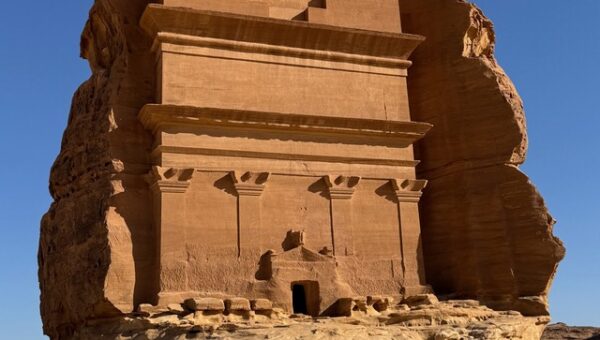
We explored the hotel’s stunning rock-framed infinity pool and walked through the canyon landscape from below, admiring the dramatic formations. The highlight of the day was Hegra, Saudi Arabia’s first UNESCO World Heritage Site. Accessible only by tour bus, the ancient Nabataean city revealed rock-cut tombs, inscriptions, and remarkable engineering techniques, including the unfinished tomb of Laheyan. As sunset approached, we visited Elephant Rock, where the glowing sandstone formation provided a perfect ending. Dinner at the hotel’s Thai restaurant concluded a day rich in history, nature, and quiet awe.
Middle East Travel Journal Day 23: AlUla
Today we stepped further back in time to explore the ancient kingdoms of Dadan and Lihyan, once powerful players along the northern Arabian incense trade routes. Because of Ramadan, only two shuttle departures were available, making our visit feel even more deliberate and rare. At the Dadan site, we saw early rock-cut tombs carved into sandstone cliffs, some marked with simple lion reliefs and inscriptions identifying families from over 2,000 years ago.
A highlight was the partially opened archaeological zone, recently made accessible to the public. What appears to be ruins to ordinary eyes reveals temples, wells, and purification basins—echoes of rituals that still resonate in Islamic practices today.
At Jabal Ikmah, known as an open-air library, ancient inscriptions in multiple scripts covered the rock faces, preserving voices from distant centuries.
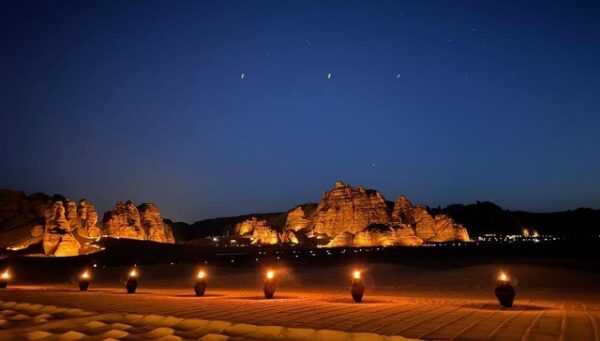
As night fell, we returned to AlUla for a final desert evening under stars and firelight—quiet, timeless, unforgettable.
Middle East Travel Journal Day 24: Drive to Hail
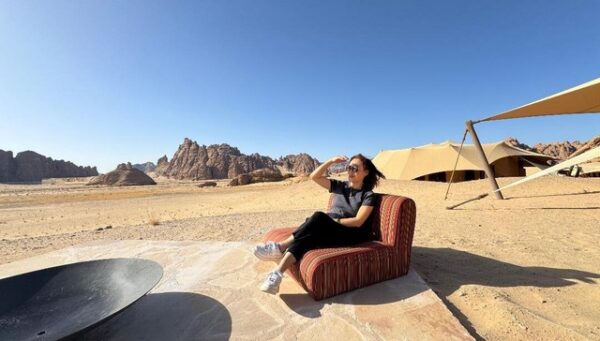
Day 24 took us from AlUla to Hail, marking a transition from dramatic desert landscapes to a quieter provincial city. Before leaving, I captured the soft desert sunrise and reflected on how the desert, once imagined as barren and lifeless, revealed unexpected resilience. We rediscovered the mysterious “desert apple,” later identified as Citrullus colocynthis—beautiful but bitter and toxic.
After breakfast, now busier as Ramadan season approached its end, we began a five-hour drive across endless “sand seas.” A fuel stop reminded us of the importance of carrying cash when credit cards failed.
Arriving in Hail by evening, we explored Qishla Palace, an Ottoman-era mudbrick fortress with watchtowers and a central courtyard that evoked its military past. The city felt less tourist-oriented, with mostly Arabic signage. Dinner proved challenging during Ramadan service hours, and instant noodles ultimately saved the night—though our ordered meal arrived just moments later.
Middle East Travel Journal Day 25: Hail
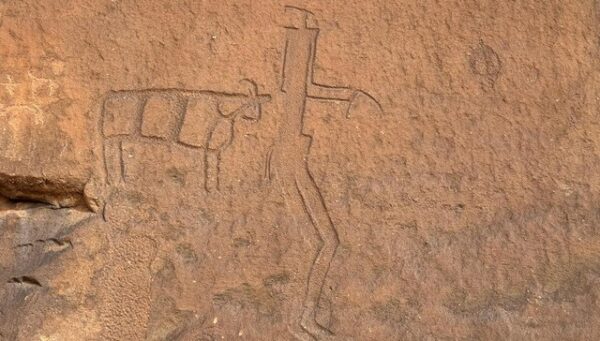
Today we explored the prehistoric rock art site of Jabal Umm Sinman near Hail, a UNESCO World Heritage site preserving traces of life dating back as far as 12,000 years. What is now dry desert was once a lake-edge oasis that supported early hunter-gatherer communities.
The visitor center provided an excellent introduction, highlighting three major carvings: the “King” figure, the striking “Man and Bull” panel, and an extraordinary chariot scene that challenges assumptions about when horses were introduced to the Arabian Peninsula. Unlike heavily restricted European cave sites, these carvings remain visible in their natural setting, etched directly into open rock faces.
Climbing between rocky hills to locate the panels felt like a quiet archaeological treasure hunt. The dedication of the staff, who waited until closing to ensure we saw everything, left a lasting impression.
In the evening, we observed Ramadan dining customs in a local mall, witnessing faith, patience, and cultural rhythm woven into daily life.
Middle East Travel Journal Day 26: Drive to Riyadh
Today we drove six hours to Riyadh, the capital of Saudi Arabia. The long desert highway gave us time to reflect on cultural details that had reshaped our understanding of the region. Of all the Middle Eastern countries we visited, Saudi Arabia felt the most conservative in women’s dress. Black abayas and niqabs dominated the streets, sometimes revealing only the eyes. Twice in Hail, I experienced how easily faces blend into anonymity—mistaking someone for a manager, and later exchanging shy smiles with a woman I could barely recognize again.
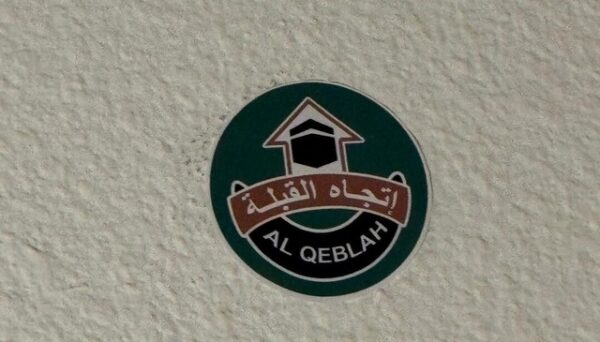
Yet inside shopping malls, colorful modern fashion filled the stores. Since 2019, dress codes have gradually relaxed, and change feels quietly underway. In every hotel room, we also noticed arrows marking the direction of Mecca for daily prayers. Even road signs reminded us we were in a different cultural sphere, using Eastern Arabic numerals. Arriving in Riyadh, the skyline felt strikingly modern—the most advanced city we had seen in Saudi Arabia.
Middle East Travel Journal Day 27: Riyadh
Our first day in Riyadh coincided with Eid al-Fitr, marking the end of Ramadan. Instead of large public celebrations, we discovered that Eid is mostly a family-centered occasion. At the hotel, we noticed separate wedding celebrations for men and women, revealing another layer of local tradition. For lunch, we enjoyed authentic Chinese food—finally able to eat openly during the day. Riyadh felt strikingly modern, even spotting JD Logistics trucks along major roads.
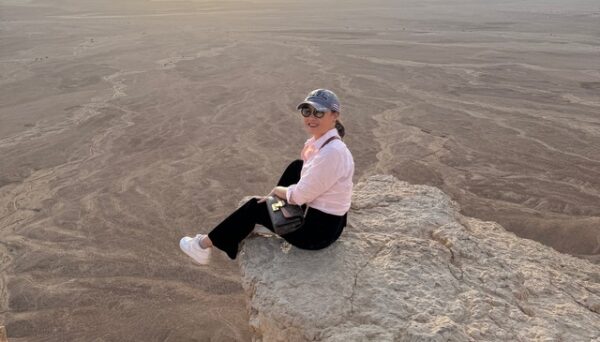
In the afternoon, we joined a guided tour to the famous Edge of the World. The off-road journey across desert tracks was intense—no real roads, just tire marks across sand and washboard terrain. After a careful hike over rocky slopes, we reached the dramatic cliff rising over 1,100 meters above the vast Arabian desert. Watching the sunset from the edge felt surreal. That evening, we glimpsed a women-only Eid gathering, where behind closed doors, elegance and celebration flourished freely.
Middle East Travel Journal Day 28: Riyadh
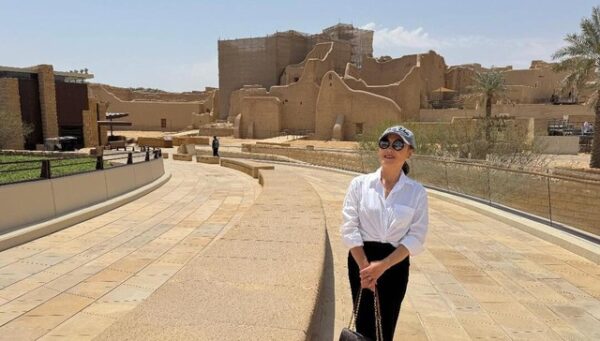
Today we explored Diriyah, the birthplace of Saudi Arabia. Entry was free after registration, and the site beautifully blends history with modern presentation. At the At-Turaif visitor center, a massive screen traced Saudi history from ancient tribal migrations to the founding of the first Saudi state in 1727, its fall to the Ottomans, the second state in Riyadh, and the rise of the modern kingdom under Ibn Saud. A female guide warmly explained that face covering is now a personal choice, reflecting visible social changes in Riyadh.
Walking through the Najdi mud-brick architecture, we saw remnants of royal residences and early mosques, imagining the roots of the Saudi state. Later, we visited Kingdom Center Tower and crossed the Sky Bridge, suspended high above the city. From above, Riyadh looked modern, ambitious, and expanding—reminding us of Shanghai decades ago. The day ended with frozen yogurt and an inspiring conversation about opportunity and reform.
Middle East Travel Journal Day 29: Riyadh
Day 29 in Riyadh unfolded as a blend of unpredictability and history. The morning began with a surprising driving experience—despite a clear “No Right Turn on Red” sign, local drivers ignored the rule and honked impatiently. It was a striking contrast to the relaxed lifestyle people had described during Ramadan.
We first visited Masmak Fortress, the symbolic starting point of Saudi Arabia’s third state, though it was closed for maintenance. Nearby markets were mostly shuttered for Eid. We also stopped by Al-Murabba Palace and Imam Turki bin Abdullah Mosque, admiring them from the outside.
A visit to Lulu Hypermarket turned into a small adventure when pricing issues on Safawi dates unexpectedly saved us money. Lunch at a modest Chinese restaurant proved surprisingly authentic.
The day ended at the National Museum of Saudi Arabia, where exhibits tracing Islamic history deepened our understanding of the Kingdom’s roots and transformation.

Middle East Travel Journal Day 30: Riyadh
On our final day in Riyadh, we embraced a slower pace. A 40-minute drive brought us to the Red Dunes, where deep terracotta sand glowed under the bright desert sun. At 38°C, the heat was intense, but the striking contrast of red sand against blue sky made the visit unforgettable. Standing atop the dunes, with only wind and silence around us, felt like a peaceful farewell.
In the afternoon, we explored Granada Mall, enjoyed a flavorful Yemeni lunch served with giant flatbread, and noticed how luxury brands like Dior dominate Middle Eastern malls. Even Cinnabon appeared in an unexpectedly upscale setting.
Before our evening flight the next day, we visited Al Faisaliyah Tower and had an elegant lunch at Yauatcha. With that, our 30-day Middle East journey came to an end—turning distant places on a map into vivid, lasting memories.