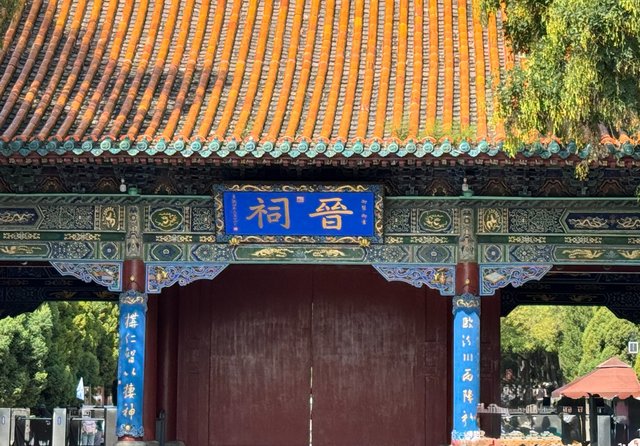
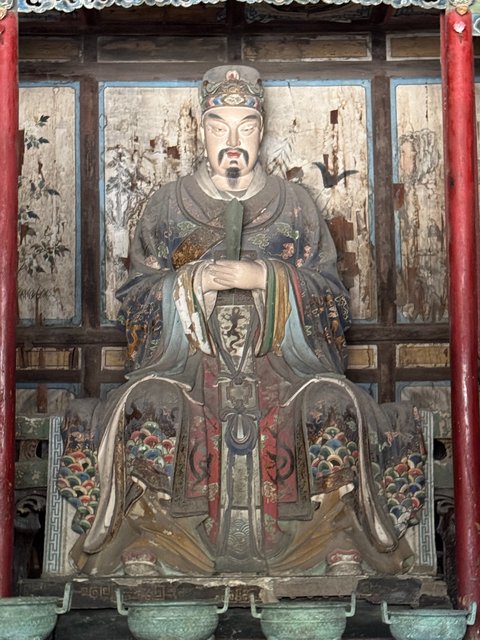
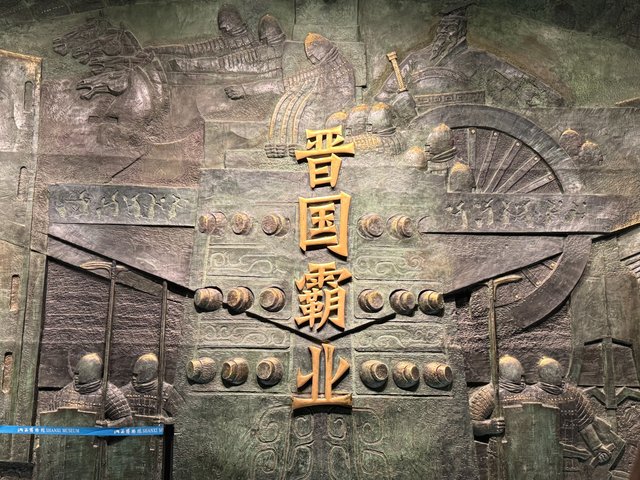
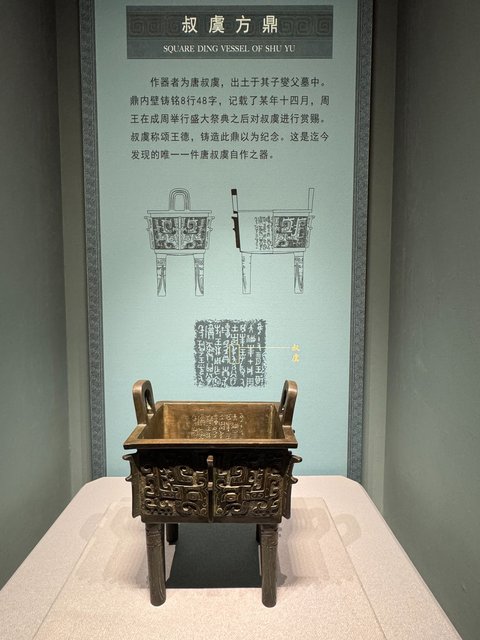
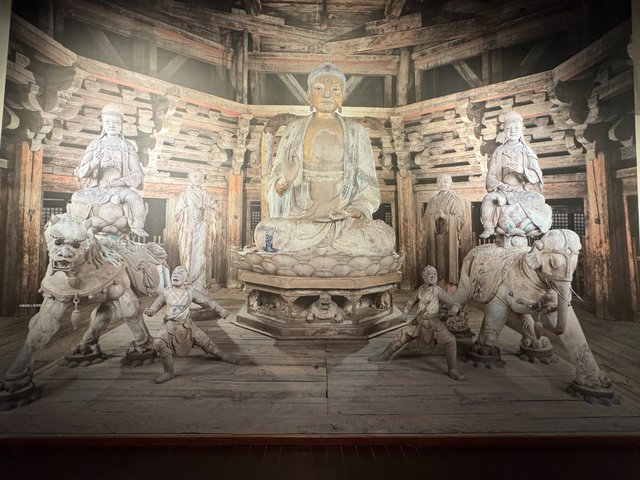
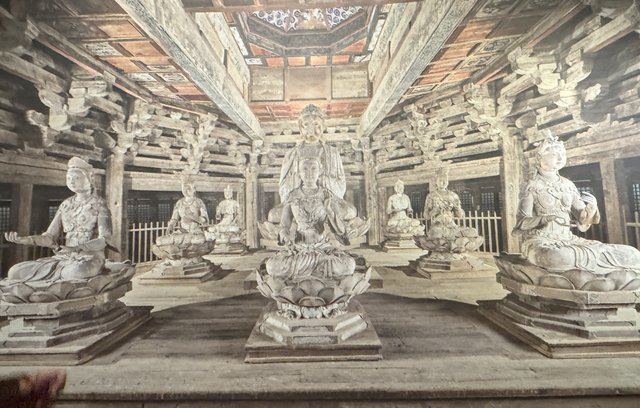
In the early Zhou Dynasty, King Wu of Zhou implemented the feudal system and granted the Tang territory in southern Shanxi to his son Tang Shuyu, founding the State of Tang. After his death, his son changed the state name to “Jin.”
The Jinci Temple was built during the Northern Wei Dynasty to honor Tang Shuyu, the founding ancestor of the Jin State.
Today, Jinci is also known as Jinci Museum. After parking, we took a shuttle through the park to reach the site.
Following the main path, we began our visit.
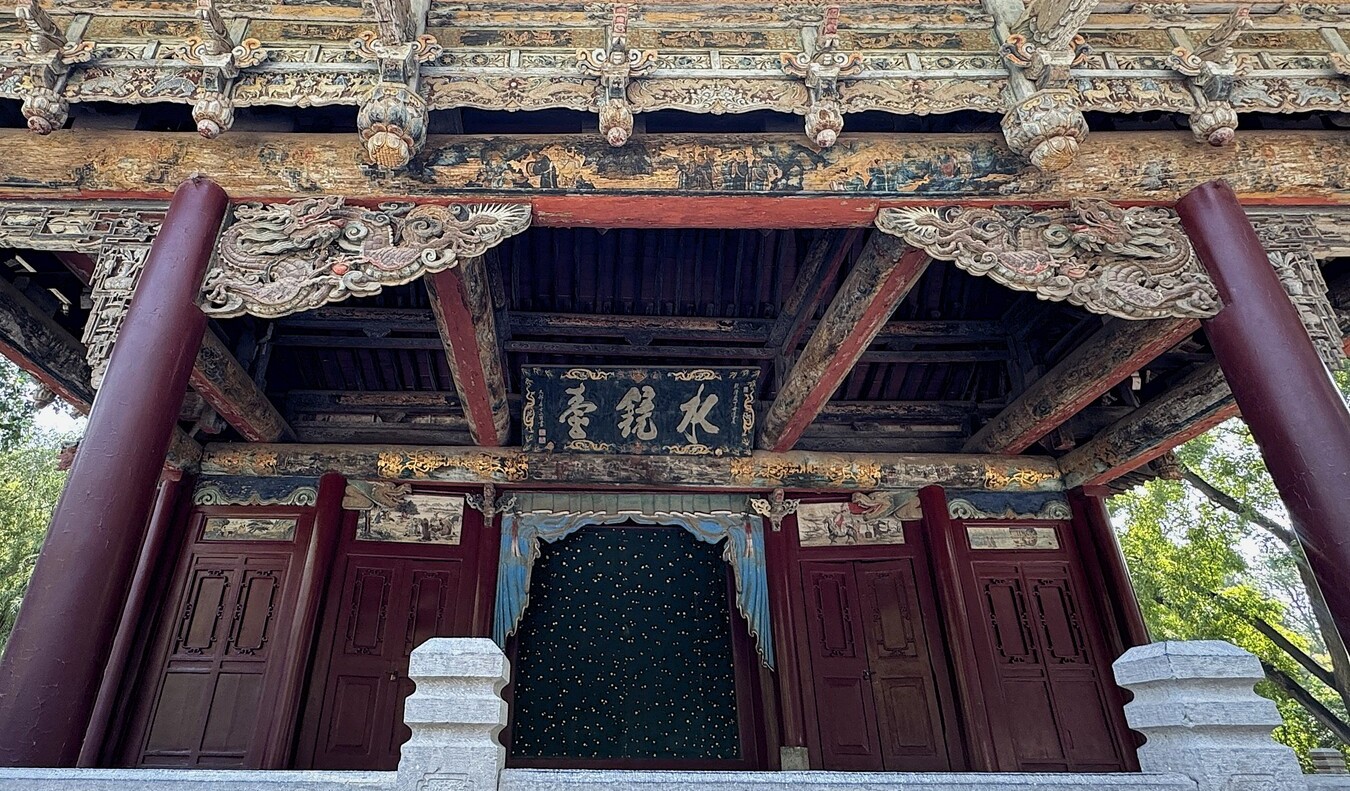
The first structure we encountered was Shuijing Terrace, an ancient stage used for ritual performances. Its exact construction date is unknown, though it was restored during the Ming and Qing Dynasties.
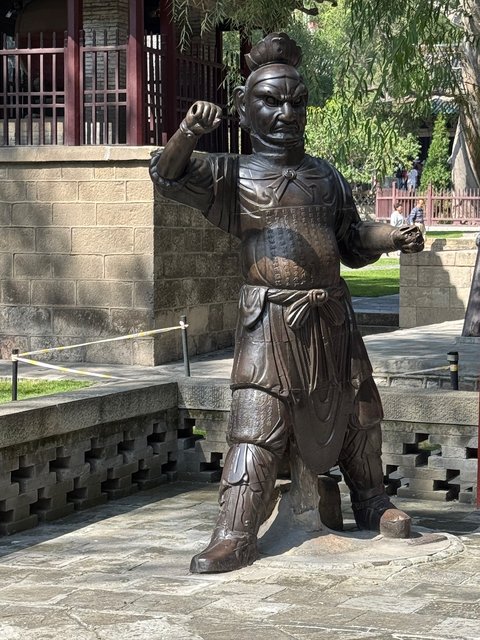
Next was the Iron Man Terrace, featuring four iron statues cast during the Song Dynasty. Locals mentioned that one statue was lost during the Republic era and later replaced. They also said the statues used to shine from constant touching by visitors.
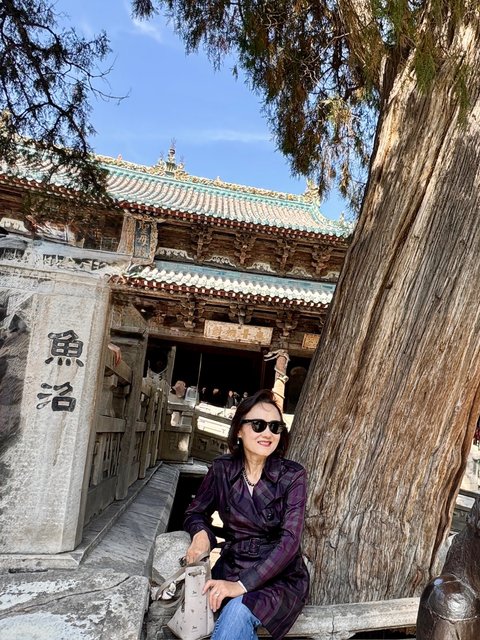
We then arrived at the famous Fish Pond Flying Bridge, a cross-shaped stone bridge considered an early example of a multi-level bridge. The architect Liang Sicheng praised it as a rare and valuable structure.
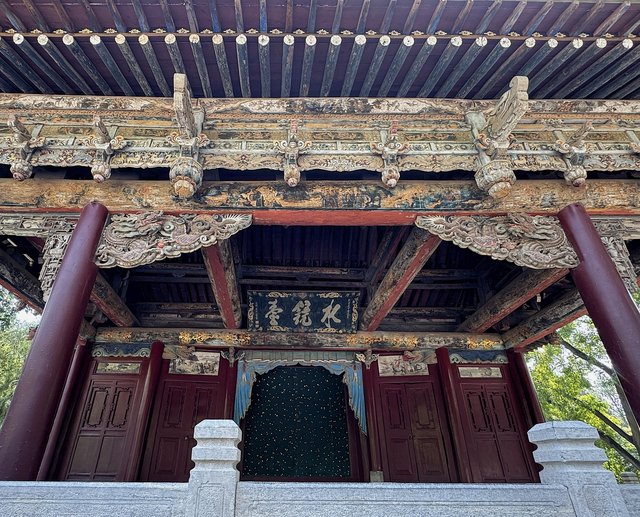
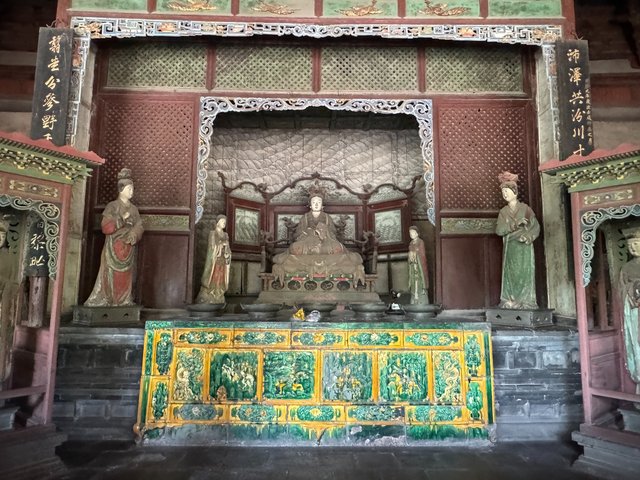
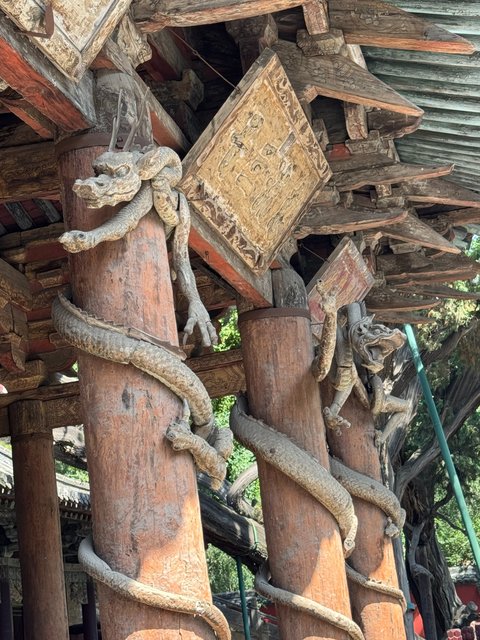
The highlight of Jinci is the Sacred Mother Hall, dedicated to Yijiang, mother of Tang Shuyu. Eight columns in front are each carved with a dragon, while inside are vivid attendant statues, one of the “Three Wonders of Jinci.”
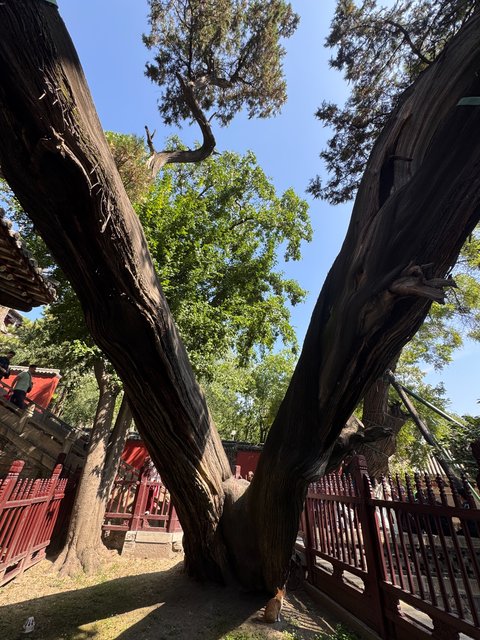
To the right stands an ancient cypress tree over 3,000 years old, known as the “Zhou Cypress.” Its unusual form reflects centuries of growth and regeneration.
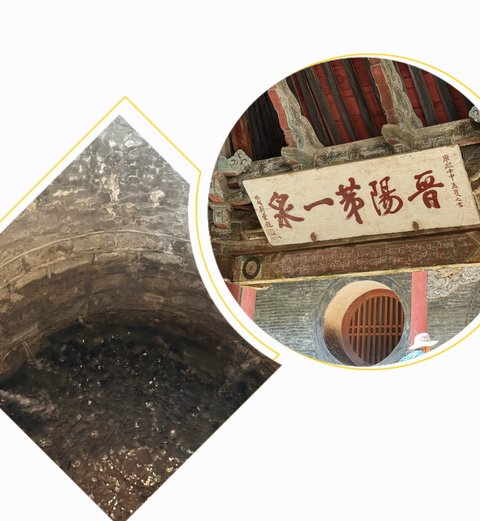
To the left is the Never-Aging Spring, whose water flows year-round at a constant temperature.
We also visited the Tang Shuyu Shrine, arranged along a central axis, symbolizing the origins of Jin culture under the Zhou feudal system.
We use cookies to ensure that we give you the best experience on our website. If you continue to use this site we will assume that you are happy with it.