Highlights of the Day
Today we drove from Santiago to the UNESCO World Heritage city of Valparaíso, a vibrant port famous for its colorful hills and street art. Walking through the painted stairways and mural-filled streets felt like wandering through an open-air gallery. Friendly locals even stopped to help us take photos and reminded us to keep our bags safe. We later visited La Sebastiana, the hillside home of Nobel Prize–winning poet Pablo Neruda, where the sweeping view of the harbor from the windows was unforgettable. In the afternoon we continued to the nearby coastal city of Viña Del Mar. Although the famous Flower Clock was less impressive than expected, the seaside scenery with rocky shores and passing ships was beautiful. We ended the day with dinner at a seaside restaurant overlooking the Pacific, enjoying ocean breezes, warm sunlight, and a relaxing atmosphere.
Hidden north of Santiago lies a colorful treasure — the UNESCO World Heritage city of Valparaíso.
Valparaíso is about a two-hour drive from Santiago.
As we approached the city, we noticed a long pedestrian walkway in the middle of the road filled with street vendors stretching nearly a mile. Stalls selling clothing, handicrafts, fruits, and vegetables lined the walkway, and the place was buzzing with visitors.
We continued driving until we reached the area near the funicular. After finding a parking spot, a man wearing a reflective vest immediately came over to guide us into the space. I had read online that people usually give a small tip to these informal “car watchers.” My husband handed him 2,000 Chilean pesos, and he happily showed us the direction to the funicular.
When we reached the entrance, however, a group of tourists walking out told us the funicular was closed. It wasn’t even the weekend, but for some reason it simply wasn’t operating.
So we decided to climb the hill on foot.
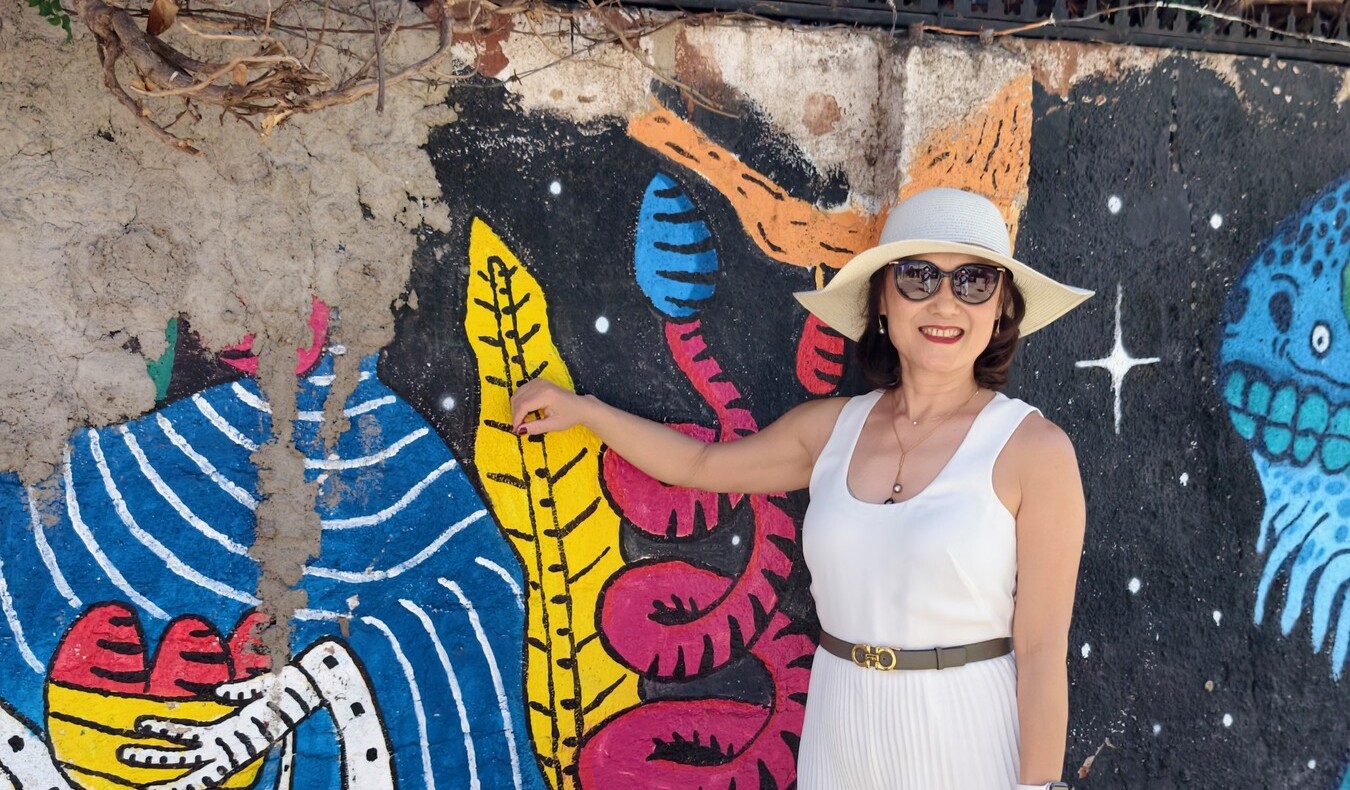
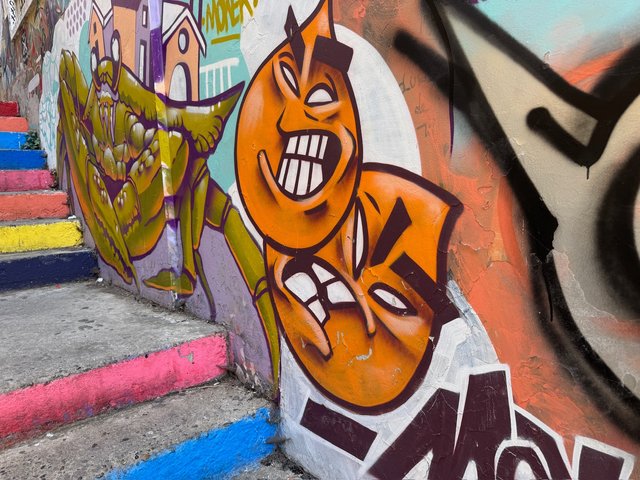
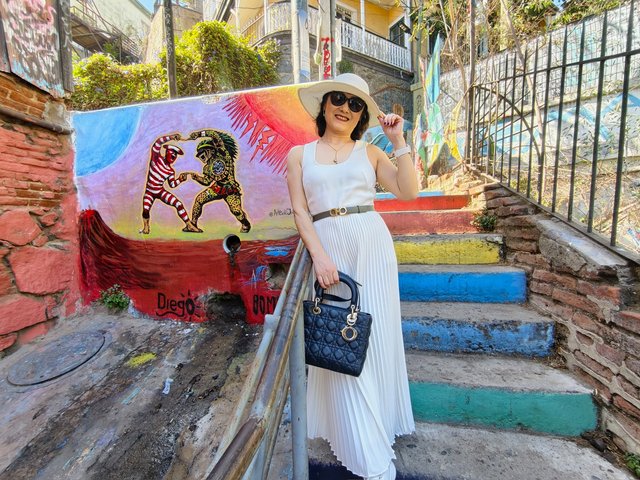
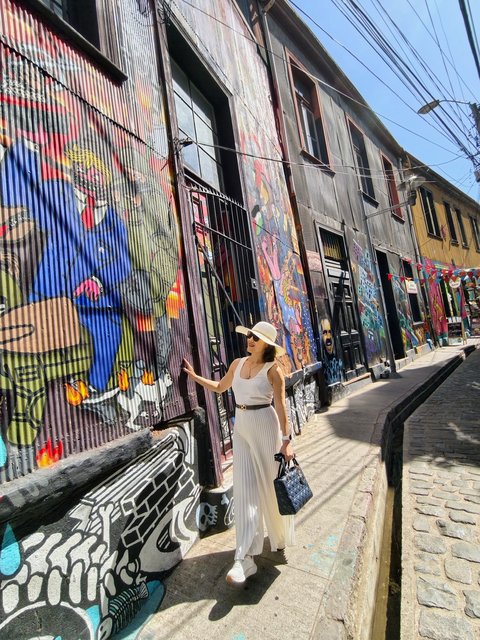
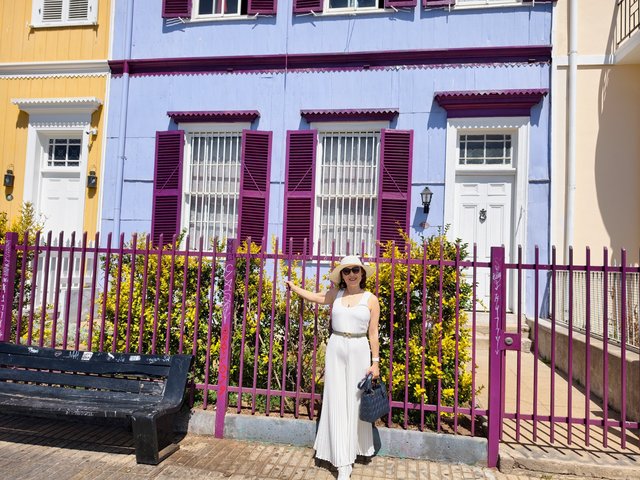
Soon we arrived at one of the most famous streets in Valparaíso. The stairs were painted in bright colors, and both sides of the street were covered with murals and graffiti — or perhaps more appropriately, street art. After climbing a few steps, a door suddenly opened and two local women came out, one middle-aged and one elderly. Despite the language barrier, they warmly offered to take photos for us. They also reminded us to carry our bags in front for safety. Such kind people.
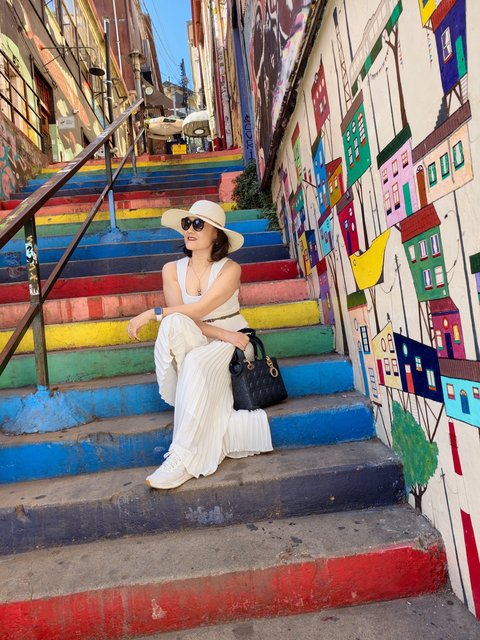
We continued walking up the stairs while admiring the artwork along the streets. Some paintings featured animals, others people, and one mural resembled the famous character from the film The Silence of the Lambs. The artistic quality of the murals here is truly impressive.
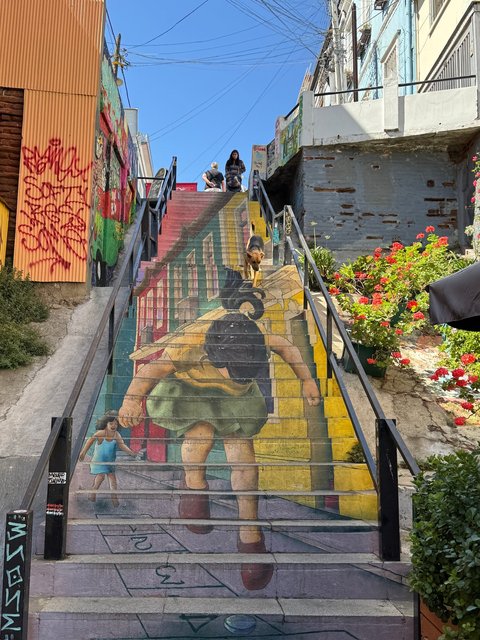
Two scenes left a particularly deep impression on me. One staircase was painted to create the illusion of a girl running — from a distance it looked like a painting, but up close you realized it was the stairs themselves. Another was a musical corner where piano keys were painted on the steps and Beethoven appeared on the nearby wall, like a small tribute to music lovers.
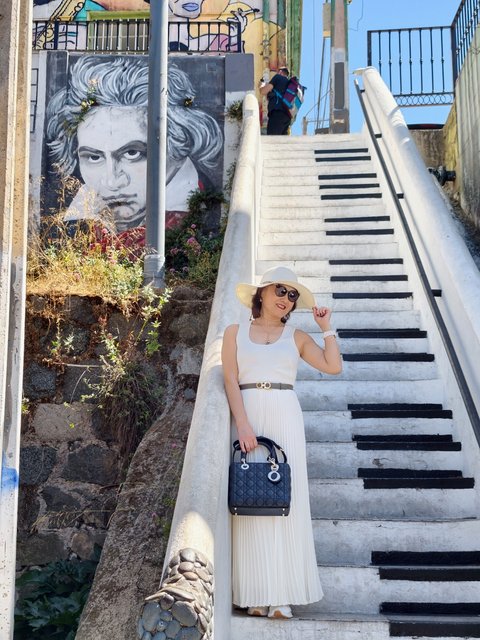
We then noticed an ice-cream shop along the street — a perfect excuse to sit down, take a break, and enjoy a sweet treat.
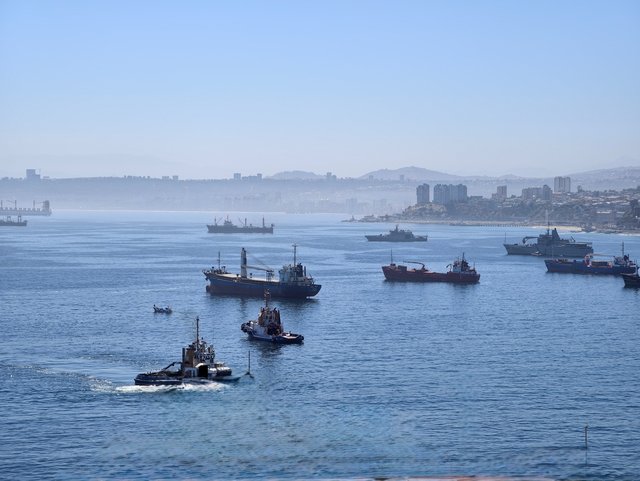
Later we walked down to the waterfront. The distant hills layered one behind another, the ocean shimmered deep blue, and ships of all sizes gently rocked on the waves. A thin mist hovered above the water, creating a dreamlike scene, almost like a painting.
As we strolled along the coast, small vendors sold handmade crafts. My husband was persuaded to buy a tiger-eye stone ring — well, at least we contributed a little to the local economy.
We later stopped at a seaside café for afternoon tea. A few days earlier at a winery tour, the guide had enthusiastically recommended a local drink called Piscola — a mix of Pisco, Coca-Cola, and ice. Curious after hearing the guide rave about it, we ordered one. It tasted somewhat like rum and cola, but with a slight tangy note.
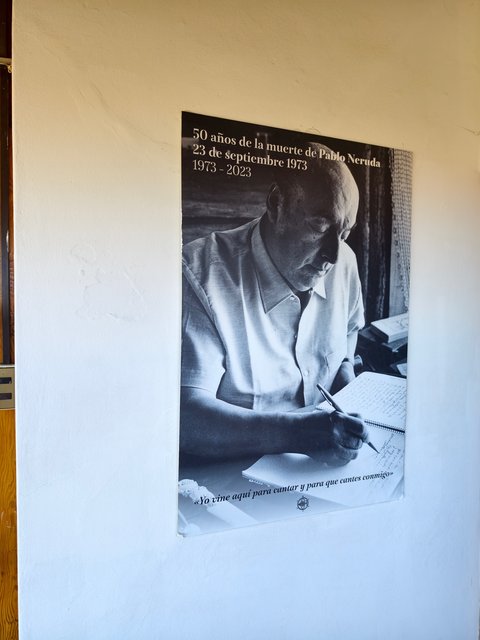
Our next stop was the house of Chilean poet Pablo Neruda, known as La Sebastiana.
Neruda, one of the most important Spanish-language poets of the twentieth century, received the Nobel Prize in Literature in 1971. The Italian film Il Postino: The Postman tells the story of his friendship with a local postman during his exile in Italy — a beautiful film worth watching.
In the 1950s, Neruda asked a friend to help him find a quiet place to write. His friend discovered this unfinished house perched high on the hillside. The original owner had passed away before completing it, so Neruda and his friend purchased the property and spent two years finishing it.
The house has five floors and reflects the poet’s distinctive personality. The rooms are filled with unusual objects — antique navigation instruments, colored glass, ship models, and various curiosities. Many decorations follow nautical themes, making the entire house feel like a ship anchored on the hillside.
Because of its high location, the view from the windows is breathtaking. In fact, every beautiful scene we saw throughout the day could not compare with the view from a single window here. Photography inside the house is not allowed due to copyright rules, but the outside scenery can be photographed freely — and it is spectacular.
Afterwards we drove to the neighboring seaside city Viña del Mar. When I first heard the name, I assumed it referred to a winery. In fact, the area really did start as a vineyard centuries ago, but today it has grown into a refined coastal resort city.
Our first stop was the famous Flower Clock. It is exactly what it sounds like — a large clock made of flowers. Up close it wasn’t particularly impressive, so we simply took a quick photo from a distance and moved on.
We then parked along the seaside boulevard. As soon as we stepped out of the car, another man in a reflective vest approached and signaled that payment was expected. Curious about the typical fee, my husband first offered 1,000 pesos. The man shook his head and pointed to his stomach, implying he needed more to eat. After a few attempts, we finally handed him 5,000 pesos, and he returned 3,000 — confirming that 2,000 pesos seemed to be the standard.
Later I learned that these people are not government employees but informal “car watchers” who occupy certain streets and collect tips for watching parked cars. The authorities appear to tolerate the practice, and tourists often assume it is official.
After parking, we walked along the waterfront to the city’s small seaside castle, Wulff Castle. Half of the building sits over the ocean, creating a beautiful coastal scene. Although it was already closed, the view from outside was still wonderful.
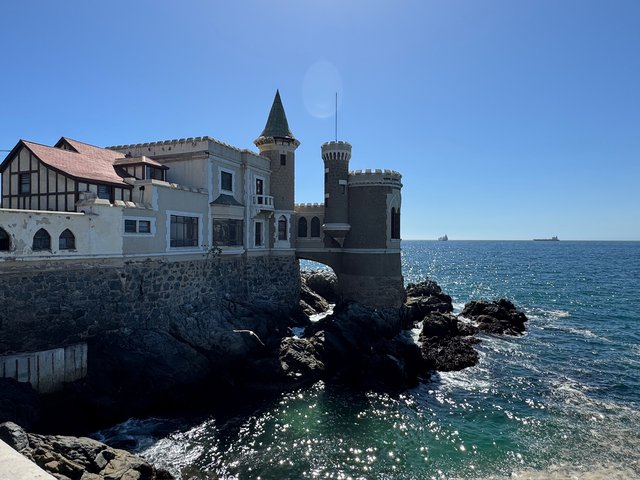
The beach here is small but filled with dramatic rock formations. Their shapes stand against the waves, the open ocean, and passing ships, forming a dynamic coastal landscape.
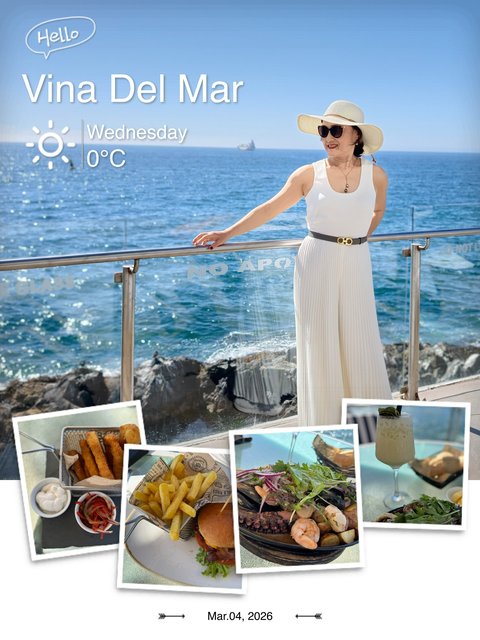
To our surprise, we also discovered a Sheraton Miramar Hotel & Convention Center perched right on the shoreline. When we asked whether we could dine by the sea, we were immediately guided to a beautiful ocean-front terrace.
Sea breeze, sunshine, and delicious food — the perfect ending to the day.
Accommodation: Courtyard by Marriott Santiago Airport
Transportation: Rental Car
If you’d like to learn more about the itinerary, please click the button below to download a free copy of the customizable itinerary.