



You are currently viewing Shanxi Travel Journal Day 4: Yingxian Wooden Pagoda and Yanmen Pass
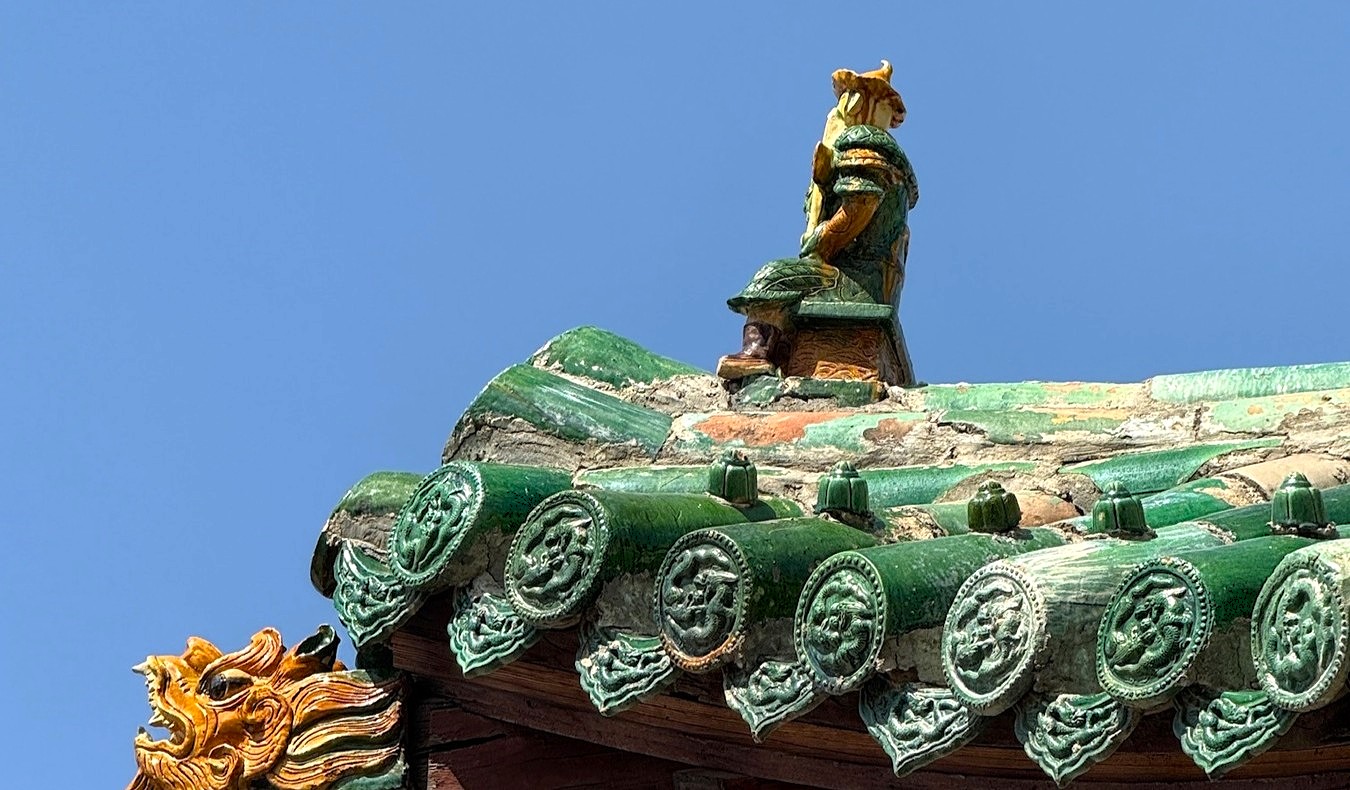
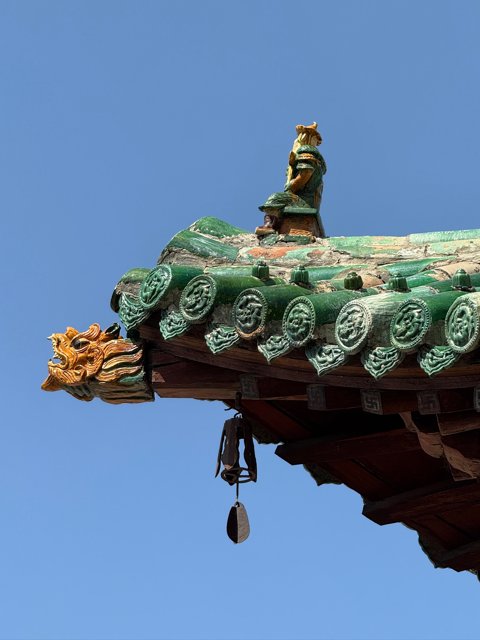
Jingtu Temple Roof Detail 净土寺屋檐细节

Shanxi Travel Journal Day 4: Yingxian Wooden Pagoda and Yanmen Pass

Today we drove from Datong to ShuoZhoun, visiting several sites along the way.

Our first stop was the Yingxian Wooden Pagoda. This nearly thousand-year-old structure has an interesting story behind it.

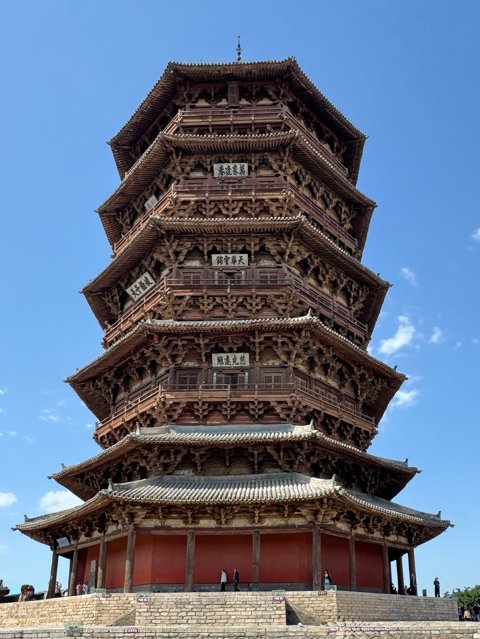
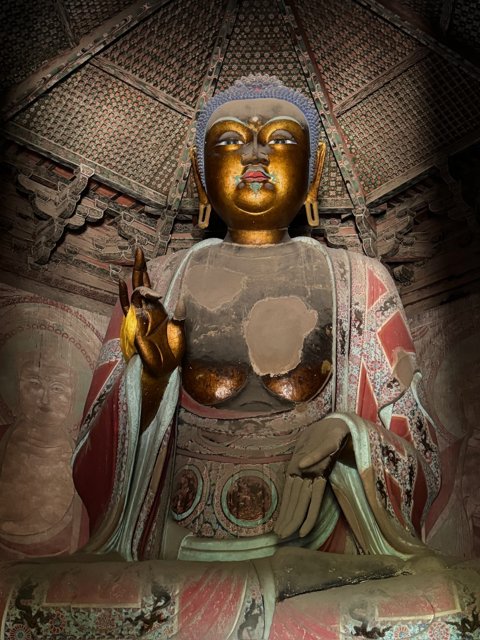
Yingxian Wooden Pagoda 应县木塔

During the Republican era, the architect Liang Sicheng came across records of a unique wooden pagoda in Yingxian, Shanxi, though its existence was uncertain. He wrote to a local photo studio, asking them to send a photograph and enclosed payment for the service. Once he received the image, he immediately realized its significance. Together with Lin Huiyin, he traveled to Shanxi, conducted detailed measurements, and introduced this remarkable pagoda to the world.

We, too, approached this extraordinary structure today. Built in 1056 during the Liao Dynasty, when the Central Plains were under the Northern Song while Yingxian was ruled by Liao, the pagoda stands as a witness to that divided historical era.

Yingxian Wooden Pagoda 应县木塔

The pagoda rises 67.31 meters tall and is constructed entirely without nails, relying solely on traditional mortise-and-tenon joinery. It remains the tallest and oldest existing wooden pagoda in the world. Despite earthquakes, wars, and centuries of weathering, it still stands firm—a true testament to ancient Chinese craftsmanship.

Yingxian Wooden Pagoda 应县木塔

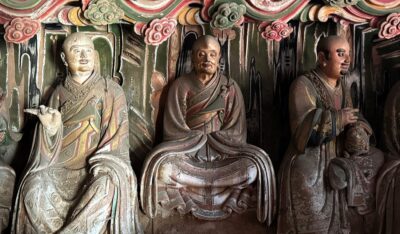
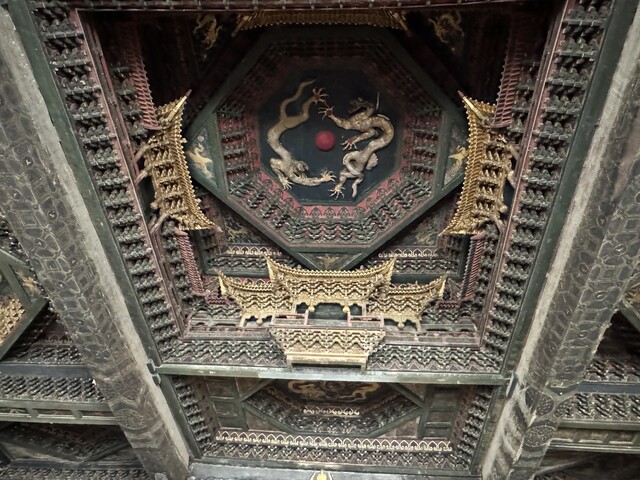
We then stopped by Jingtu Temple. Though the temple itself is not large, what truly amazes is the intricate wooden structure unfolding overhead. At the center of the caisson ceiling, two dragons coil around each other, as if energy still flows within their stillness. Looking closer, the interlocking brackets and carvings fit together with remarkable precision—each layer refined and restrained, without excess, yet full of craftsmanship.

Jingtu Temple净土寺

The details beneath the eaves are equally captivating. Green glazed tiles and beast-head ornaments come alive in the sunlight, forming a striking contrast with the calm, subdued wooden structure inside. This interplay of exterior and interior, light and shadow, reveals the balance and rhythm at the heart of traditional Chinese architecture.

Jingtu Temple Roof Detail 净土寺屋檐细节

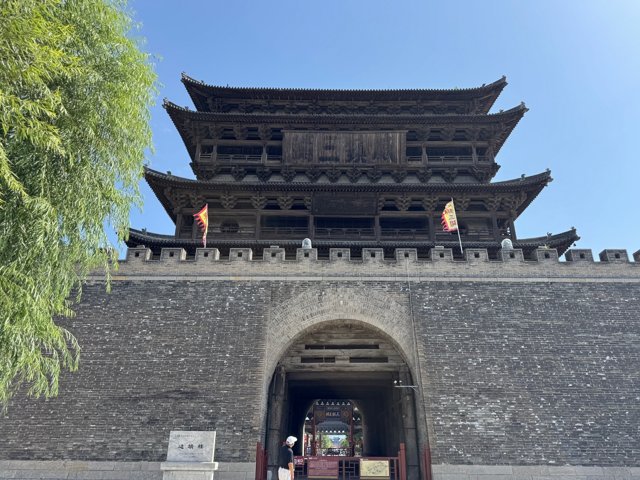
Our next stop was Bianjing Tower, known as the “First Tower of the Great Wall.” Built in 1372 during the Ming Dynasty, it began as a military watchtower and later evolved into a multi-functional structure combining defense, administration, and ceremonial use.

Bianjing Tower 边靖楼
Bianjing Tower 边靖楼

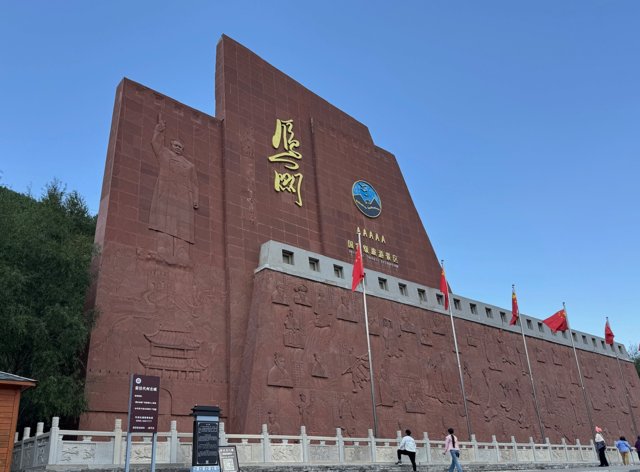
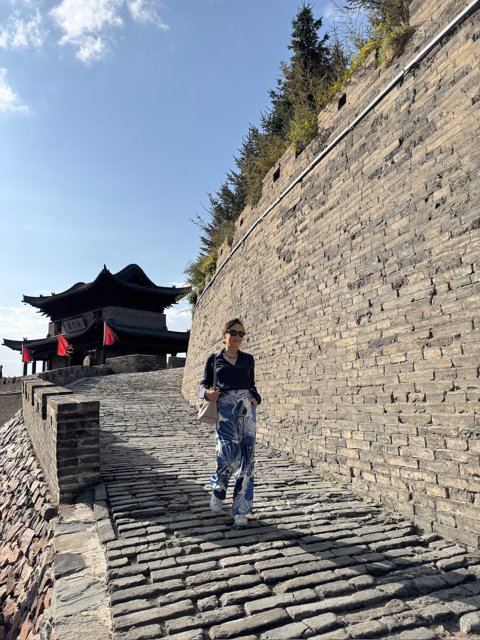
We then drove to the highlight of the day: Yanmen Pass. The road winds through steep mountains, passing the famous eighteen bends, while navigating around oncoming heavy trucks—truly a challenge for any driver.

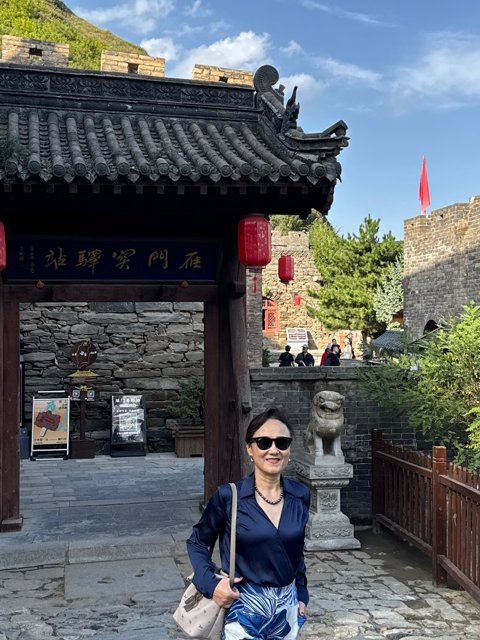
Yanmen Pass, often called the “First Pass Under Heaven,” dates back to around 300 BC during the Warring States period, when King Wuling of Zhao built it to defend against northern nomadic tribes. With its strategic location, it has long been a contested military stronghold. During the Ming Dynasty, it was incorporated into the Great Wall, becoming one of its three most important passes alongside Shanhai Pass and Jiayu Pass.

Yanmen Pass 雁门关

Walking up the stone paths, we passed the Zhenbian Temple, dedicated to legendary generals such as Wei Qing, Huo Qubing, Li Mu, and the Yang family generals. The Yanmen post station once served as a resting place for military leaders, and emperors from the Zhou to Qing dynasties had stayed here. Scholars like Li Bai and Shen Kuo also left their traces.

Yanmen Pass 雁门关
Yanmen Pass 雁门关

It is said that Wang Zhaojun once passed through Yanmen Pass on her journey north to the Xiongnu, pausing to gaze back at the Central Plains in sorrow, inspiring the poem “Zhaojun’s Lament.” Later generations built memorial sites such as Zhaojun Tower and her tomb nearby.

Yanmen Pass 雁门关

Our final stop was the Guangwu Great Wall. Built during the early Ming Dynasty, this section once served as a crucial defensive barrier against Mongol cavalry. The remaining walls still stand proudly, resembling a giant dragon stretching across the mountain ridges—majestic and powerful.

Guangwu Great Wall 广武明长城

📍 Travel Logistics

🛏️ Accommodation: Hampton Inn by Hilton Shuozhou

🚗 Transportation: Rental Car

📥Planning a similar trip? Download your free itinerary below. 🧭

Leave a Reply