Originally, we planned to visit Tongtian Gorge today, but due to rain, we changed plans and visited temples instead.
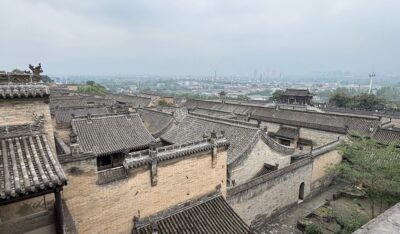
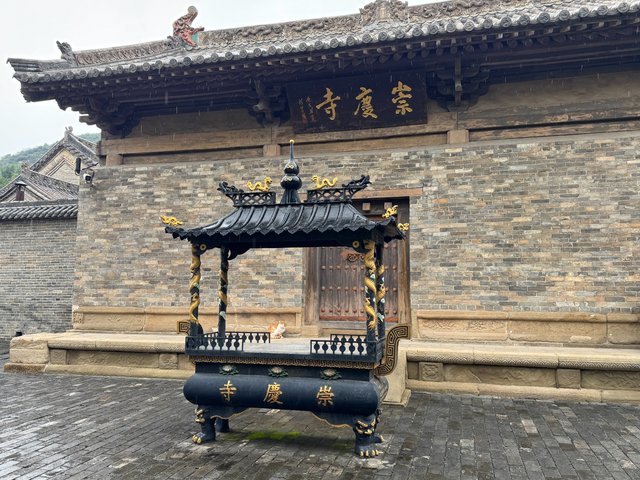
Our first stop was Chongqing Temple Changzhi. Founded in 1016 during the Northern Song Dynasty, it was later expanded and restored in the Ming and Qing periods.
While waiting for the shuttle bus, we chatted with a staff member. He shared that his hometown used to be a coal mining area, and residents were relocated. His pension is just over one hundred yuan, and he grows his own vegetables. Medical insurance covers only about half of healthcare costs. Raising livestock is no longer allowed due to environmental regulations.
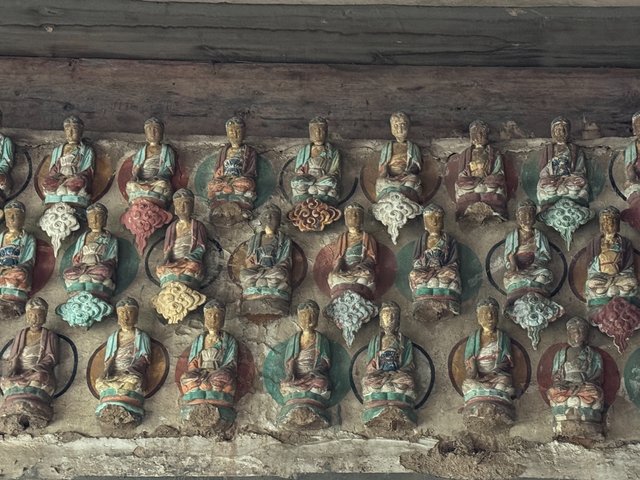
Chongqing Temple is most famous for its colored sculptures. In the Thousand Buddha Hall, only one wall still preserves around 200 small Buddha statues from the Song Dynasty.
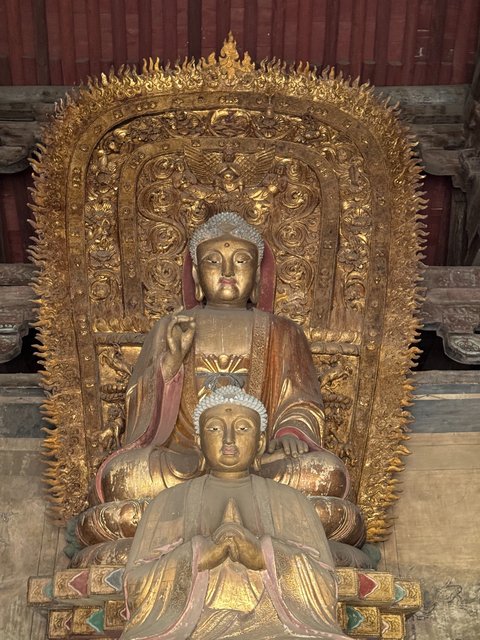
In the Guanyin Hall, statues of Guanyin, Manjushri, Samantabhadra, and the Eighteen Arhats are well preserved. These figures are vivid and expressive, representing the finest of Song Dynasty sculpture. The Eighteen Arhats, dated precisely to 1079, are known as the “crown of Song sculptures.”
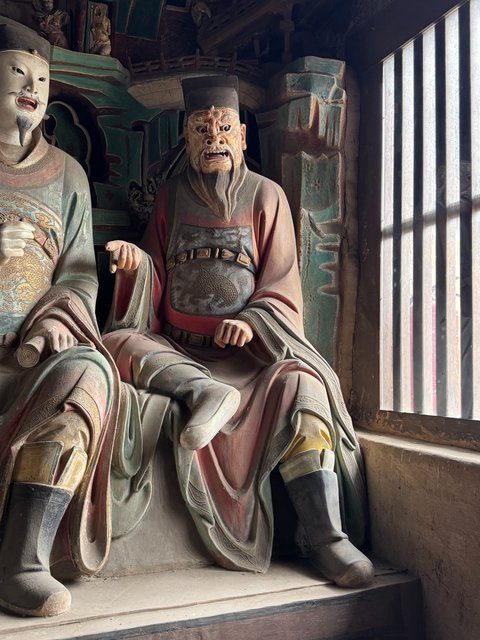
In the Ten Kings Hall, ten figures modeled after historical emperors are displayed. One is said to resemble Zhu Yuanzhang.
The popular game Black Myth Wukong also used this temple as a reference for its design.
The rain stopped when we arrived, but soon began again. Staff reminded us to finish quickly, as temples must close during rain. Indeed, each hall was locked after we exited, until the entire site closed behind us.
We then visited Sanzong Temple, also known as the Houyi Temple, dedicated to the legendary archer Houyi who shot down the suns.
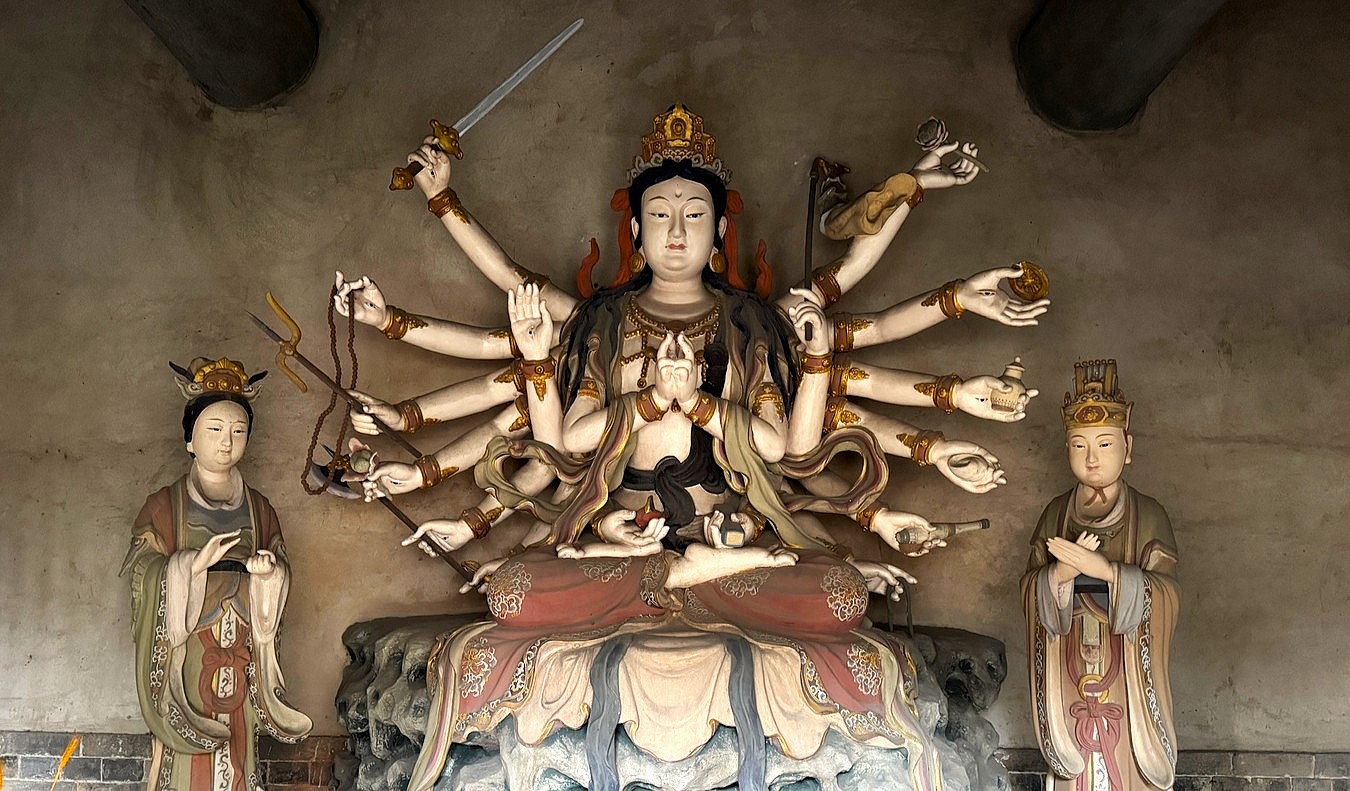
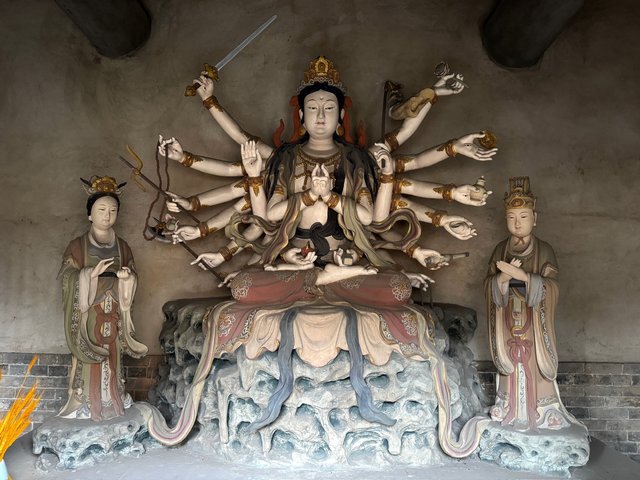
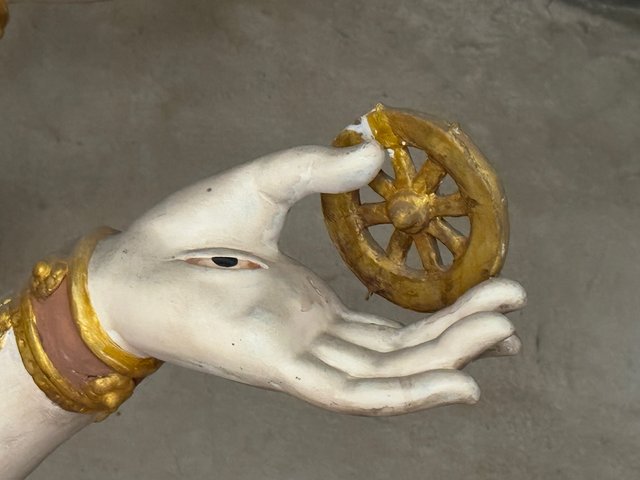
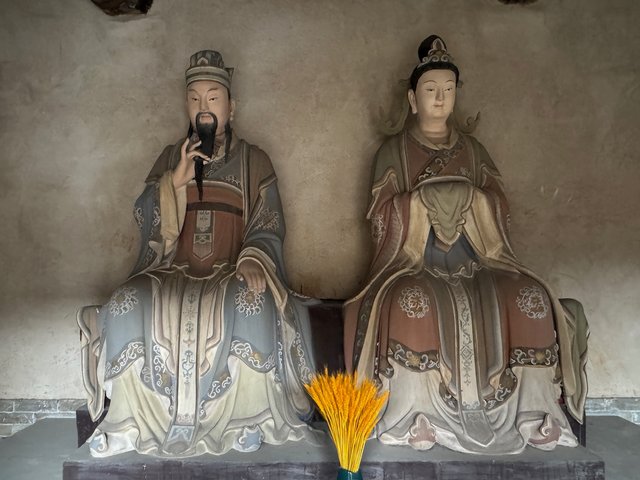
The temple dates back to at least the Tang Dynasty, with many existing structures from the Jin Dynasty. Inside are sculptures of Houyi, his wife Chang’e, the medicine sage Sun Simiao, and a remarkable Thousand-Hand Guanyin.
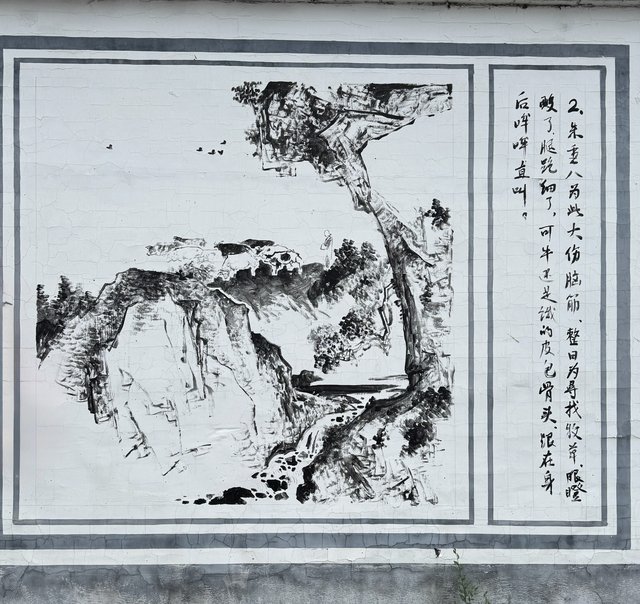
Next, we drove to Faxing Temple Shanxi. Along the way, murals depicted stories linking the temple to Zhu Yuanzhang, though these appear to be folk legends rather than historical fact.
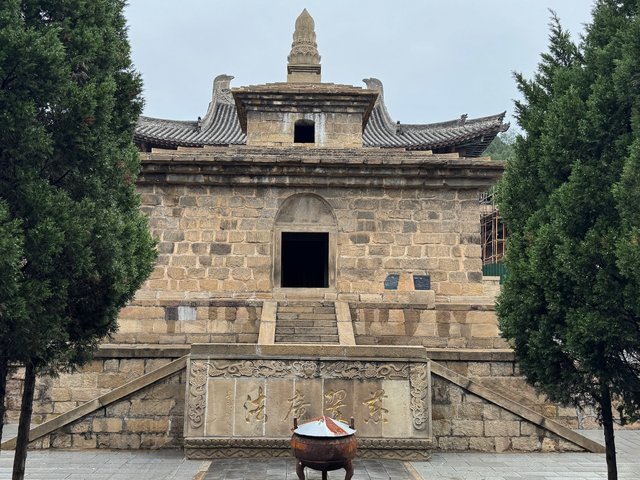
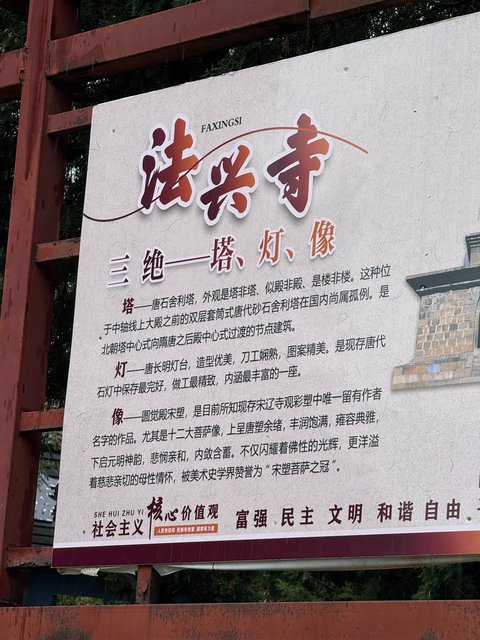
Faxing Temple was first built during the Northern Wei Dynasty and later restored through several dynasties.
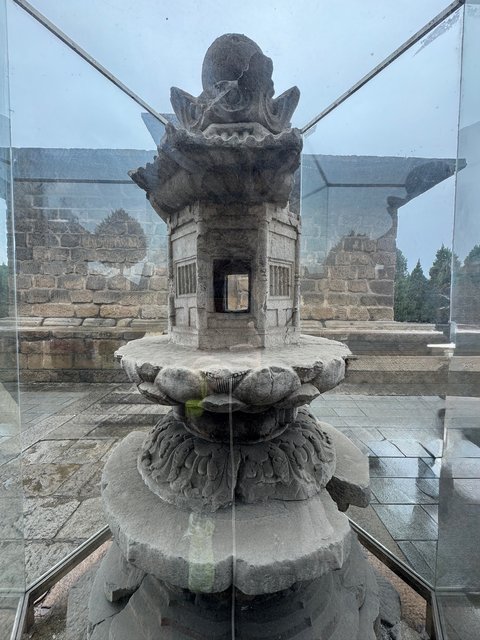
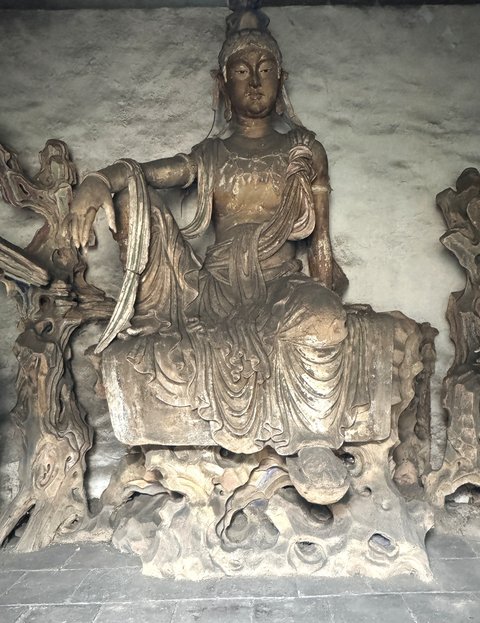
The temple is famous for three treasures: the pagoda, the lamp, and the sculptures.
The pagoda, built during the Tang Dynasty, has a unique form resembling both a tower and a hall.
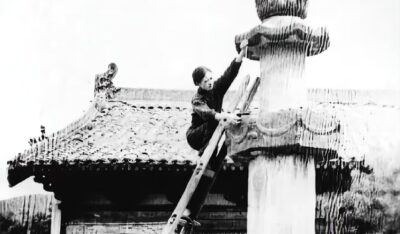
The stone lamp, also from the Tang Dynasty, symbolizes eternal Buddhist light and is one of the best-preserved examples of its kind.
The sculptures in the Yuanjue Hall, built during the Song Dynasty, are especially notable. The twelve Bodhisattvas are serene, full-bodied, and beautifully preserved. This is the only known group of Tang-Song sculptures signed by their creators.
As rain began again, the temple staff started closing the site, and we ended the day early.
We use cookies to ensure that we give you the best experience on our website. If you continue to use this site we will assume that you are happy with it.