Highlights of the Day
On our way back to Santiago from the Colchagua wine valley, we stopped to visit The Baháʼí House of Worship of South America. The Baháʼí Faith originated in 19th-century Persia and emphasizes the unity of humanity, harmony among religions, and equality between men and women. One of its key principles is “unity in diversity.”
The temple sits on a quiet hillside and is shaped like a flower opening toward the sky. Its exterior is made of translucent stone and glass panels, which glow softly under sunlight. Inside, the space is strikingly simple: there are no statues, no altar, and no symbols of personal worship, reflecting the Baháʼí belief that there is no intermediary between humans and God. The walls rise upward and converge at the top, symbolizing spiritual ascent. After the visit, we spoke with volunteers from different countries and learned more about the faith’s vision of unity among religions and cultures.
Today, on our way back to Santiago from the wine valley, we made a stop here to visit.
The temple sits on a hill. As we drove up, layers of mountains surrounded us and the atmosphere became increasingly quiet. After parking the car and entering the visitor center, someone immediately came to greet us. When they realized we spoke English, they invited an English-speaking volunteer to talk with us. She briefly explained the core idea of the religion—unity in diversity—and then showed us a nine-minute video introducing the origins and teachings of the Baháʼí Faith.
Afterward, we chose the walking path up the hill. The trail was lined with shrubs and greenery, making for a pleasant walk.
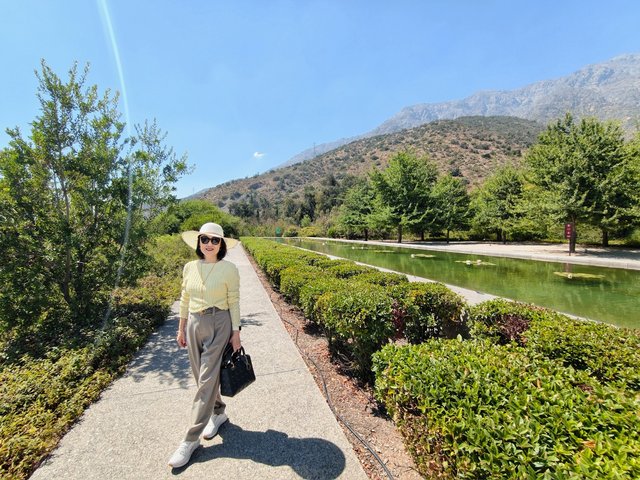
At the top stood the temple itself, a structure filled with poetic beauty. The building is shaped like a blooming flower, its exterior made of translucent stone and glass panels cut in multiple facets, somewhat like the surface of a diamond. Under sunlight, the structure glows softly. Beside the building lies a reflecting pool, and with the wind completely still, the temple formed a perfect mirror image on the water.
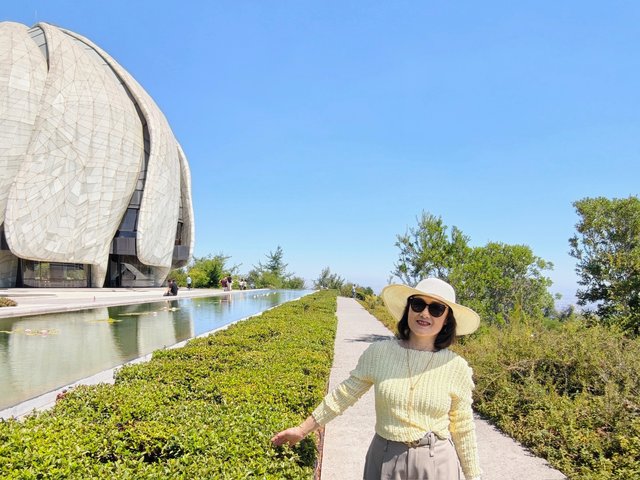
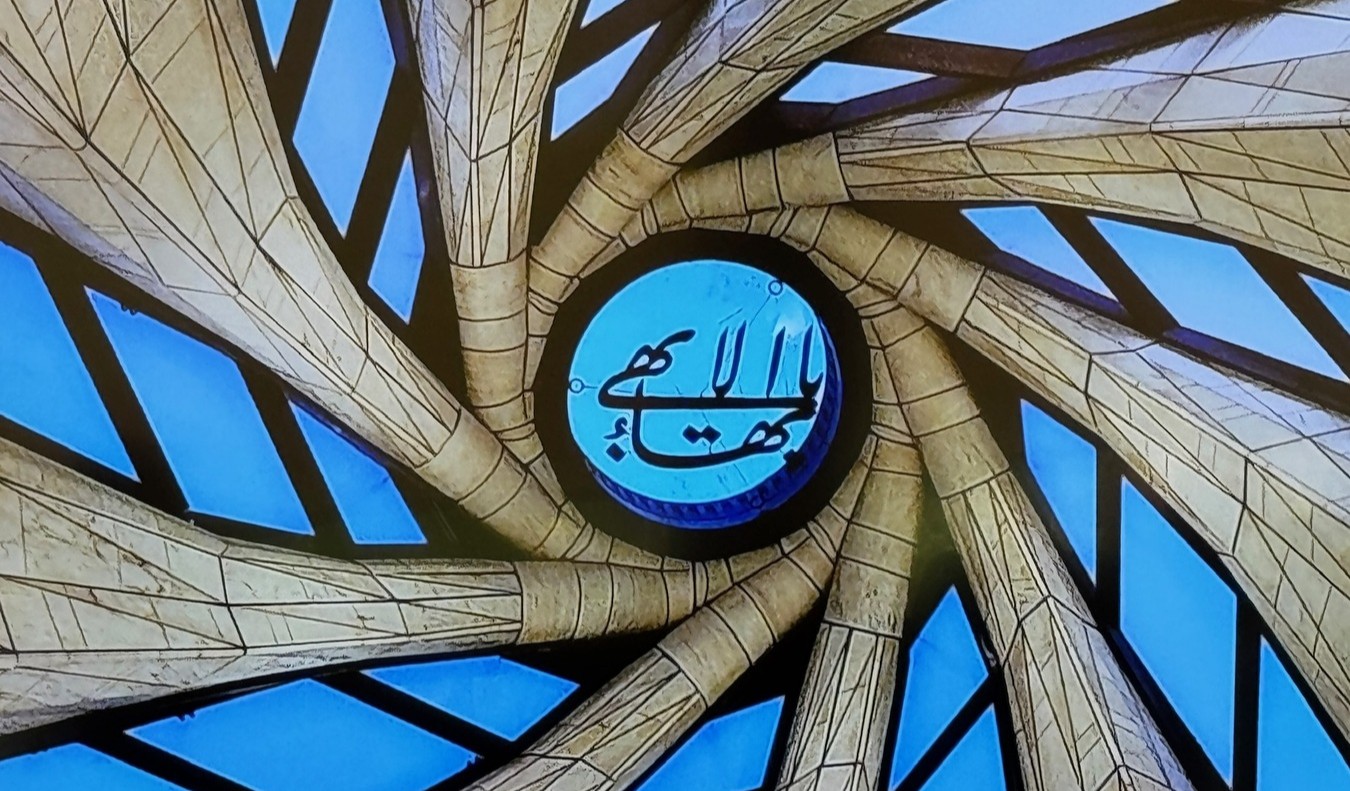
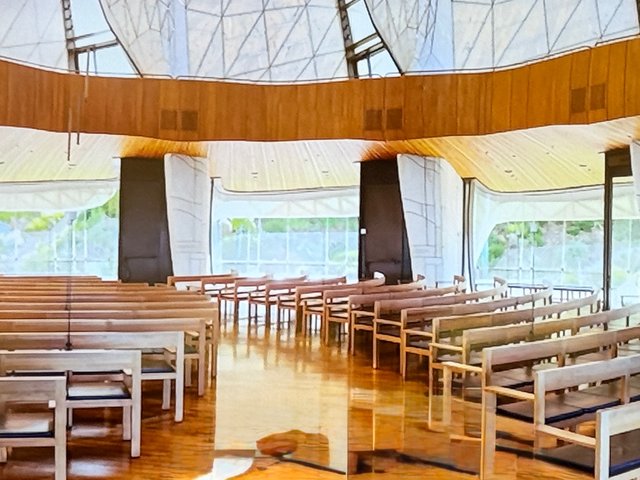
The temple is open to the public free of charge. As we stepped inside, the atmosphere immediately felt quiet and solemn. The interior is almost entirely unadorned—there are no statues, no altar, and no symbols of personal worship—reflecting the Baháʼí belief that there is no intermediary between humanity and God. The surrounding walls spiral upward and converge at the top, symbolizing the spiritual ascent toward the divine.
Photography is not allowed inside the temple. The two interior images here were taken from the video shown in the visitor center.
Back at the visitor center, we chatted with several volunteers. Some were from France, others from the United States, all serving here voluntarily. I asked them how their faith relates to other religions. They explained that throughout human history, new religions appear every few hundred to a thousand years, each bringing a messenger who conveys God’s guidance to humanity. The Baháʼí Faith, they said, is one of the more recent ones, and one of its key ideas is unity in diversity.
Before leaving, my husband asked if there was a place to make a donation. They smiled and said there was no need—everything here is freely offered.
As we walked away and looked back toward the hilltop, the white “flower” stood quietly among the mountains, opening toward the sky. Different cultures and beliefs may appear distinct, yet perhaps they all point toward the same source.
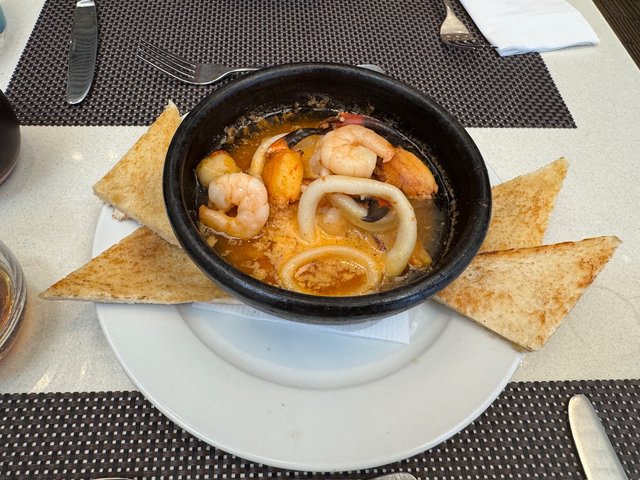
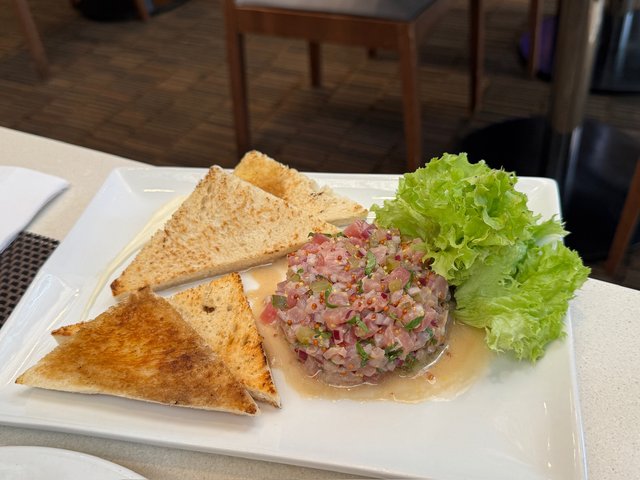
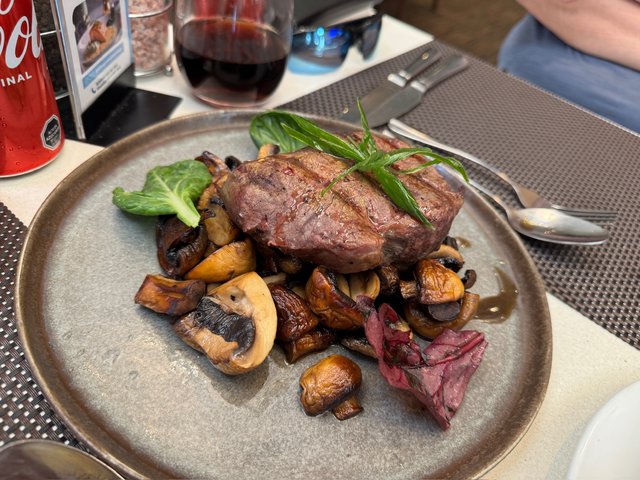
After returning to Santiago, we went to a restaurant near our hotel. There, we tried seafood stew, tuna tartar and steak. All tastes very good. The seafood stew is the best.
Just like that, we are back in Santiago again.
Accommodation: Courtyard by Marriott Santiago Airport
Transportation: Rental Car
If you’d like to learn more about the itinerary, please click the button below to download a free copy of the customizable itinerary.