After days of rain and dust, the car was extremely dirty. We stopped at a small family-run car wash, where everything was done by hand. The car was spotless again, and so was our mood.
Today we drove from Pingyao to Taiyuan, visiting sites along the way.
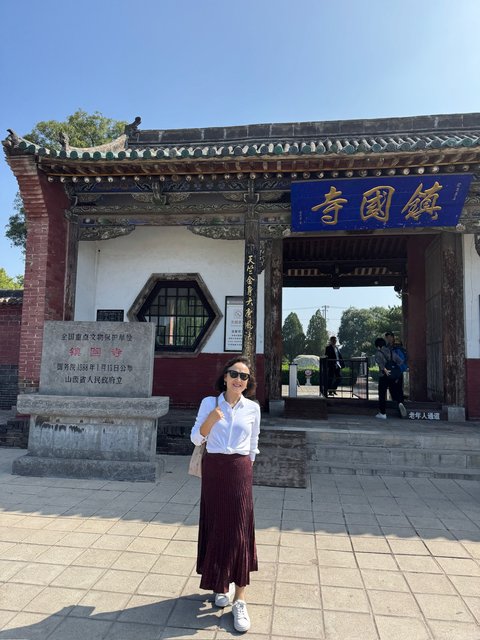
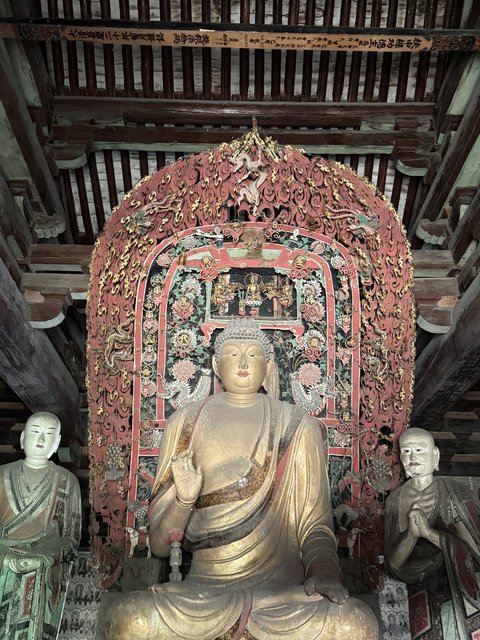
Our first stop was Zhenguo Temple Pingyao. Founded in 963 during the Northern Han period, the temple was repaired in later dynasties, but its main structure, the Wanfo Hall, retains its early architectural features.
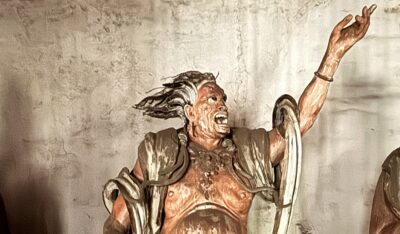
Inside the hall are Northern Song Dynasty colored sculptures. At the center sits Sakyamuni Buddha, flanked by Manjushri and Samantabhadra. Some of the original Eighteen Arhats remain.
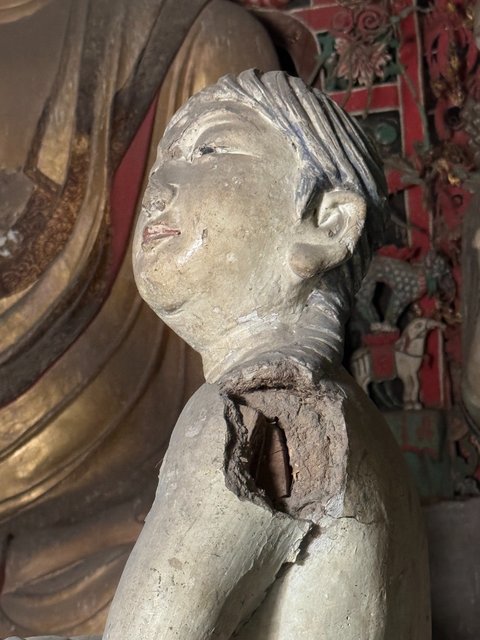
Two smaller Buddha statues at the front reveal their internal structure due to damage over time: a wooden framework inside, covered with straw and clay for shaping, and finished with painted layers.
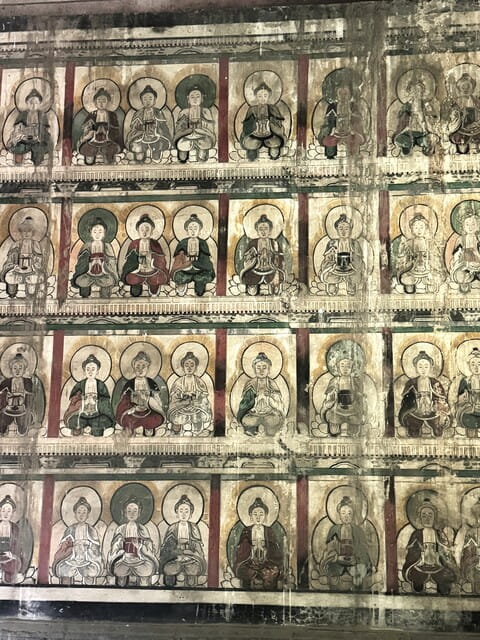
The walls are covered with numerous Buddha images, giving the hall its name, Thousand Buddha Hall. Unfortunately, graffiti can be seen on one large mural, which hopefully will be better protected in the future.
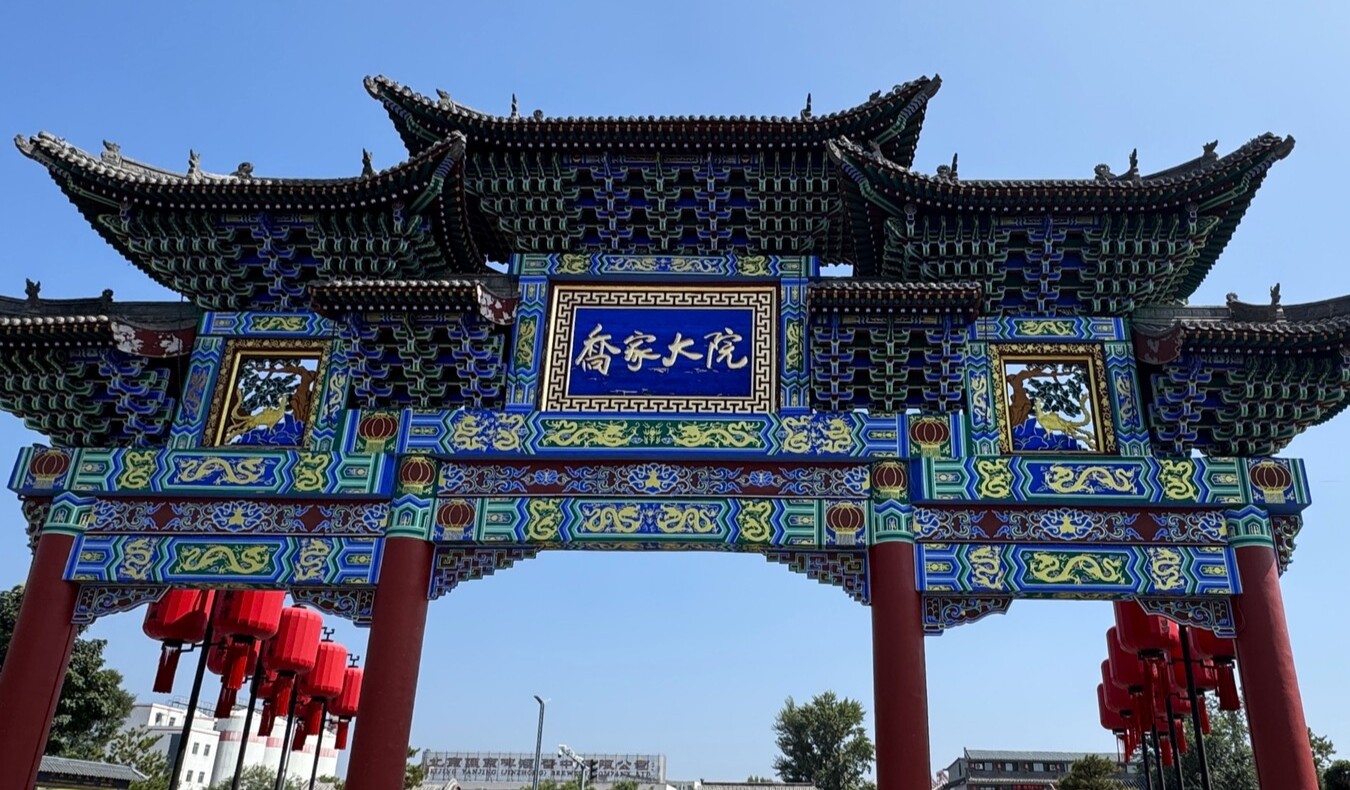
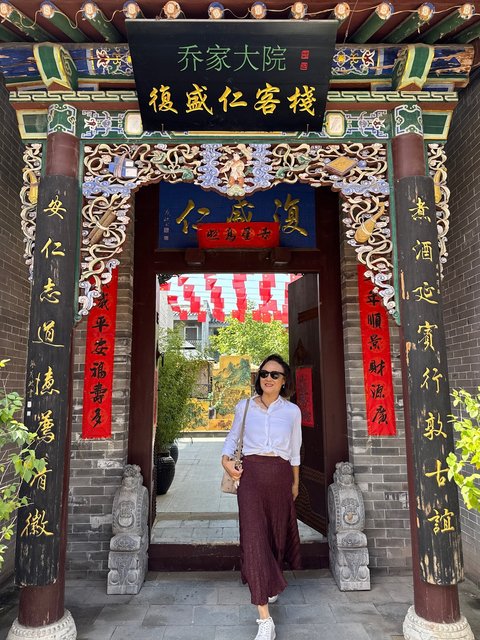
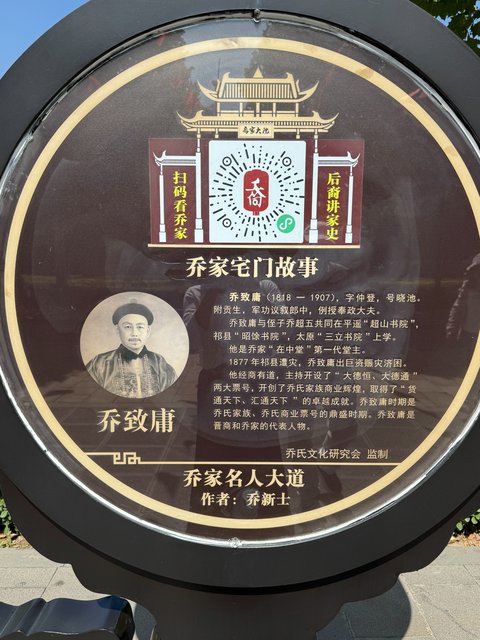
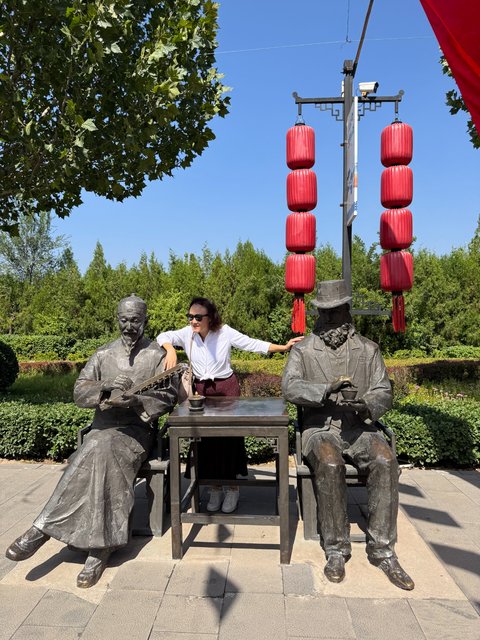
The TV series Qiao Family Courtyard first introduced me to the Jin merchants. The character Qiao Zhiyong was portrayed as the founder of China’s draft banking system.
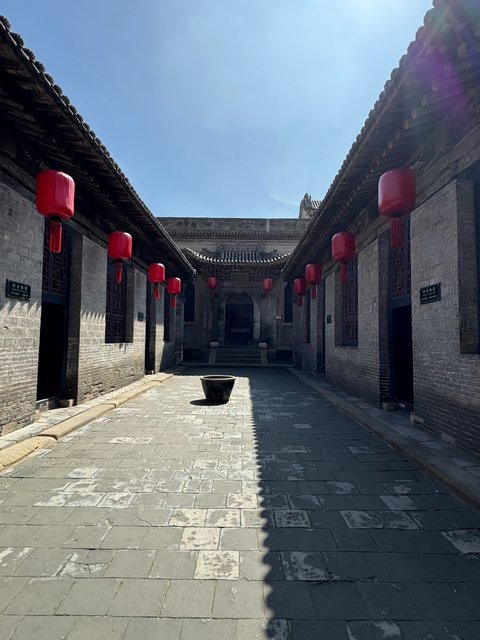
In reality, the courtyard covers about 9,000 square meters with over 300 rooms, smaller than some other Shanxi mansions we visited.
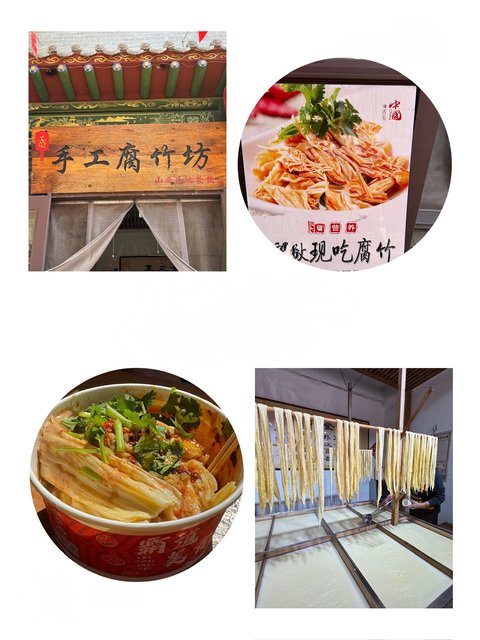
Outside the site, shops were everywhere. We tried freshly hand made yuba (Toufu bamboo), which was soft and flavorful.
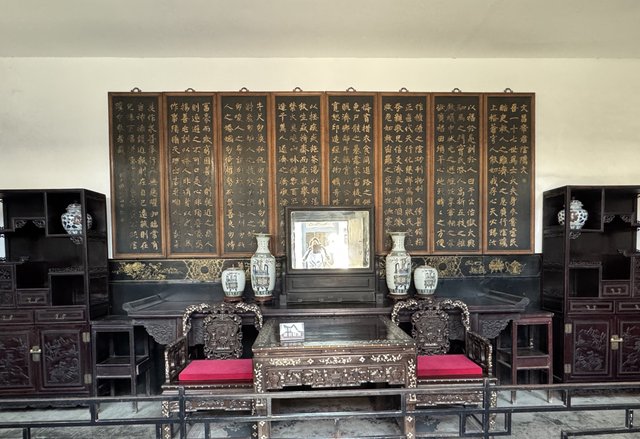
The courtyard layout is layered and interconnected, forming a complete residential system. We explored living quarters, private schools, and gardens.
One notable family rule was “no concubines and treat servants kindly,” which was rare in feudal times.
The family’s rise began with Qiao Guifa, who started as a poor worker and later identified business opportunities while trading supplies for caravans.
He even engaged in early forms of futures trading, suffering losses before eventually rebuilding his fortune.
Later generations expanded the family business, and Qiao Zhiyong elevated it to its peak.
He developed the draft bank system, establishing branches across China and even into Central Asia, including Russia, Mongolia, and Nepal, creating a vast financial network.
Through these operations, the Qiao family accumulated great wealth and became known as “Qiao the Millionaire.”
We use cookies to ensure that we give you the best experience on our website. If you continue to use this site we will assume that you are happy with it.